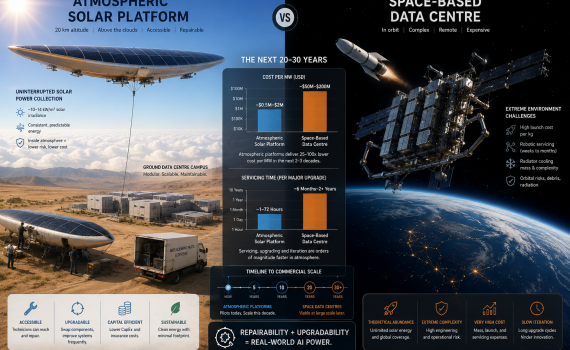
Artificial Intelligence is creating unprecedented demand for electricity, forcing governments, hyperscalers, and researchers to rethink how future data centres will be powered. While orbital data centres and space-based solar power capture public imagination, atmospheric solar platforms may offer a more practical, scalable, and economically viable solution over the next two decades. This article compares atmospheric, ocean-based, terrestrial, nuclear, and space energy architectures to determine which technologies are best positioned to support the next generation of AI infrastructure.
Energy transition
2 posts

Q1 2026 will reward businesses tied to real demand drivers like AI infrastructure, energy reliability, logistics, healthcare access, and compliance. This edition maps high-potential business bets across major world regions, split into small, medium, and large opportunity bands, including portability signals and risk tags to guide execution.