
AI has made prototypes cheap. The difficult work remains: turning lawful evidence, user needs and modern architecture into a product that enterprises can trust, support and adopt.
technology
161 posts

State of Play moves beyond market reports. It links evidence, scenarios, risk and organisational capability so leaders can test strategic options before committing capital, policy or resources.
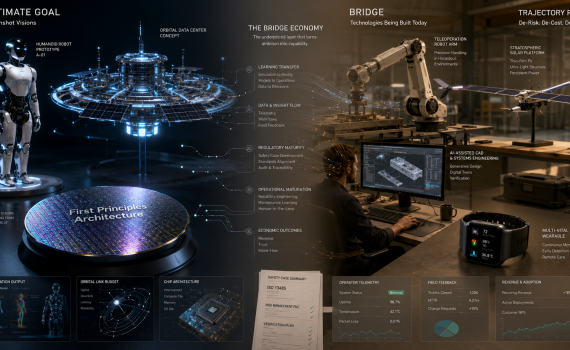
The future rarely arrives fully formed. Before the moonshot becomes real, something quieter usually ships first: a teleoperated robot, an AI-assisted design tool, a diagnostic kiosk, or a narrow infrastructure layer that solves today’s problem while preparing the ground for tomorrow’s breakthrough. This article introduces the bridge economy: the overlooked layer of transitional technologies that sit between current constraints and ultimate technological ambitions.

Outdoor noise control is moving beyond passive barriers. A new generation of active noise cancellation, AI-driven acoustic zoning, metamaterials, spatial audio, and digital twins could help cities, events, airports, venues, and developers manage sound more intelligently.
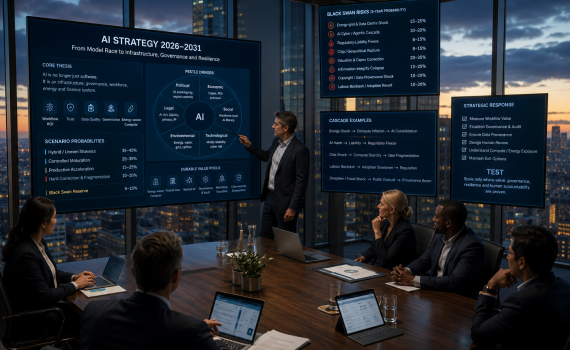
AI in June 2026 has moved beyond software hype into infrastructure, governance, energy, finance and workforce transformation. This article explores the current state of AI, the most likely futures through 2031, and the risks that could reshape the industry.

Agentic AI is transforming the enterprise, but governance is lagging behind adoption. As organizations deploy thousands of AI agents across SaaS platforms, RPA workflows, embedded applications, and emerging vibe-coded solutions, a new risk is emerging: AI Agent Sprawl. This article explores why AI governance, agent registries, ownership, security, auditing, and lifecycle management will become essential capabilities for every modern enterprise.