
Agentic AI is transforming the enterprise, but governance is lagging behind adoption. As organizations deploy thousands of AI agents across SaaS platforms, RPA workflows, embedded applications, and emerging vibe-coded solutions, a new risk is emerging: AI Agent Sprawl. This article explores why AI governance, agent registries, ownership, security, auditing, and lifecycle management will become essential capabilities for every modern enterprise.
ai architecture
4 posts

This article develops the synthetic organism as a disciplined alternative to both speculative AGI and shallow agentic automation. Building from the Abstraction Fallacy, it argues that AI systems should not claim consciousness through scale, complexity, or embodiment. Instead, artificial agency can be designed as a governed, memory-bearing, context-aware, and auditable system bounded by what creators can describe, test, supervise, and govern.
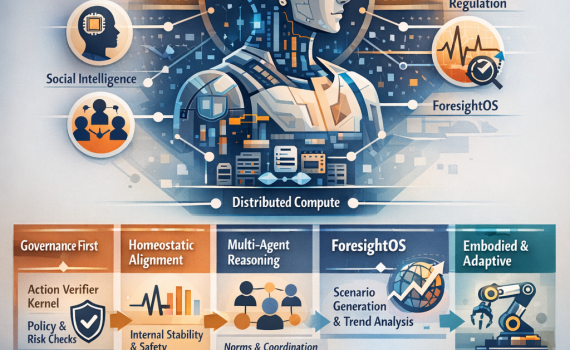
Most AI agents still behave like clever chat systems with tools. This article lays out a governed organism style architecture that treats regulation, memory, identity, social reasoning, and foresight as first class system layers. You get a deployable stack for digital twins and high stakes environments, with verifiable action selection and long horizon coherence.
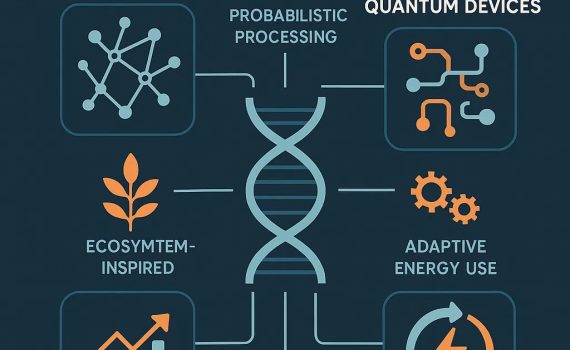
Nature solves complex problems without central control. This Idea Trigger explores how ecosystems can inspire radically distributed, adaptive, and energy efficient computing.