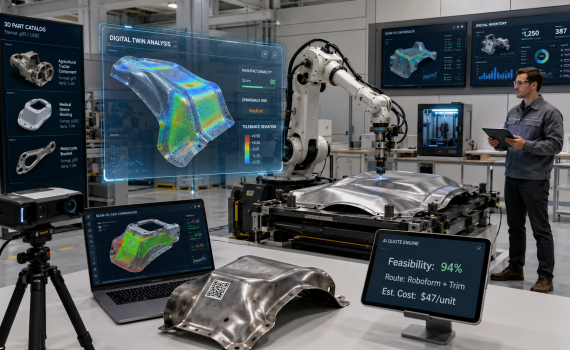
A new manufacturing stack is emerging where products are scanned, modelled, simulated, visualized, produced, inspected and stored as reusable digital artifacts. This article explains the rise of the Robotic Product Foundry and why it matters for local production, global supply chains, the Global South and the future workforce.
digital twins
10 posts
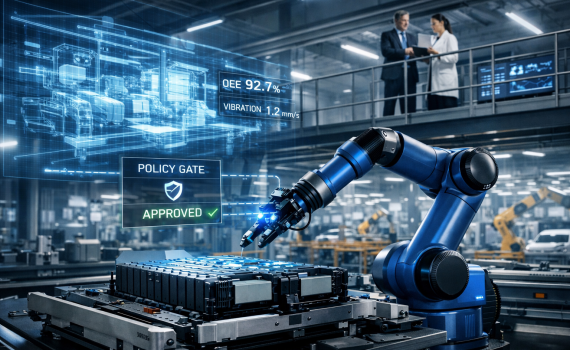
Manufacturing is becoming the next major frontier for AI. This article explores how digital twins, robotics, and industrial intelligence platforms are converging to reshape production, compress engineering cycles, and create a new class of software-defined industrial companies.
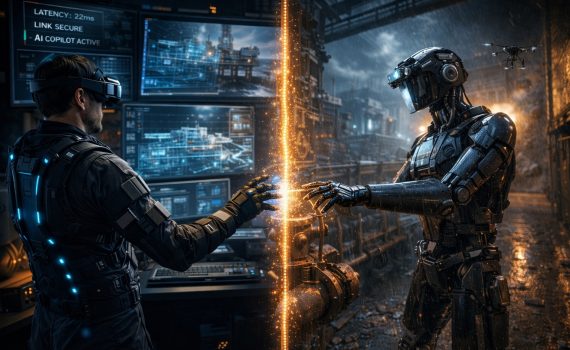
Most robotics debates ask the wrong question. It is not full autonomy versus remote control, it is how you build a safe bridge between the two. This dispatch breaks down a five layer Progressive Autonomy Ecosystem, from haptic presence and AI copilots to digital twins, certification, and operator marketplaces.
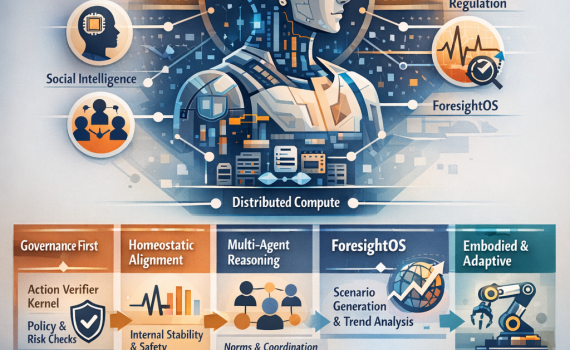
Most AI agents still behave like clever chat systems with tools. This article lays out a governed organism style architecture that treats regulation, memory, identity, social reasoning, and foresight as first class system layers. You get a deployable stack for digital twins and high stakes environments, with verifiable action selection and long horizon coherence.
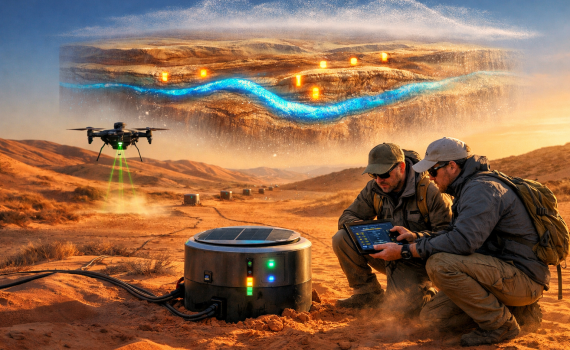
Project MESOM proposes a new approach to subsurface intelligence. By fusing seismic, electromagnetic, and AI driven sensing into a single system, it enables continuous underground monitoring, predictive risk detection, and data driven decisions for infrastructure, mining, and urban resilience.
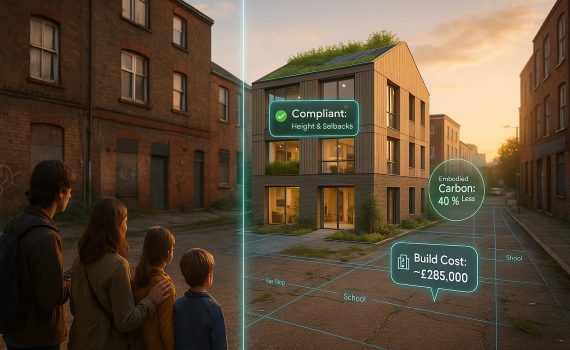
GroundKit blends city-building game mechanics with real-world planning data. It allows gamers, communities, and professionals to explore viable site options, test constraints, and export credible planning outputs from playful, parcel-based design.