
This article develops the synthetic organism as a disciplined alternative to both speculative AGI and shallow agentic automation. Building from the Abstraction Fallacy, it argues that AI systems should not claim consciousness through scale, complexity, or embodiment. Instead, artificial agency can be designed as a governed, memory-bearing, context-aware, and auditable system bounded by what creators can describe, test, supervise, and govern.
ai ethics
5 posts

Pre-crime may not arrive as a single dystopian machine. It may emerge through the quiet fusion of lawful systems: facial recognition, ALPR, CCTV analytics, police records, broker data, social media monitoring, digital identity, smart-city infrastructure, and AI summarisation. This article argues that the real danger is convergence, where evidence becomes inference, inference becomes a score, and a score becomes consequence before any person has been accused, charged, or convicted.

Bernie vs Claude argues that the AI privacy crisis is not just a consumer issue but a democratic one. It proposes a Digital Sovereignty Act backed by enforceable rights, transparency infrastructure, human-in-the-loop governance, and a Digital Governance & Enforcement Suite that turns policy into operational reality.

Deepfakes are usually framed as a misinformation problem. That misses the real issue. Synthetic media turns human identity into reproducible raw material. This article argues that digital sovereignty is incomplete without identity sovereignty, and that real protection requires consent, labelling, platform accountability, rapid takedown, auditability, and cross border enforcement.
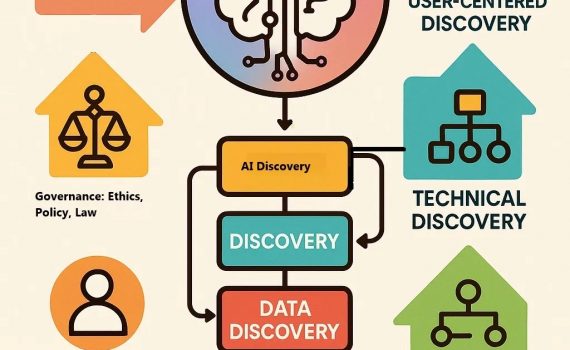
This article explains how to run a structured AI discovery process using a two stage framework. It covers feasibility checks, governance, ethics, user research, data audits and technical validation for enterprise AI projects.