A Public-Interest Policy Paper on Hidden Predictive Control

This policy paper is written from the standpoint of a public-interest systems architect concerned with the quiet fusion of ordinary technologies into a hidden infrastructure of prediction, suspicion, and administrative control. It argues that the central public-policy danger is not a single futuristic machine, but the convergence of facial recognition, ALPR, CCTV analytics, police records, social-media monitoring, financial intelligence, smart-city sensors, data-broker feeds, digital identity systems, behavioural analytics, and LLM summarisation into a persistent citizen graph.
The governing principle is simple: AI may assist investigation of evidence; AI must not become evidence of future guilt. When scattered traces are linked, inferred, scored, and operationalised, administrative suspicion can harden into consequence without notice, meaningful challenge, or due process
The convergence problem
Pre-crime by convergence describes a system-level condition in which facial recognition, ALPR, CCTV analytics, police records, social-media monitoring, financial intelligence, smart-city sensors, data-broker feeds, digital identity systems, behavioural analytics, and LLM summarisation are each introduced as separate tools, then fused into a hidden social-risk architecture.
The danger is not only explicit prediction. It is the administrative mutation of evidence into inference, inference into score, score into alert, and alert into consequence.
In such an environment, identity resolution becomes the bridge that turns scattered traces into a persistent citizen graph linking names, faces, devices, addresses, vehicles, accounts, relationships, movements, and transactions.
Behavioural inference then turns that graph into a machine-readable narrative of possible intent, vulnerability, ideology, disorder, fraud propensity, radicalisation risk, or public-order concern.
This is where risk-label creep begins. A system may avoid the words pre-crime or guilt while generating labels such as elevated risk, safeguarding concern, community safety priority, integrity anomaly, behavioural threat, or predictive deployment priority, all of which can operate as administrative suspicion.
The attached frameworks identify several distinct dangers inside this convergence pattern:
- Pre-crime by convergence: the fusion of multiple lawful or semi-lawful systems into a broader predictive-control capability.
- AI as evidence of future guilt: using scores, forecasts, or narrative outputs as substitutes for proof, suspicion thresholds, or warrant standards.
- Identity resolution: linking faces, phones, addresses, vehicles, records, and accounts into hidden person-level dossiers.
- Behavioural inference: deriving traits, intentions, risk states, and associative labels from incomplete data.
- Risk-label creep: soft administrative labels that gradually become operational triggers.
- Administrative suspicion: action taken through schools, councils, welfare, border, policing, or licensing without formal accusation or conviction.
- Data-broker laundering: acquisition of sensitive or warrant-like data through brokers rather than direct collection.
- Automation bias: human reviewers adopting system outputs because they appear objective or authoritative.
- LLM-generated risk narratives: persuasive summaries that make weak, fragmented, or low-confidence data appear coherent and actionable.
A mature pre-crime software suite would not necessarily be marketed under that name. The documents show that it would more likely be described as a harm-prevention platform, real-time intelligence environment, safeguarding analytics service, community safety optimisation layer, operational intelligence platform, or AI-assisted investigation system.
Its likely architecture would contain nine interlocking layers.
| Layer | Function | Typical public-facing disguise | Core danger |
| Ingestion layer | Pulls from police records, CCTV, ALPR, platforms, brokers, finance, IoT, mobility, and social media. | “Real-time intelligence,” “all-source data,” “public safety analytics.” | Totalising data capture and hidden data fusion. |
| Identity-resolution layer | Links names, faces, devices, addresses, vehicles, payment traces, and accounts. | “Identity resolution,” “entity matching,” “case-link analysis.” | Hidden citizen graph and mistaken identity propagation. |
| Behavioural inference layer | Infers intent, ideology, vulnerability, association, fraud propensity, or disorder risk. | “Behavioural analytics,” “risk triage,” “safeguarding.” | Correlation becomes suspicion. |
| Multimodal AI layer | Combines text, video, face, voice, metadata, location, and network patterns into narratives. | “AI summarisation,” “investigation assistant,” “decision support.” | Persuasive but brittle stories from messy data. |
| Predictive scoring layer | Scores people, places, groups, households, vehicles, or events. | “Harm prevention,” “community risk,” “threat assessment.” | Automated stigma and hidden ranking. |
| Operational alerting layer | Sends alerts to police, councils, border, schools, employers, or private security. | “Proactive intervention,” “officer safety,” “real-time alerts.” | Consequences occur before notice or challenge. |
| Decision-support layer | Recommends patrols, stops, visits, referrals, scrutiny, or investigation priorities. | “Mission-critical decision support,” “resource optimisation.” | Human review collapses into rubber-stamping. |
| Feedback loop | Uses enforcement outcomes as new training and intelligence signals. | Rarely named directly. | Bias becomes self-confirming. |
| Missing governance layer | Public register, audit logs, appeals, deletion, evidence bundles, and rights dashboards are absent or blocked. | “Governance under development,” “commercial confidentiality,” “security-sensitive.” | No meaningful accountability. |
The most important feature of this suite is that each component can be procured separately. The pre-crime effect emerges through interoperability, not necessarily through a single declared product.
The attached materials repeatedly warn that false positives are not marginal errors in such systems; they can become lived harms. A false facial match, a mistaken identity link, an inflated LLM summary, or a stale association graph can trigger more stops, more surveillance, more scrutiny, and more records, which then feed the next round of prediction.
Discriminatory targeting can arise directly through protected traits or indirectly through proxies such as postcode, network proximity, device patterns, school attendance, benefit status, or mobility behaviour.
Purpose creep is structurally likely once infrastructure exists. Systems approved for fraud detection, safeguarding, public-order monitoring, or transport optimisation can expand into welfare, immigration, protest, licensing, employment-adjacent, and school contexts.
Secret watchlists are a central misuse pathway because they allow hidden scoring to generate ongoing consequences without notice, challenge, or timely deletion.
Biometric dragnet risk is especially severe because face, voice, gait, and behavioural signatures become persistent identifiers that can be captured in public space and matched at scale.
Vendor lock-in compounds democratic weakness. The safeguards document warns against black-box public power, proprietary evidence systems, vendor-owned watchlists, and contracts that prevent audit, explanation, portability, or transition.
National-security exemptions are another escalation route. The reference documents note that fragmented oversight and emergency logic can swallow transparency, particularly when intelligence and policing functions begin to merge.
The democratic cost is not limited to policing. The likely social effect is a chilling of assembly, speech, protest, movement, association, and civic participation once people believe that ordinary behaviour may be logged, linked, inferred, and ranked.
The technical attack surface is also broad. The safeguard framework explicitly identifies hacking, insider abuse, data poisoning, prompt injection, spoofing, deepfake evidence, model inversion, and adversarial manipulation as governance-critical risks rather than secondary IT issues.
Data laundering through brokers creates a parallel route around constitutional and statutory safeguards by allowing agencies to buy or receive sensitive information they might otherwise need a warrant or specific legal authority to obtain directly.
LLM hallucination and narrative inflation are particularly dangerous in this context because they can introduce unsupported inferences, omit exculpatory context, and present uncertainty as confidence.
The combined effect is erosion of due process and the presumption of innocence. Once risk scores, AI summaries, or hidden inferences influence adverse action, the burden quietly shifts from the state proving conduct to the citizen disproving machine suspicion.
The convergence map and risk assessments point to a strong PESTLE pattern explaining why pre-crime architectures emerge.
Governments are drawn to these systems because they promise visible responses to crime fear, terrorism, migration pressure, fraud, unrest, child-protection concerns, and officer-safety demands. Political appeal is amplified when vendors frame tools as efficient, modern, and preventive rather than coercive.
Corporations see a large recurring market in public safety, intelligence, fraud, identity, retail loss prevention, border management, and smart-city procurement. Surveillance convergence is commercially attractive because cloud infrastructure, analytics subscriptions, broker data, and platform integrations create ongoing revenue and lock-in.
Public fear and convenience accelerate adoption. Citizens are more likely to accept intrusive systems when they are described as protecting children, reducing violence, stopping fraud, improving response times, or making cities more efficient.
Cheap sensors, ubiquitous cameras, data lakes, graph analytics, biometrics, ALPR, OSINT, cloud compute, and multimodal LLMs reduce the friction of combining once-separate systems. The result is not just more surveillance, but more legibility: people become continuously searchable, classifiable, and targetable.
Weak regulation and fragmented oversight enable misuse. The documents repeatedly identify gaps around broker data, inference rights, watchlists, public notice, vendor secrecy, and cross-agency data reuse.
Environmental and infrastructural
Smart-city build-outs, connected vehicles, drones, transport cards, retail sensors, smart buildings, and IoT systems embed surveillance capability into everyday infrastructure, making data extraction easier and opt-out harder.
The reference map groups real-world actors into vendor categories that together illustrate the convergence chain.
| Category | Examples named in the reference map | Relevance |
| RTCC and operational intelligence | Palantir, Peregrine Technologies, Motorola Solutions, Axon Fusus, Genetec, Hexagon. | These platforms can fuse fragmented operational data into real-time intelligence and decision environments. |
| Biometrics and facial recognition | NEC, Idemia, Cognitec, Clearview AI, Thales, AnyVision/Oosto. | They expand person-level identification, watch listing, and biometric matching across policing, border, and identity systems. |
| ALPR and vehicle intelligence | Flock Safety, Motorola Solutions Vigilant, Rekor Systems, Genetec AutoVu. | They turn mobility traces into searchable movement histories. |
| OSINT and investigative enrichment | Babel Street, Dataminr, Thomson Reuters CLEAR, LexisNexis Risk Solutions, TransUnion, Experian, Equifax. | They support public-record, social-data, identity, and risk enrichment. |
| Predictive policing and place-based risk | Geolitica/PredPol, HunchLab, SoundThinking SafetySmart. | They illustrate the shift from historical deployment analytics toward predictive governance logic. |
| Retail surveillance | Auror, Facewatch, Veesion, NCR Voyix and similar checkout analytics providers. | They show how private-sector suspicion systems can flow into public enforcement ecosystems. |
The government users to watch are not only police. The reference map highlights border agencies, immigration enforcement, welfare and fraud bodies, councils, transport authorities, intelligence services, schools, probation systems, and private security actors as likely adopters or data contributors.
The clearest warning case in the materials is China’s Xinjiang system, described as a predictive policing and mass-surveillance model that aggregated data, flagged people deemed threatening, and operated within a wider architecture of arbitrary control.

The attached frameworks already contain the skeleton of a public-interest counter-architecture. Read together, APCMP, DSIP, Identity Integrity, and the Anti-Pre-Crime Safeguards documents support a unified mitigation model built around visibility, contestability, auditability, and deletion-backed rights.
- Public registers for every high-risk system, with vendor, purpose, data categories, legal basis, retention, audit status, and expiry date.
- Mandatory DPIAs, HRIAs, and equality assessments before deployment and renewal.
- Judicial authorisation for sensitive biometric, location, financial, or exceptional uses.
- Independent audits, public procurement scrutiny, and no-deployment rules for black-box systems that cannot be tested or explained.
- Sunset clauses with automatic expiry unless necessity, proportionality, and effectiveness are re-established.
- Human-in-the-loop review with structured rationale capture, uncertainty recording, counterfactual consideration, and override logging.
- Prohibited-use rules that block individual pre-crime scoring, public-space biometric dragnet surveillance, covert broker enrichment, and automated adverse action.
- Audit logs and regulator-grade evidence bundles sufficient to reconstruct data inputs, model outputs, access events, human decisions, overrides, and disclosures.
- Deletion proof with backup purge tracking and third-party notification where data has been shared.
- Data provenance and broker disclosure registers showing source, lawful basis, broker involvement, sharing history, and quality limits.
- Citizen rights dashboards showing whether AI was used, what data was held, what was inferred, who accessed it, and whether it affected a decision.
- Rights to access, correction, deletion, explanation, challenge, and post-use notice where operational necessity expires.
- Rights to identity integrity covering face, voice, body, gait, likeness, and behavioural signatures.
- Personal Data Agents as certified, user-controlled tools for rights exercise and data-flow monitoring, provided they do not become covert collection systems themselves.
Explainability, traceability, and legal review
The paper now adds an explicit democratic right to explainability. Any person materially affected by an AI-assisted decision should receive a meaningful explanation in plain language, while authorised courts, lawyers, ombudsmen, regulators, and independent auditors should receive the technical explanation needed to test legality, evidential integrity, and proportionality.
That right to explainability must include factor-level reasons, policy references, confidence levels, uncertainty labels, known limitations, and a clear distinction between observed facts, inferred attributes, and predictive outputs.
The right to traceability must also be made explicit. Every data source, broker input, model version, system rule, access event, override, export, disclosure, and downstream consequence should be reconstructable through append-only audit logs, provenance metadata, chain-of-custody records, and signed evidence bundles.
Open government request availability should be written into the framework as a public-access principle. Non-sensitive deployment records, procurement summaries, audit outcomes, impact assessments, expiry dates, and public-register entries should be available for freedom-of-information or open-government style requests, subject only to narrow, reviewable redactions for active investigations, victim safety, or tightly defined national-security exceptions.
The legal system must have structured access, not ad hoc access. Courts, tribunals, defence teams, claimant representatives, ombudsmen, and authorised reviewers should be able to obtain regulator-grade evidence bundles, audit trails, explanation records, data lineage, and human-review records sufficient to test whether AI outputs were lawful, reliable, contestable, and wrongly inflated into operational suspicion.
This also creates a right of review grounded in legal knowledge. Affected people should be able to understand the legal basis, statutory authority, applicable safeguards, review deadlines, appeal routes, and burden of proof that governed the system’s use in their case. In practical terms, every rights portal and notice should translate technical AI activity into legal knowledge that an ordinary citizen, lawyer, judge, or community advocate can actually use.
Human-in-the-loop safeguards must therefore be strengthened beyond the slogan itself. The reviewer must see source data, evidence quality, uncertainty markers, limitations, and exculpatory context; must provide an independent evidential rationale rather than repeating the model output; must record whether the output was accepted, rejected, modified, or escalated; and, for high-impact actions, must trigger second-reviewer approval, conflict checks, and auditable override logging.
A lawful human-in-the-loop system is not merely a person clicking approve. It is a documented legal accountability process in which the human reviewer is informed, empowered to disagree, trained in rights obligations and automation bias, and reviewable by courts, regulators, and the public-interest oversight system.
Timeline of likely convergence
The documents present convergence as gradual rather than sudden.
- Pilots: agencies buy separate tools for RTCCs, ALPR, facial recognition, AI case triage, misconduct analysis, fraud control, or smart-city safety.
- Data fusion: shared identifiers begin linking names, vehicles, devices, locations, social accounts, payments, and records across systems.
- Predictive governance creep: labels shift from explicit crime prediction to harm prevention, safeguarding, community risk, or proactive intervention.
- Biometric expansion: facial, voice, gait, and identity systems broaden across policing, border, transport, and private-security environments.
- LLM-driven intelligence: summarisation and multimodal models turn fragmented data into threat profiles, association maps, and investigative priority narratives.
- Administrative consequences: more stops, scrutiny, referrals, border delays, school interventions, welfare suspicion, and watchlist effects emerge without formal conviction.
- Normalisation: the public hears that the system is only decision support, always human reviewed, not surveillance, or merely intelligence-led prevention.
Observable signs that pre-crime convergence is happening include the following.
- Procurement language using terms such as “real-time intelligence platform,” “single pane of glass,” “all-source intelligence,” “harm prevention,” “community safety analytics,” “AI-assisted investigation,” “identity resolution,” or “proactive intervention.”
- Vendor offers that bundle video, ALPR, biometrics, CAD/RMS, OSINT, and analytics into a common operational layer.
- Government purchases of data enrichment, broker feeds, or commercial identity products without clear warrant-equivalent safeguards.
- Expansion of systems from pilot geographies or narrow use cases into broader, multi-agency deployments.
- Claims that a tool is only advisory while rejection rates, rationale quality, or override behaviour are not published or audited.
- Missing public registers, unpublished DPIAs, absent equality assessments, weak appeal routes, or secrecy justified by “commercial confidentiality” or national security.
- Growth of hidden inferred attributes, risk labels, association graphs, or watchlist-like flags without citizen visibility.
A democratic society should articulate a clear citizen charter against hidden predictive control.
The citizen mandate is straightforward: show the person what is known, who supplied it, who accessed it, what was inferred, what AI processed it, whether it affected a decision, how it can be corrected, how unlawful data can be deleted, and how the result can be challenged before harm hardens into status.
The charter should therefore guarantee:
- The right to access raw, derived, and inferred data.
- The right to correction of inaccurate, stale, misattributed, or context-stripped information.
- The right to deletion of unlawful, unnecessary, expired, or disproven data, with proof where applicable.
- The right to explanation in plain language of algorithmic processing and decision roles.
- The right to challenge automated or AI-assisted adverse action and obtain human review.
- The right to know whether AI was used in any consequential decision or recommendation.
- The right to identity integrity over face, voice, body, gait, likeness, and behavioural signatures.
- The right to see inferred attributes, risk labels, and association graphs where rights may be affected.
- The right to use certified Personal Data Agents without retaliation.
- The right to community oversight through public registers, hearings, independent auditors, ombudsman access, and civilian or parliamentary review.
The Architect-Author’s position
The public-interest position is not anti-technology. It is anti-secret power, anti-hidden profiling, anti-biometric dragnet, and anti-administrative guilt by machine inference.
A democratic society may use AI to find evidence, expose corruption, detect fraud patterns, assist lawful investigation, support missing-person searches, and strengthen accountability. It must not allow AI to create hidden categories of future guilt, secret risk scores, or coercive suspicion without proof, notice, remedy, and oversight.
The line must remain bright: AI may assist investigation of evidence; AI must not become evidence of future guilt.
A further democratic safeguard must be made explicit: some public-sector datasets have historically been kept apart by law, constitutional practice, or administrative convention because their fusion creates coercive visibility over ordinary life. These protected state silos include national ID systems, civil registries, taxation records, payroll and employer reporting, social security and welfare systems, immigration files, border records, education and safeguarding systems, health and mental-health records, housing files, transport and mobility systems, and court-adjacent administrative data.
The convergence danger is not only that police obtain new tools. It is that policy changes, emergency exemptions, anti-fraud agendas, or administrative modernisation programmes erode long-standing separation rules and allow these silos to be queried, linked, scored, or reused for suspicion. Once national ID, tax, welfare, mobility, and policing systems can be linked through common identifiers, the state gains the practical ability to construct a continuous citizen graph even if no law openly authorises a formal pre-crime system.
National ID and identity infrastructure
National ID cards, digital identity wallets, civil registries, and identity verification rails should be treated as high-risk convergence infrastructure, not merely as convenience systems. When identity becomes the universal lookup key across welfare, tax, travel, payments, telecoms, public services, and policing, identity assurance can become identity control.
The governing rule should therefore be clear: identity systems may prove who a person is for a specific lawful purpose, but they must not become a hidden backbone for behavioural profiling, predictive suspicion, or cross-domain administrative surveillance. Any proposal to connect digital identity systems to policing, intelligence, welfare-fraud scoring, transport monitoring, or behavioural analytics should trigger mandatory public registration, DPIA, HRIA, equality review, judicial scrutiny where sensitive data is involved, and automatic sunset review.
Tax, welfare, and administrative suspicion
Taxation systems, payroll reporting, benefits records, disability assessments, fraud-prevention tools, household composition data, and compliance systems should be recognised as a distinct pre-crime frontier. These systems are often justified in the language of integrity, leakage reduction, fraud prevention, and service optimisation, yet they can generate administrative suspicion long before any criminal threshold is met.
The paper should therefore state that no tax, welfare, or social-security system may export person-level data, risk labels, or behavioural anomalies into policing, intelligence, immigration, or general public-order systems without explicit statutory authority, necessity and proportionality review, independent oversight, and a challenge pathway for the affected person. Administrative anti-fraud logic must not become a covert route into pre-crime classification.
Health, education, and family systems
Health records, mental-health indicators, safeguarding files, school attendance data, special educational needs records, child-protection referrals, and family-support case notes are especially vulnerable to misuse because they can be reframed as proxies for vulnerability, instability, or future risk. A democratic safeguard model must treat these domains as hard firewalls, permitting cross-use only under narrow, reviewable, rights-preserving conditions.
Support-oriented systems must not silently become enforcement-oriented systems. The same principle applies to housing, transport, and municipal systems, where every day administrative data can be transformed into movement intelligence, neighbourhood suspicion, or compliance profiling once linked to identity-resolution tools and predictive analytics.
The updated framework should include explicit cross-domain data-firewall rules. Data held for tax, welfare, education, health, transport, civic administration, or identity management should not be repurposed for policing, intelligence, migration control, protest monitoring, or behavioural scoring without fresh legal authority, documented necessity, proportionality testing, and external approval where rights are significantly affected.
These firewalls should be technical as well as legal. Systems should require purpose-bound APIs, field-level access controls, separate encryption domains, query-specific reason codes, independent logging, mandatory deletion and suppression workflows, and public reporting when silo barriers are changed by law or policy.
Market structure and commercial incentives
The convergence problem is also a market-structure problem. A hidden pre-crime architecture does not require one monopoly vendor; it can emerge when separate companies sell adjacent capabilities in data fusion, biometrics, ALPR, OSINT, identity verification, cloud hosting, retail surveillance, risk analytics, and LLM-enabled summarisation, all of which can later be integrated through procurement or platform partnerships.
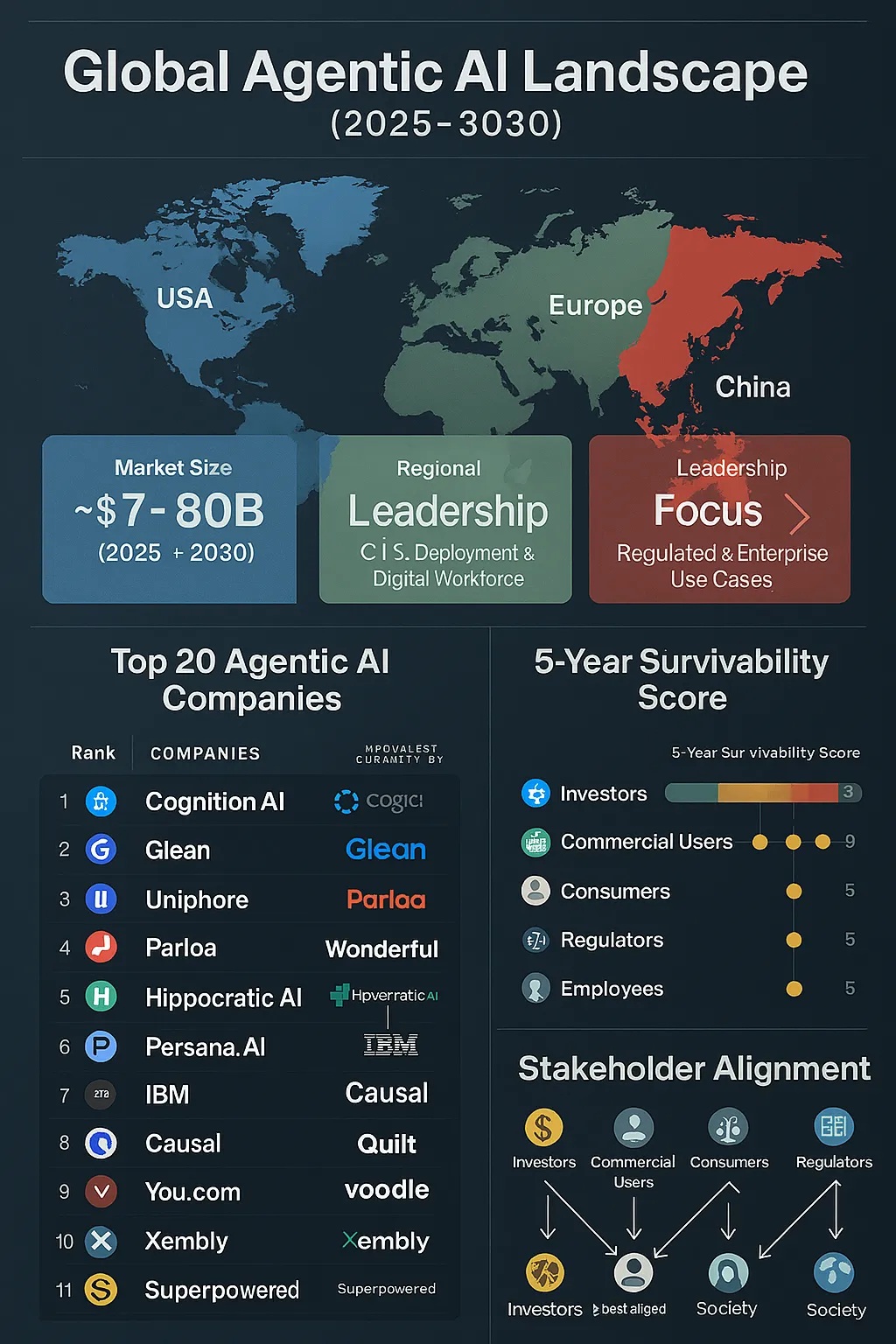
The reference materials already identify the commercial categories that matter: RTCC and data-fusion platforms, biometric identity vendors, ALPR providers, OSINT and investigative-intelligence firms, predictive-policing products, cloud and analytics infrastructure, and retail-surveillance networks. The policy implication is that market size should be understood as a convergence economy, not a single sector.
Because these tools are sold as separate products, governments may underestimate their combined constitutional effect. The legal test should therefore focus not only on the standalone tool, but on the cumulative capacity created when multiple vendors, datasets, and workflows are connected into one operational environment.
The paper should also recognise lobbying and political influence as active drivers of convergence. Surveillance capabilities are often normalised through vendor-funded pilots, innovation partnerships, emergency procurement, consultancy influence, security conferences, standards bodies, and public narratives that frame expansion as pragmatic modernisation rather than rights-altering power.
This influence matters at every stage: before procurement, when capabilities are marketed through benign language; during procurement, when contracts are framed as modular or experimental; and after deployment, when incumbents resist audit access, public registers, interoperability duties, or decommissioning requirements. A serious anti-pre-crime framework must therefore require disclosure of vendor meetings, pilot sponsorships, policy advocacy, consultant involvement, lobbying expenditure where applicable, and any attempt to widen use beyond the original public case.
The unified mitigation model should be expanded with the following controls.
- Protected-silo review: any proposal to connect national ID, tax, welfare, health, education, housing, mobility, or immigration systems to high-risk analytics must undergo elevated review.
- Data-firewall change log: every legislative, policy, contractual, or technical change that weakens separation between protected state silos must be logged, published where lawful, and independently reviewable.
- Administrative-consequence register: agencies must record when predictive or inferred labels affect access to services, scrutiny level, border friction, inspection intensity, account review, or civic participation.
- Public-interest procurement disclosures: publish public summaries of pilots, vendor claims, data categories, model roles, lobbying contacts, and contract amendments.
- Cross-border sovereignty controls: disclose offshore hosting, third-country processor access, and cross-border transfers that may weaken citizen rights or regulator reach.
- Remedy timing rules: set statutory deadlines for explanation, correction, human review, independent appeal, and deletion proof so that rights remain usable in practice.
- Decommissioning verification: require independent confirmation that retired systems, old models, stale watchlists, backups, and third-party copies have actually been removed or lawfully archived.
Additional indicators of pre-crime convergence should now include procurement or policy proposals that link digital ID to policing, tax to fraud-risk intelligence, welfare to behavioural analytics, transport data to identity resolution, or municipal systems to public-order monitoring. They should also include legal reforms that weaken data-sharing barriers, broaden anti-fraud exemptions, expand national-security secrecy, or authorise cross-domain matching under general efficiency language.
Other warning signs include data-sharing memoranda between agencies that historically kept their records separate, cloud migration programmes that centralise multiple registries under one analytics environment, or public-private partnerships that merge retail, platform, payment, and public-sector data into joint risk models. When such developments occur without public registers, independent audits, and citizen remedy routes, democratic firebreaks are being eroded.
Conclusion
A democratic society may use AI to help find evidence, expose corruption, detect fraud patterns, support lawful investigation, and strengthen accountability. It must not allow AI, identity infrastructure, or commercial data markets to merge into hidden risk scoring, secret watchlists, or evidence of future guilt. The response should therefore be a rights-based framework built on visibility, contestability, auditability, deletion, and strong firewalls between protected public systems. The line must remain bright: AI may assist investigation of evidence; AI must not become evidence of future guilt.