1. Executive Summary
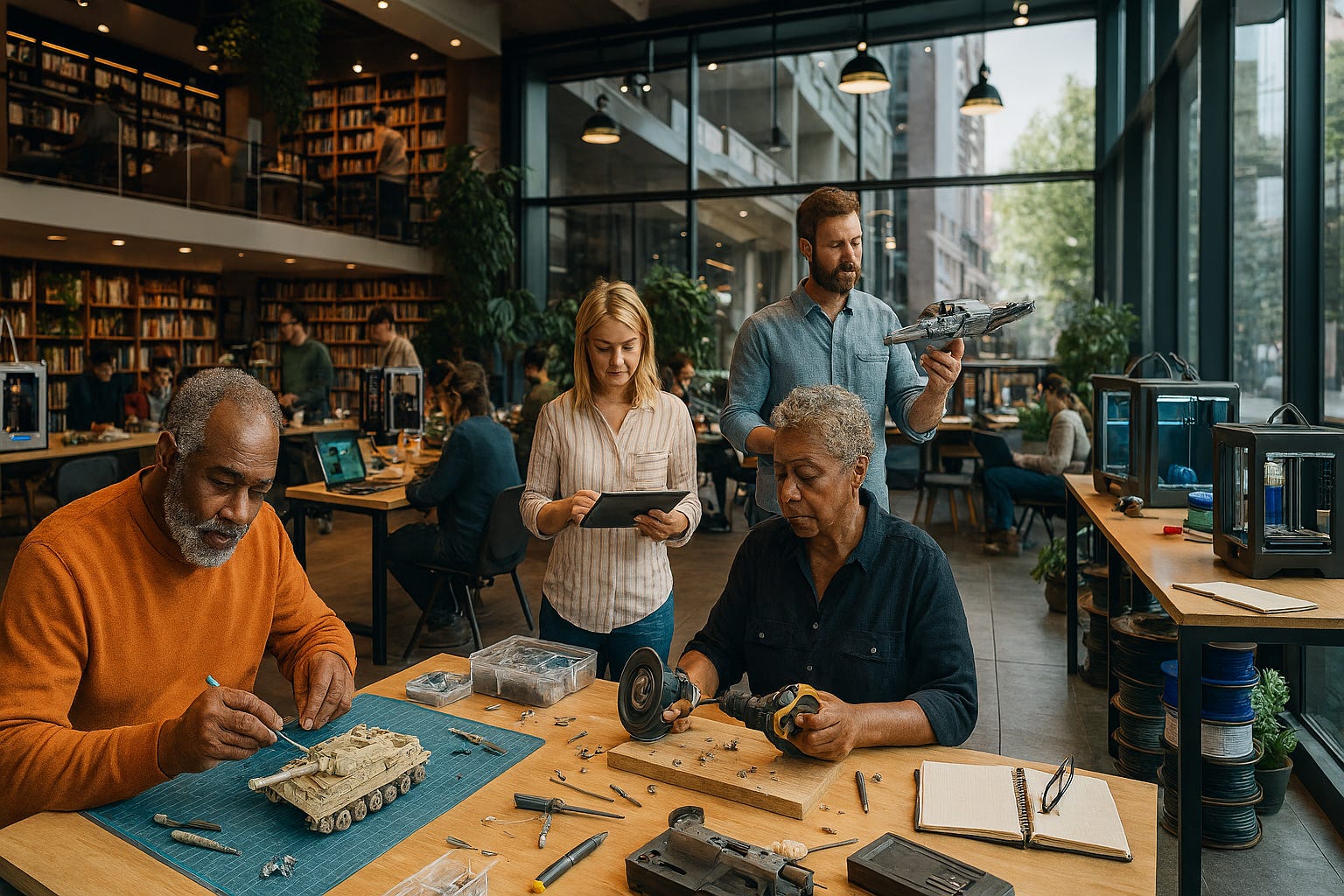
This concept proposes a new category of “Third-Place Maker Studios” designed exclusively for adult hobbyists performing advanced, long-duration build activities (20–100+ hours), including model kits, mechanical builds, miniature painting, 3D printing, diorama creation, robotic/mechanical kits, and hybrid digital-physical builds.
The model integrates:
- Flexible workspaces
- Secure personal build storage
- High-end fabrication equipment
- Media/creator studios
- Hybrid digital extensions (AR/VR, digital twins, STL modding)
- Membership tiers & recurring revenue
- Strong community ecosystem
Supporting document : Full stack analysis Shared Creative Spaces for Advanced Model Makers & Adult Hobbyists
I hope this trigger some ideas or some interesting pathways!!!
2. Space Design & Facility Blueprint
2.1 Core Zones
1. Flexible Build Bays (Short- & Long-Term)
- Individual desks or semi-private pods
- Anti-static surfaces, magnification lamps, ventilation
- Reservation-based via app
2. Secure Storage
- Lockers for tools
- “Build Vaults” for multi-week models (drawers or cabinets sized for 20–100-hour kits)
- Climate-controlled storage for resin/paints
3. Advanced Equipment Zone
Based on your global craftsmanship criteria emphasizing high-quality materials and mechanical depth :
- FDM & SLA 3D printers
- Laser-cutters & CNC micro-mills
- Paint booths (ventilation, filters)
- Resin curing stations
- Electronics benches (soldering, Arduino, LED rigs)
4. Collaboration & Peer Learning Areas
- Communal tables
- Weekly meetups/workshops
- Peer review boards inspired by maker forums
5. Media Studio
Aligned with your focus on content creators and modder ecosystems :
- Lightboxes for product shots
- Overhead camera rigs
- Podcast/streaming booth
- Multi-cam setup for build videos, time-lapse, TikTok/Reels
6. Hybrid/Home Continuity System
- Digital lockers (plans, timelogs, digital twins)
- AR instruction extensions for at-home continuation
- VR studio tours and virtual co-building lounges
3. Business Model & Operations
3.1 Membership Tiers
Tier 1: Drop-in / Casual (£25–£40 per session)
- Flexible desk
- Access to basic tools
- Pay-per-use advanced equipment
Tier 2: Maker Monthly (£90–£150/mo)
- 20–40 build hours
- Locker included
- Discount on materials & workshops
Tier 3: Builder Pro (£200–£350/mo)
- Unlimited build hours
- Large project storage
- Priority equipment access
- Access to recording studio
- Free monthly workshop credits
Tier 4: Corporate / L&D Packs
- Team-build events
- Mindfulness & stress-reduction framing
- Custom diorama challenges
Matches the corporate demand found in your stakeholder map .
3.2 Additional Revenue Streams
- Tool rentals
- 3D printing services
- Creator memberships (studio time)
- Premium workshops
- Kit retail (curated based on your Top 100 curation criteria)
- Subscription boxes with local pickup
- Digital products (STL files, AR add-ons)
- Event hosting & exhibitions
3.3 Cost Structure vs Return
Major Costs
- Rent (1500–5000 sq ft depending facility size)
- Staff: General Manager, Tech Supervisor, Safety Officer, Community Lead
- Insurance & liability
- Equipment & maintenance
- Consumables (resin, paints, filters)
Expected Returns
- High-margin memberships
- Stable recurring revenue
- Corporate events: extremely profitable hour-for-hour
- Digital upsells (highest-margin revenue stream)
4. Stakeholder & Value Proposition Map
Using your BRD stakeholder analysis structure :
1. Advanced Hobbyists / Makers
Pain: No dedicated space, messy home setups
Value: Pro-grade environment, long-term project storage
2. Stressed Professionals
Pain: Screen overload, burnout
Value: Mindful, tactile, calming workflow (supported in your market survey)
3. Retirees
Pain: Isolation, desire for long-form creative challenges
Value: Community, meaningful projects
4. Content Creators
Pain: Need for professional-looking build spaces
Value: Studio + exclusive tools + partnerships
5. Institutions (Libraries, Colleges, Makerspaces)
Pain: Lack of specialty equipment
Value: Outsourced high-end capability
6. Investors / Mall Operators
Pain: Dying foot traffic
Value: Experience-heavy anchor tenant
5. Risk & Safety Considerations
Operational Risks
- Low utilization
- Equipment downtime
- Over-specialization risk
Safety & Liability Risks
- Tool misuse
- Chemical/resin exposure
- Fire/ventilation standards
Mitigations
- Mandatory intro safety course
- Tiered machine certification
- PPE stations
- Liability waivers & insurance bundles
- Standardized operator logs
6. Technology & Innovation Layer
AR/VR Integration
- AR instructions overlay
- Safety overlays for CNC/laser equipment
- VR “virtual builds” and digital twin archives
Digital Twin System
From your XR-enabled vision roadmap :
- Scan projects in-progress
- Analyze assembly accuracy
- Auto-generate part lists
Online Community Platform
- Member profiles
- Build journals
- STL library
- Local event scheduling
Subsidiary Businesses
- Training programs
- Creator bootcamps
- 3D printing bureau
- Retail shop for curated kits (aligned with your product criteria matrix)
7. Benchmarking & Comparison
Traditional Makerspaces
Pros: Equipment-heavy, established communities
Gap: Not optimized for advanced hobby builds; too generalist
Hobby Clubs
Pros: Community, enthusiasm
Gap: Lack of equipment, poor facilities
Coworking Spaces
Pros: Membership model proven
Gap: No crafting equipment or storage
This Model
Differentiator:
Purpose-built for long-duration, precision hobby crafting with storage, safety, and hybrid digital tools.
8. Strategic Models & Contrarian View
Model A: Community-Driven Nonprofit
Pros: Grants, low pricing
Cons: Lower capital for equipment
Model B: Commercial Premium Studio
Pros: High revenue, strong creator segment
Cons: Higher CAC, need premium location
Model C: Hybrid Hub-in-Mall Anchor
Pros: Drives mall foot traffic
Cons: Rent & scale challenges
Contrarian Take — Why This Might Fail
- Niche market too small in certain cities
- High fixed costs vs uncertain daily traffic
- Advanced equipment requires continuous supervision
- Competing at-home setups getting cheaper
Success Factors
- Location near high-income, high-professional-density zones
- Strong creator partnerships and sponsorships
- Tiered memberships with sticky recurring revenue
- Showcase events & community rituals
- Data-driven programming (session usage, kit popularity)
- Possible retail space for smaller models
- Is it possible to position near home depot or similar entablement or extensions to library or use under utilised mall space
9. Implementation Roadmap (High Level)
0–3 Months
- Market sizing & site selection
- Partnerships with kit manufacturers
- Build “Top 100 Premium Kit Library”
- Launch landing page MVP
4–6 Months
- Facility buildout
- Equipment installation
- Safety protocols
- Pre-launch marketing
6–9 Months
- Soft launch
- Corporate pilot programs
- Membership scaling
12 Months
- AR/VR integration
- Expansion feasibility study
10. Novel & Hybrid Extensions
1. Hybrid Space Models
- Library-Maker Hybrids: Partner with public libraries to retrofit underutilized areas into advanced hobby studios, blending knowledge access with hands-on creation.
- Mall Anchor Hybrids: Position studios as “experience anchors” in malls, combining retail (kit shops, tool rentals) with experiential build zones.
- Wellness-Maker Studios: Integrate mindfulness programs (guided building sessions, stress-reduction workshops) with hobbyist activities, tapping into the wellness economy.
2. Speculative Business Models
- Subscription + Ownership Hybrid: Members earn equity in shared equipment or storage pods over time, creating loyalty and reducing churn.
- Build-to-Earn Economy: Gamify builds—completed projects earn tokens redeemable for discounts, digital assets (STL files), or exhibition opportunities.
- Corporate Hybrid Packs: Extend beyond team-building into L&D pipelines, where companies sponsor memberships for creativity, stress management, or prototyping.
3. Technology-Driven Hybrids
- AR/VR Co-Building Worlds: Members collaborate in virtual studios, overlaying AR instructions on physical builds. Hybrid events could mix in-person and VR participants.
- Digital Twin Marketplaces: Every physical build generates a digital twin that can be sold, shared, or modified online—bridging hobbyist culture with NFT-like ecosystems.
- AI-Assisted Build Coaches: On-site kiosks or apps provide real-time guidance, safety checks, and design suggestions, blending human expertise with machine intelligence.
4. Cross-Sector Partnerships
- Museums & Galleries: Position studios as feeder spaces for exhibitions of hobbyist work, elevating model-making into cultural capital.
- Education Hybrids: Partner with universities or vocational schools to offer micro-credentials in advanced fabrication, turning hobbyist activity into accredited learning.
- Retail Hybrids: Collaborate with DIY chains (Home Depot, B&Q) or hobby kit retailers to create satellite studios adjacent to retail outlets.
5. Novel Subsidiary Businesses
- Maker Tourism: Package studio access with local travel experiences (e.g., “Build & Explore” weekends).
- Streaming & Content Networks: Develop a branded platform for hobbyist creators, monetizing tutorials, build streams, and competitions.
- Wellness Kits: Sell curated “mindful build kits” that combine tactile model-making with guided meditation or AR overlays.
6. Contrarian & Hybrid Strategic Outlooks
- Contrarian View: At-home setups are becoming cheaper and more advanced—why would hobbyists pay for external space?
- Hybrid Response: Position studios as community accelerators—not just about tools, but about shared rituals, mentorship, and visibility.
- Strategic Hybrid Models:
- Community Nonprofit + Premium Studio: Offer a base nonprofit model with optional premium tiers for advanced creators.
- Mall Anchor + Digital Platform: Combine physical presence with a strong online ecosystem, ensuring resilience against foot-traffic decline.
- Wellness Studio + Corporate Packs: Blend stress-reduction framing with corporate creativity programs.
7. Next-Level Speculative Ideas
- Biofabrication Corners: Explore hobbyist biodesign (e.g., growing mycelium structures, bio-resin kits).
- Circular Economy Labs: Encourage upcycling—turn discarded mall materials into maker inputs.
- Global Maker Exchange: A platform where hobbyists swap digital twins, STL files, or even physical kits across borders.
- Immersive AR Exhibitions: Showcase builds in hybrid galleries where physical models are augmented with AR storytelling layers.
11. Conclusion
The concept of Third-Place Maker Studios for advanced hobbyists and adult builders represents more than a physical workspace it is a hybrid ecosystem that blends craftsmanship, community, and digital innovation. By integrating flexible build bays, secure storage, advanced fabrication tools, and creator studios, these spaces address unmet needs in the hobbyist market while offering scalable business models rooted in recurring membership and corporate partnerships.
The opportunity lies not only in providing access to equipment but in cultivating a ritualized community of practice where long-duration projects can thrive, knowledge can be exchanged, and creativity can be elevated into cultural capital. Hybrid extensions such as AR/VR co-building, digital twin marketplaces, and wellness-oriented programming—position the model at the intersection of maker culture, the wellness economy, and experiential retail.
Risks remain: high fixed costs, niche appeal in certain geographies, and competition from increasingly affordable at-home setups. Yet these challenges can be mitigated through strategic site selection, strong partnerships, and diversified revenue streams. Benchmarking against makerspaces, coworking hubs, and hobby clubs reveals clear differentiation: this model is purpose-built for precision, long-form hobby crafting, with storage, safety, and hybrid digital continuity at its core.
Ultimately, success will depend on balancing people, processes, and technology ensuring usability for hobbyists, profitability for investors, and adaptability for institutions. By embracing both contrarian critiques and speculative opportunities, this concept can evolve into a new category of creative infrastructure: spaces that are not only profitable but also restorative, participatory, and future-facing.