Preamble
Plant-based diets are gaining traction worldwide, yet Africa’s vast array of inherently plant-based foods often goes unrecognized in global vegan and vegetarian markets. This article explores how African food systems can unlock the novel potential of crops and dishes that meet vegan criteria, highlighting their rich heritage, opportunity for innovation, and pathways for greater prominence in the future of food.
Thanks for reading! Subscribe for free to receive new posts and support my work.
Series Navigation:
Building the Future of Food Part 1: A Global Superfood & Herbal Knowledge Platform
Building the Future of Food Part 3: Herbal Remedies and Traditional Medicine
Building the Future of Food Part 4: Hot Drinks, Coffee, Tea, Beverages and Desserts
Building the Future of Food Part 5: Energy Drinks
Building the Future of Food Part 6: Emergency Resilience & Climate-Adaptive Agriculture in Africa
As usual some Research and artifacts
Market Report: Vegetarian and Vegan Plant-Based Sector
Overview plus Focus on new markets, novel ideas, competitor analysis, and Asian, African, and South American cuisines adaptable for Western consumers
African_Plant-Based_Catalog.xlsx
Title: African Plant-Based Ingredient Catalog Description: An outline spreadsheet of indigenous African crops, vegetables, legumes, and additives with vegan/vegetarian applications. Includes regions, culinary uses, R&D notes, and product development insights.
Overview
Title: Mapping Africa’s Plant-Based Potential: Market Overview & Strategic Outlook Description: A high-level article outlining Africa’s untapped plant-based food assets, market gaps, and innovation opportunities. Includes SWOT and PESTLE analysis, branding strategies, and future-forward ideas.
Strategic Considerations and Pathway for Vegetarian and Vegan Food
Title: Strategic Pathways for African Vegetarian & Vegan Food Innovation Description: A tactical guide for developing culturally authentic, plant-forward African products for global markets. Covers development models, spice systems, product formats, feasibility scoring, and storytelling strategies.
Regionally Diverse List
Title: Regional African Plant-Based Ingredient Guide Description: A practical outline catalogue for chefs, developers, and food innovators. Highlights grains, legumes, greens, spices, and sea vegetables with culinary, nutritional, and cultural context for vegan/vegetarian adaptation.
Global Rise of Plant-Based Diets
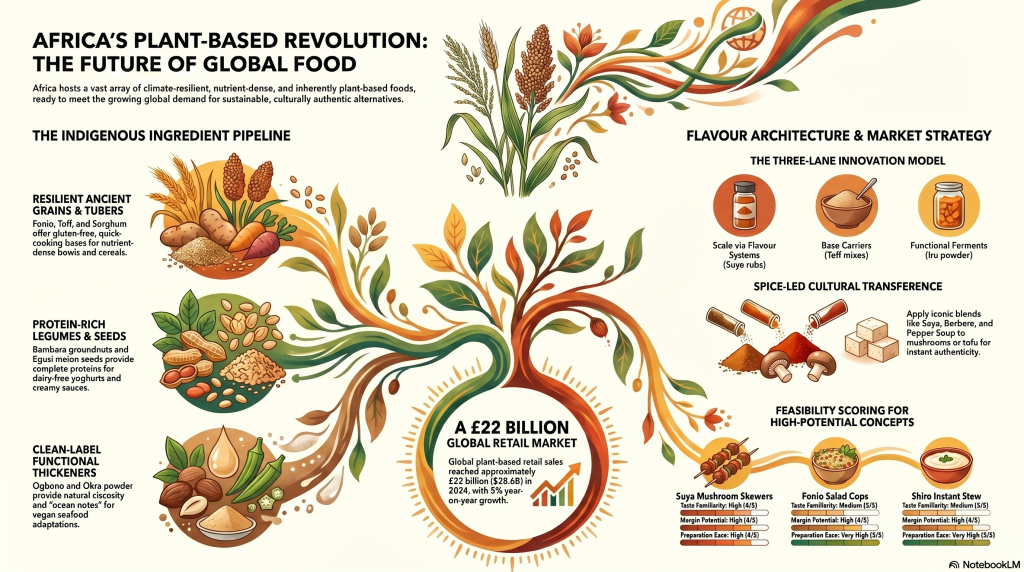
The demand for vegetarian and vegan food is expanding globally, with consumers increasingly seeking diverse, nutrient-dense, and culturally authentic ingredients. While many Western plant-based products rely on soy or wheat, Africa hosts an extraordinary variety of crops, legumes, leafy vegetables, tubers, and grains that have nourished populations for generations. The paradox is clear: Indigenous foods like Bambara groundnut, fonio, or egusi seeds are rich in nutrition and history but remain largely absent from international plant-based branding and innovation conversations.
Case Study: Underrecognized African Plant-Based Foods
Take, for example, Bambara groundnut, fonio, and egusi seeds—cornerstones of African diets:
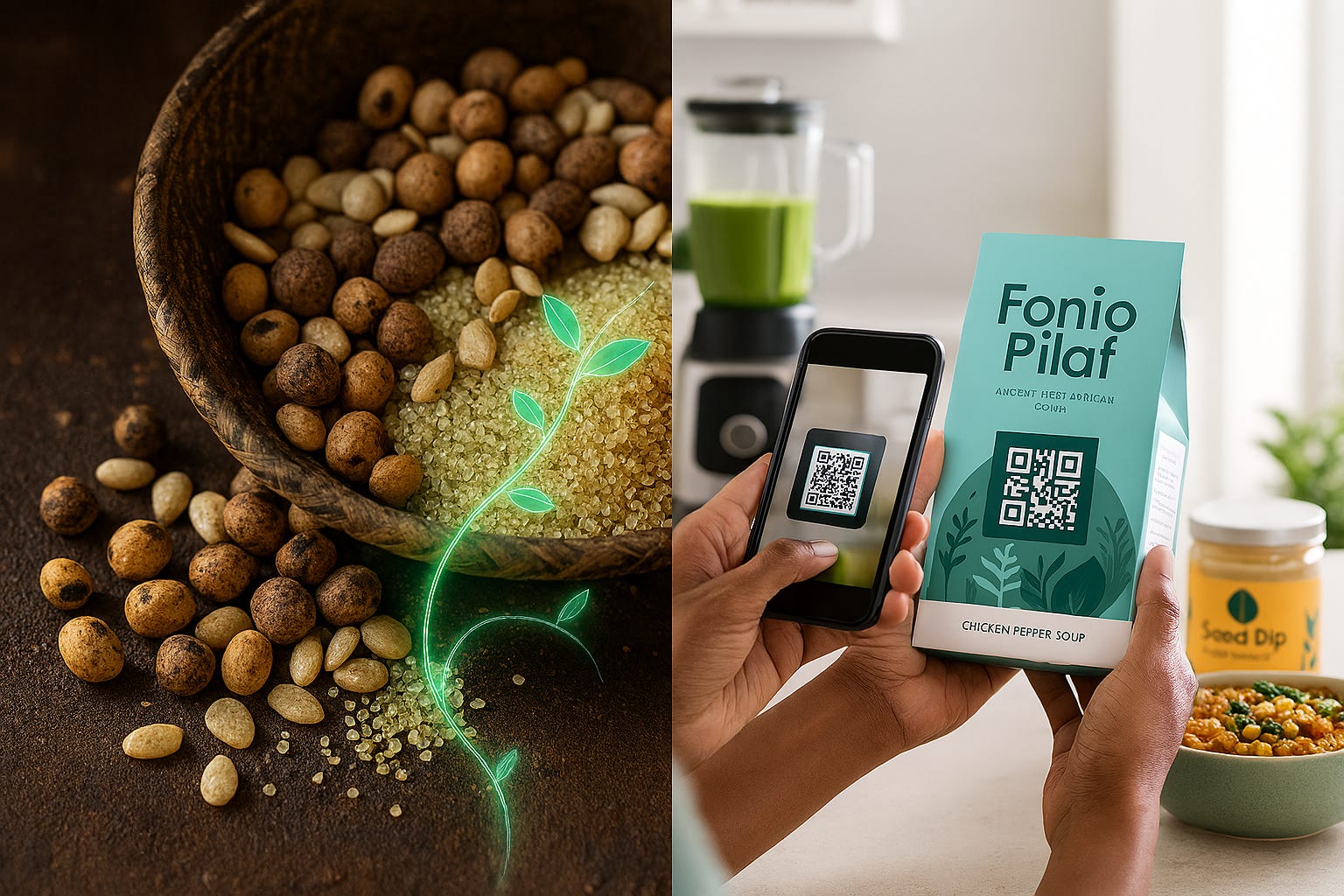
- Bambara Groundnut: Known for its complete protein profile, Bambara groundnut is nutrient-dense and can be transformed into flours, spreads, or even dairy-free yogurt substitutes. It’s naturally vegan, adaptable for fermentation, and climate-resilient.
- Fonio: This ancient, gluten-free grain cooks quickly, offers a nutty flavor, and serves as a nutritious pilaf or couscous alternative. Its high mineral content makes it an excellent candidate for health-focused cereals or convenience foods.
- Egusi (Melon Seed): Used primarily as a soup thickener or seed butter, egusi provides natural emulsification and protein. It is a mainstay in dishes like egusi soup and could be leveraged for vegan sauces and dips.
Many of these foods have been key sources of sustenance, yet are rarely classified or marketed as vegan or vegetarian, despite ticking all the boxes—excluding animal products and delivering essential nutrients.
Opportunity Mapping: Gaps and Possibilities
Despite their plant-based credentials, these foods face gaps in classification, branding, and visibility:
- Classification: Few local or packaged goods explicitly carry a vegan or vegetarian label, limiting their appeal in export and diaspora markets.
- Branding & Market Positioning: Unlike staples such as quinoa, fonio and similar grains seldom appear in the “superfood” aisles of Western supermarkets.
- Formulation Potential: Fermented cassava (attik, gari), cowpea flour, and spice blends like suya rub or berbere are ripe for ready-to-eat meals, protein-rich cereals, or functional food lines.
- Success Stories: Ethiopian injera and berbere have broken into global markets—often as “health foods”—demonstrating that careful branding and adaptation work.
Strategic Analysis: SWOT and PESTLE
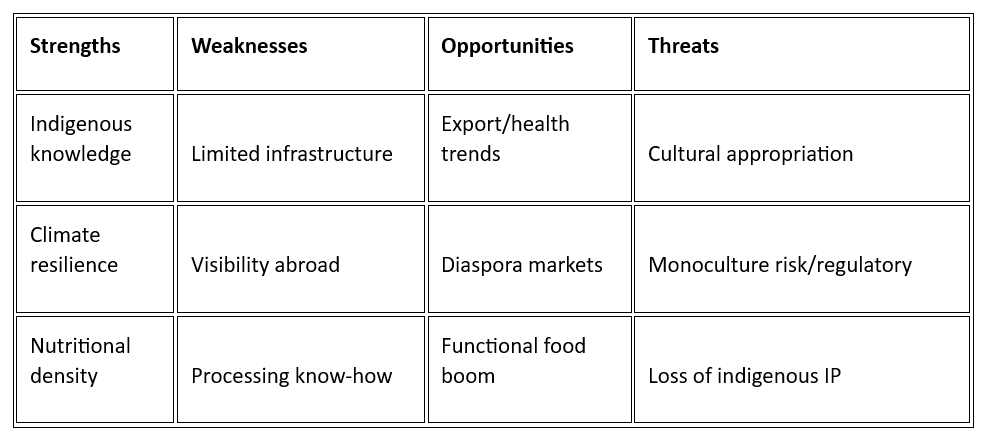
SWOT Analysis
PESTLE Analysis
- Political: Government trade and IP protection regimes crucially affect access and benefit-sharing.
- Economic: Growth hinges on investment in agro-processing, supply chains, and market access.
- Social: Urbanization and diaspora engagement create new market opportunities if dietary shifts are embraced.
- Technological: Mobile-enabled traceability and digital storytelling boost transparency and consumer trust.
- Legal: Harmonizing labeling standards and safeguarding indigenous food IP is increasingly vital.
- Environmental: With climate adaptation in mind, the biodiversity of these crops supports resilient food systems.
Agricultural & Business Considerations
Scaling the impact of African plant-based foods requires investments at multiple levels:
- Supply Chain Development: Streamlining postharvest processing, preservation (e.g., drying, fermenting), and packaging to extend shelf life and meet international standards.
- Cooperative Models: Smallholder farmer collectives and inclusive value chains can ensure fair returns and quality consistency.
- Circular Economy: Utilizing crop residues for compost, animal feed, or biogas generation supports sustainability and soil health.
- Digital Engagement: Using mobile devices to track ingredient origins, educate consumers, and share producer stories strengthens brand value and traceability.
Future Outlook and Novel Ideas
The next chapter of global plant-based innovation could be shaped by Africa through cross-sector creativity:
- Immersive Storytelling: AR/VR can bring the heritage of African ingredients into kitchens and classrooms worldwide, deepening understanding and boosting appeal.
- Culinary Tourism: Tasting trails and gastronomy-focused travel can elevate both local economies and global awareness.
- Community Branding: Digital cooperatives and community-led campaigns will ensure value remains with originators, not just marketers.
- Global Pathways: Properly branded and supported, African crops like Bambara groundnut or fonio could become mainstays in health food aisles as both functional ingredients and icons of climate-smart eating.
By reimagining classification, investing in business infrastructure, and embracing technology-driven storytelling, Africa’s plant-based heritage can move from overlooked to indispensable in the future of food. The seeds for this transformation are already in place—they simply await recognition, innovation, and global collaboration.