Preamble
Is there need for a revolution in climate data mapping? ARIA thinks so, read ARIA aria-forecasting-climate-tipping-points-programme-thesis.pdf or Early warning system for climate tipping points given £81m kickstart | Climate crisis | The Guardian
Thanks for reading! Subscribe for free to receive new posts and support my work.
This is Idea Trigger 5 of a recurring series that injects planet-scale sensing innovation and deep-tech venture triggers designed to spark new climate-tech ventures. Each post acts as a catalyst—not a fully fleshed-out plan, but the seed of something bold, timely, and market-aware.
Concept Summary
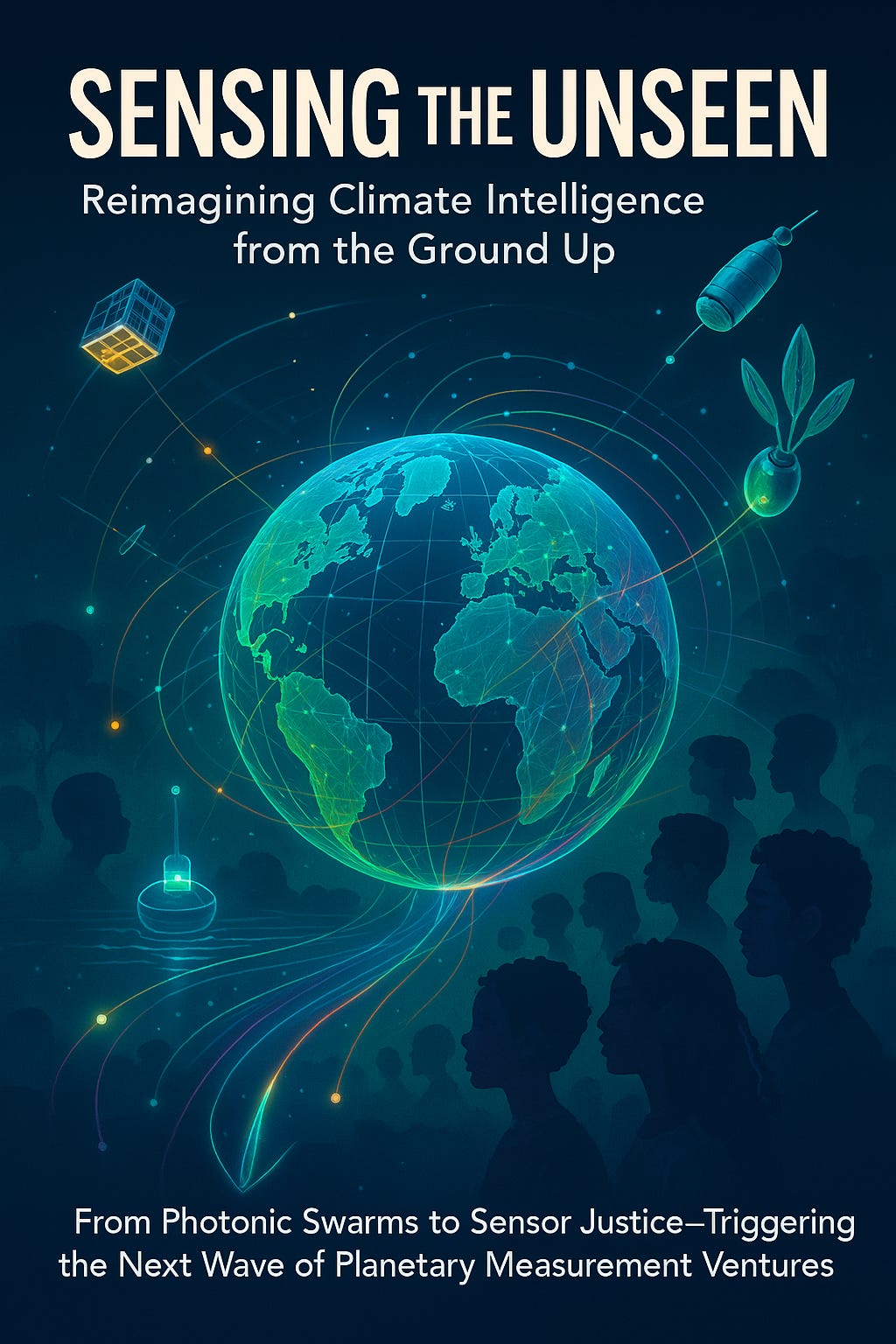
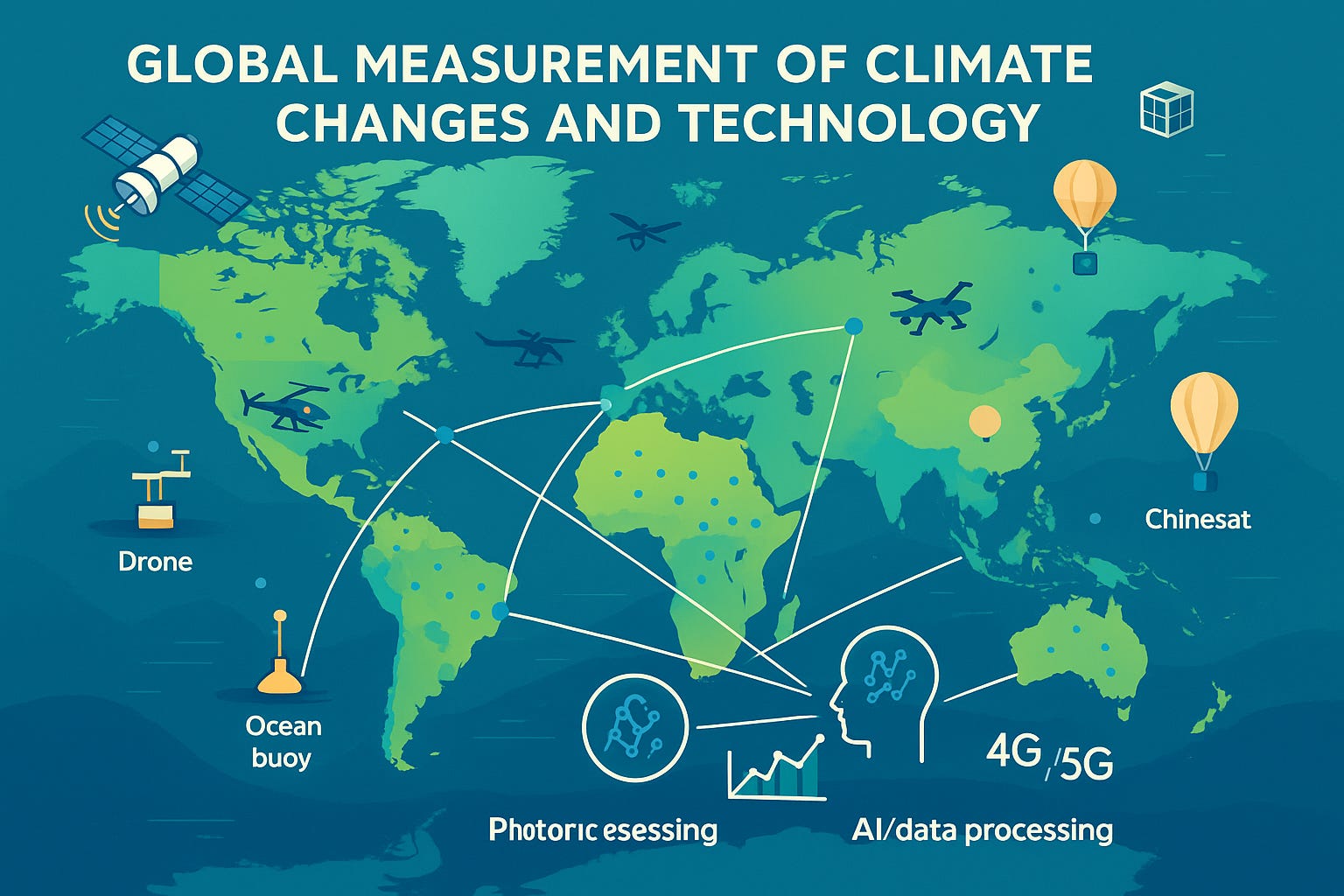
Climate forecasts remain constrained by critical measurement blind spots—across oceans, the upper atmosphere, and the Global South. What if the next climate unicorn isn’t a carbon offset app or a green ETF, but a mesh of portable, photonic micro-satellites, algae-sensors, and AI-optimized drifters that together transform climate visibility? This programme is now live please keep an eye on it as it is interesting. There are 11- 12 projects funded Scoping Our Planet opportunity seeds and you can enquire if the is still funding for more.
What if climate data sovereignty began from the device up?
I responded in 2024 with this feedback during the open call: Scoping the planet . I encourage you to please register with ARIA (Home ) and contribute to open calls and be an Idea Broker \ Trigger. Before publishing this post I did a quick and dirty update Updated problem profile it looks at expanding the concept and practical omissions from the initial brief.
Why Now? “The Triggers: Why This Explodes in 2025”
Forces Colliding to Make This Inevitable
- Technology:
- Meta-optics, adaptive LIDAR, wafer-scale photonics, and neuromorphic photon counters.
- Silicon photonics costs dropped 90% since 2020.
- TRL 4–6 across multiple sensing modalities.
- Regulatory Shifts:
- Paris Agreement’s enhanced transparency framework.
- COP28 pledges require verifiable MRV systems.
- Sovereignty debates drive demand for in-region data.
- Market Conditions:
- $2.3T climate resilience ROI projected from 1% forecast skill improvement.
- Satellite and sensor startups surged 240% in investment (2022–2025).
- LMIC demand for affordable, sovereign tools is unmet.
- Social/Cultural Momentum:
- Climate justice movements spotlight Global South exclusion.
- Citizen science is mainstreaming.
- Youth-led environmental activism pushes for radical transparency.
Trigger Questions → “The Idea Sparks”
- What if… local communities could co-own climate sensor networks—and lease data back to science agencies?
- How might we build a decentralized model for climate instrumentation-as-a-service?
- Could open-source photonic platforms reduce the cost and increase the equity of environmental sensing?
- What if the next Uber wasn’t for rides—but for gig-based, drone-deployed climate probes?
Wildcard
“What if TikTok influencers became the edge-nodes of a climate-sensing metaverse—blending bio-optic wearables, real-time weather storytelling, and user-owned data markets?”
Call to Action
What’s your spin? Reply with your take or a related idea Got a prototype or a thesis-in-the-making? Let’s amplify it. Contact ARIA
Appendices
Appendix 1: Expanded “Why Now?”
- Technology
- Mid-IR detectors (TRL 5)
- Bio-optic algae sensors (TRL 3–4)
- CubeSat-compatible quantum spectrometers
- Optical data fabrics for in-situ preprocessing
- Regulatory
- EU Carbon Border Adjustment Mechanism requires better MRV
- WMO pushing real-time standards
- African Union climate sovereignty guidelines emerging
- Market
- 83% of oceans lack sensors
- Global South = <15% climate monitoring resources
- 37h average data latency = lost decision advantage
- Social
- #DataJustice now includes #SensorJustice
- Distributed hardware as a form of climate equity
Appendix 2: Novel Ideas Zone
- Photon Swarm™:
Swarm of CubeSats with photonic chips mapping the climate in real-time.
Revenue model: API access and subscription tiers for governments and insurers.
Hook: Synthetic aperture sensing from 3U satellite constellations. - LightDetective Drifters:
Self-righting ocean buoys with solar LIDAR & edge AI.
Revenue model: Ocean MRV-as-a-Service
Hook: Co-owned by local coastal cooperatives, data royalty sharing. - OptoCommons:
Open photonic toolkits co-designed with Southern research institutions.
Revenue model: Low-cost fab access + training grants
Hook: First Creative Commons hardware stack for climate sensing.
Wildcard Pitch
“Imagine if solving Earth’s climate uncertainty worked like Minecraft—every player drops a sensor block, every region builds its own reality model, and the world syncs it live.”