Ideas Trigger# 10: The Aquatic Farming Revolution: Strategic Framework & Business Plan
Executive Summary: The Blue-Green Economy Opportunity
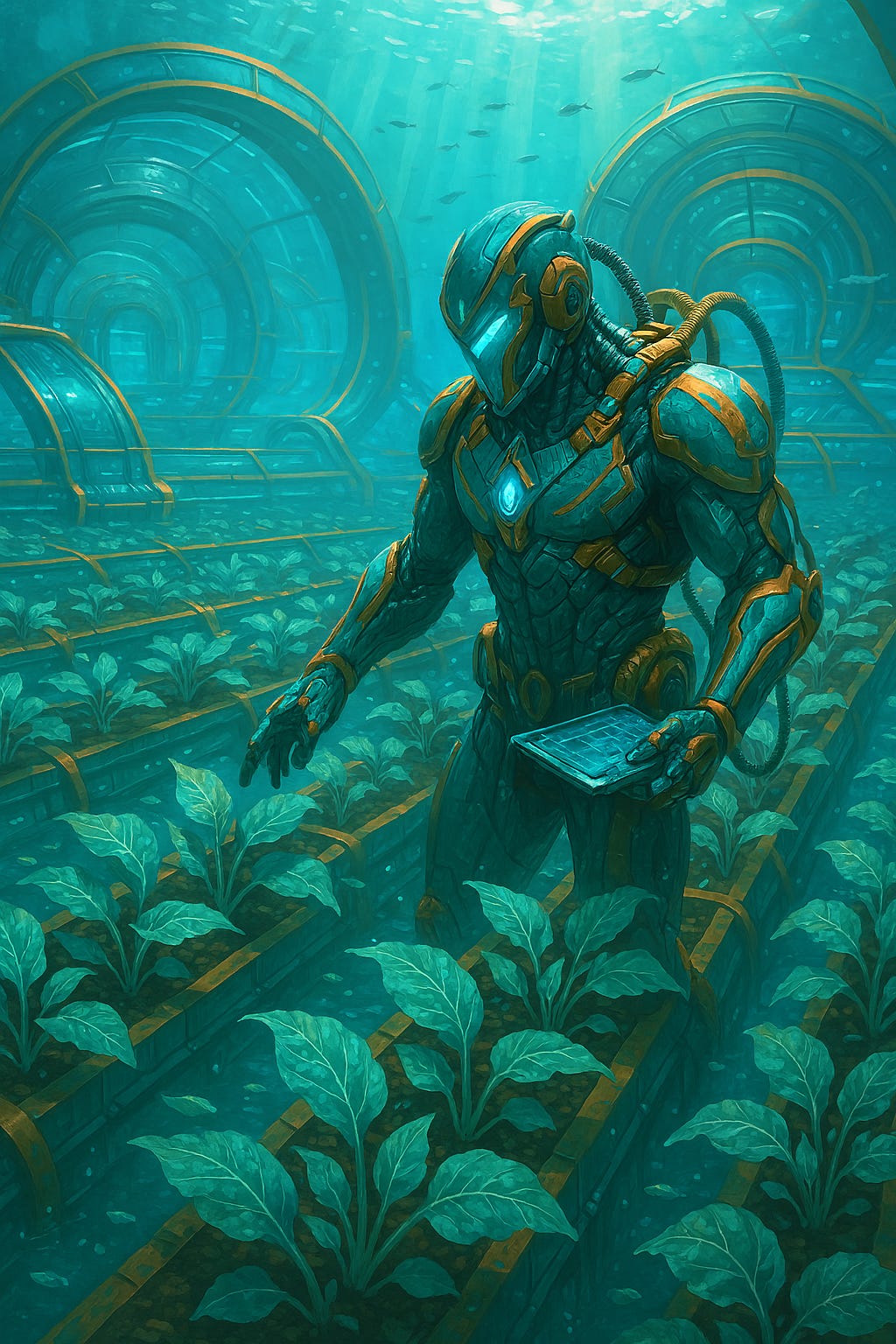
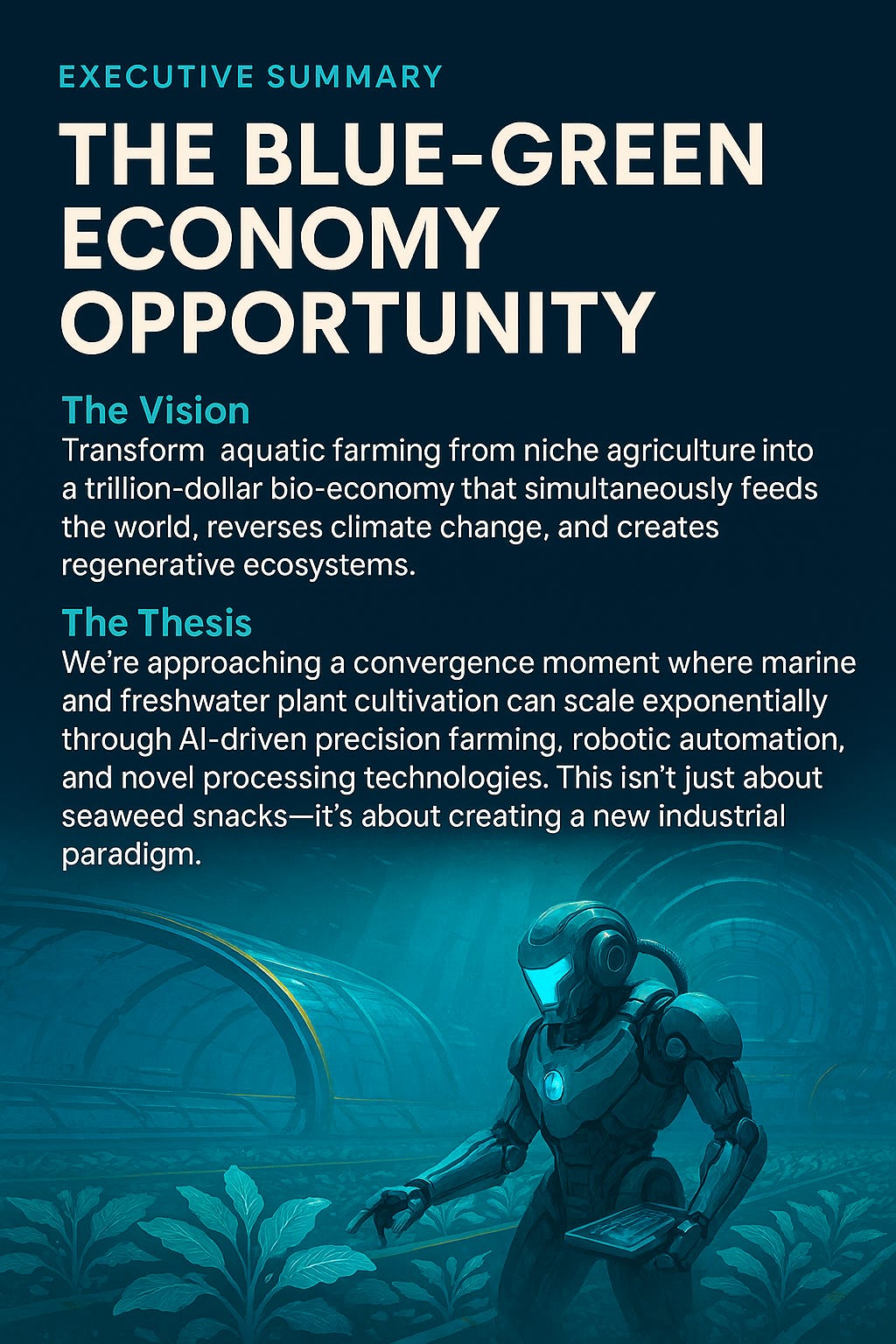
The Vision: Transform aquatic farming from niche agriculture into a trillion-dollar bio-economy that simultaneously feeds the world, reverses climate change, and creates regenerative ecosystems.
The Thesis: We’re approaching a convergence moment where marine and freshwater plant cultivation can scale exponentially through AI-driven precision farming, robotic automation, and novel processing technologies. This isn’t just about seaweed snacks—it’s about creating a new industrial paradigm. Update, 09/10/2025: this post #SUSScoop | So the Ocean is Finally Getting a Treaty 🌊 identifies a critical gap in my analysis please subscibe to SUS it Out.
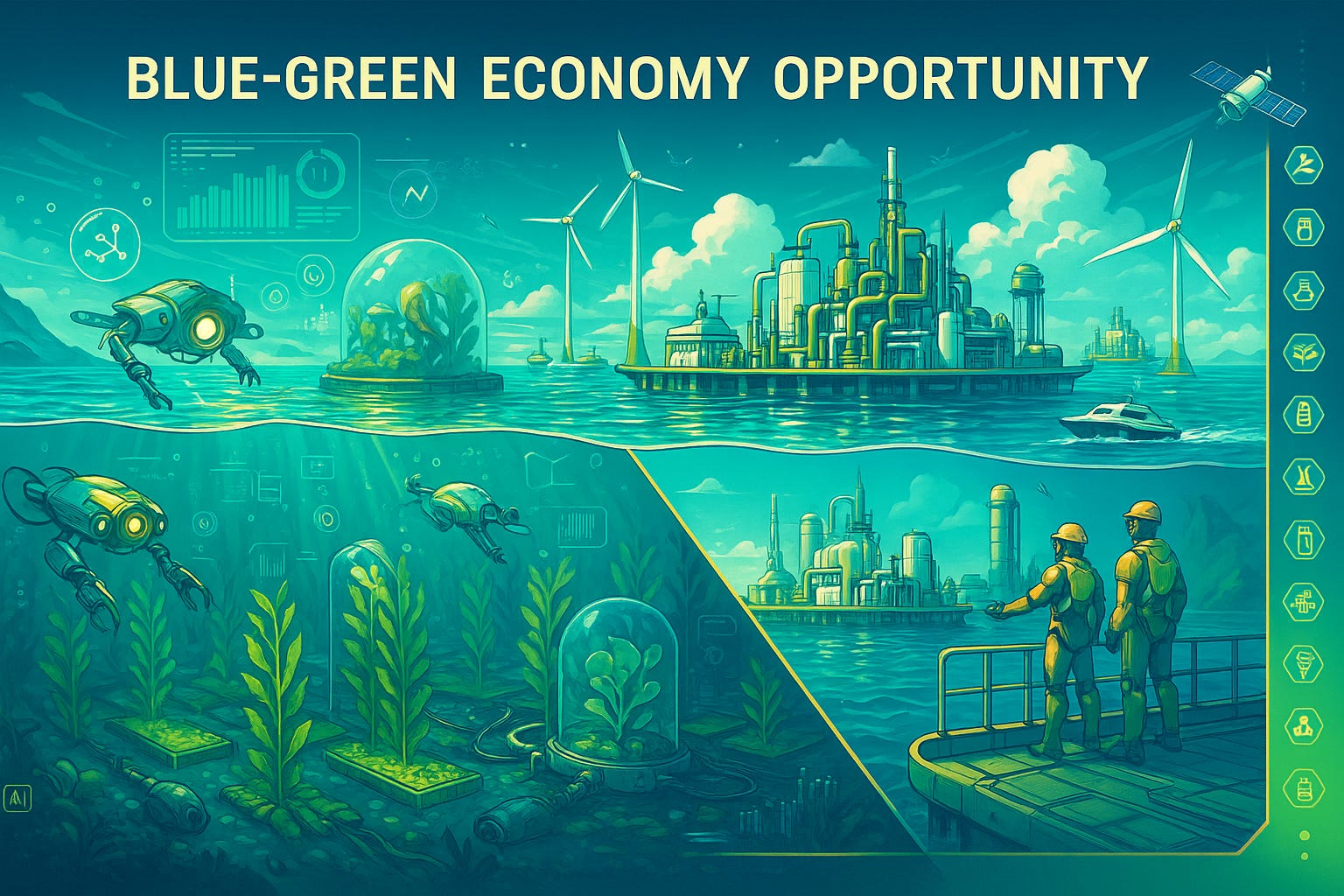
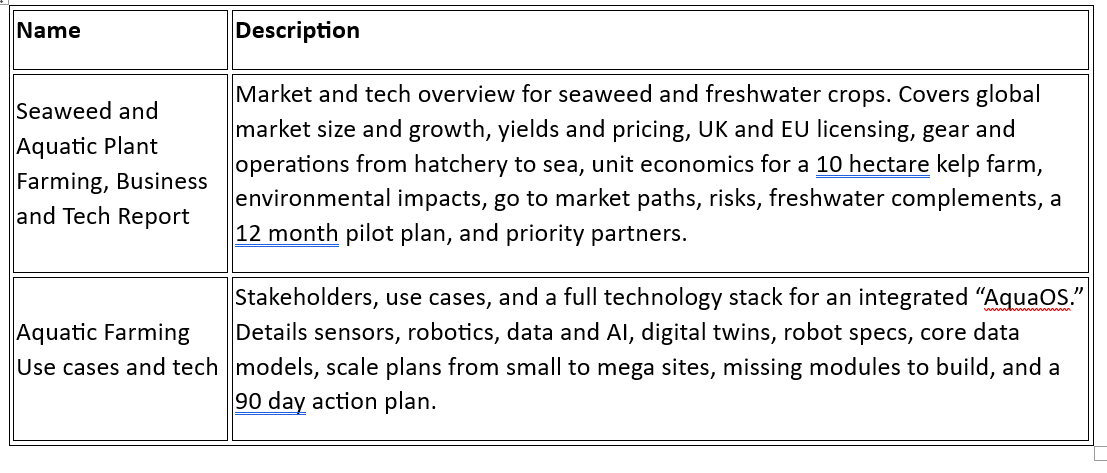
As usual some outlines Artefacts
1. Market Categorization & Size Analysis
Primary Markets (Current)
- Global Seaweed Market: $9-18.4B (2024) → $18-36B (2032)
- Hydroponics Market: $6.2B (2025) → $18B (2034)
- Aquaponics Market: Growing at 12-15% CAGR
Emerging Mega-Markets (Next Decade)
- Bioremediation Services: $100B+ potential (oil spill cleanup, water treatment)
- Carbon Credits & Climate Services: $50B+ potential
- Plastic Alternative Materials: $300B market displacement opportunity
- Agricultural Biostimulants: $4B growing to $8B by 2030
Market Classification Framework
Tier 1: Foundation Markets (Proven)
- Food ingredients & whole foods
- Hydrocolloids (agar, carrageenan, alginate)
- Animal feed supplements
Tier 2: Growth Markets (Scaling)
- Biostimulants & fertilizers
- Packaging materials
- Nutraceuticals & cosmetics
Tier 3: Transformation Markets (Emerging)
- Carbon sequestration services
- Bioremediation contracts
- Synthetic biology platforms
- Precision fermentation feedstock
2. Technology Stack: The “AquaOS” Platform
Core Technology Components
AI & Marine Data Integration
- Predictive yield modeling using satellite data, water temperature, nutrient levels
- Disease detection through computer vision
- Optimal harvest timing algorithms
- Supply chain optimization and demand forecasting
Robotics & Automation
- Automated seeding and harvesting systems
- Underwater ROVs for farm maintenance
- Processing line automation (washing, drying, packaging)
- Quality control systems using spectroscopy
Controlled Environment Systems
- Land-based recirculating aquaculture systems (RAS) for premium production
- Modular “farming pods” for consistent year-round growth
- Precision nutrient delivery systems
- Climate-controlled processing facilities
The “Artificial Farm” Concept
Land-Based Marine Systems: Think Tesla Gigafactory for seaweed
- Controlled environment eliminates weather risk
- 5x higher yields than ocean farming
- Zero contamination, organic certification ready
- Year-round production cycles
- Perfect for high-value products (pharmaceuticals, food ingredients)
3. Species Portfolio & Applications
Marine Species (High Priority)
- Sugar Kelp (Saccharina latissima): Food, biostimulants, packaging
- Dulse: Premium food market, high protein content
- Nori: Established food market, processing expertise available
- Wakame: Asian cuisine expansion opportunities
Freshwater Species (Complementary)
- Duckweed: 42% protein, complete amino acids, fastest growing
- Azolla: Nitrogen-fixing, integrated with rice systems
- Water Spinach: High-value vegetable crop
- Lotus: Cultural significance, multiple product streams
Undiscovered/Underutilized Species
- Arctic kelp species with unique compounds
- Deep-water macroalgae with pharmaceutical potential
- Hybrid cultivars for specific applications
- Extremophile algae for bioremediation
4. Sustainability & Environmental Impact
Positive Impact Mechanisms
- Carbon Sequestration: 31-214g C/m²/year (conservative estimates)
- Nitrogen Removal: Up to 1.2t N/ha/year in nutrient-rich sites
- Habitat Creation: Underwater forests supporting marine biodiversity
- Zero Inputs: No fertilizers, pesticides, or fresh water required
Bioremediation Business Model
Revenue from Ecosystem Services:
- Municipal contracts for nutrient capture near wastewater outfalls
- Industrial cleanup projects (heavy metals, hydrocarbons)
- Fishery restoration partnerships
- Carbon credit generation and trading
Risk Mitigation Strategies
- Native species only to prevent ecosystem disruption
- Seasonal farming aligned with natural cycles
- Integrated monitoring systems for early problem detection
- Insurance products for extreme weather events
5. Scale-Appropriate Strategies
Small Scale (1-10 hectares): Community & Premium
- Target: Local food systems, premium restaurants, organic markets
- Technology: Simple longlines, basic processing
- Investment: $50K-500K
- Example: Scottish coastal communities farming native kelp
Medium Scale (10-100 hectares): Regional Processing
- Target: Food manufacturers, biostimulant companies
- Technology: Mechanized harvesting, processing facilities
- Investment: $500K-5M
- Example: Ocean Rainforest model across multiple sites
Large Scale (100+ hectares): Industrial Platforms
- Target: Global food companies, materials manufacturers
- Technology: Fully automated systems, AI optimization
- Investment: $5M-50M+
- Example: Integrated biorefinery producing multiple product streams
6. Novel Features & Competitive Advantages
The “Operating System for Water” Approach
- Platform business model selling farming-as-a-service
- Data monetization from farming operations
- Continuous improvement through machine learning
- Standardized modules for rapid scaling
Breakthrough Innovations
- Multi-Trophic Integration: Kelp + shellfish + fish in optimized ratios
- Precision Breeding: Using CRISPR for enhanced nutritional profiles
- Circular Processing: Zero-waste biorefineries
- Climate Adaptation: Resilient species for changing ocean conditions
Differentiation Strategy
- Not just farming, but ecosystem engineering
- Software-driven optimization vs. traditional agriculture approach
- Integrated value chain from seed to shelf
- Climate-positive positioning vs. neutral or negative
7. Regulatory Framework & Market Entry
Current Regulatory Landscape
- UK: Marine licensing through MMO/Marine Scotland (improving clarity)
- EU: Strong policy support through algae sector strategy
- US: State-by-state approach, Maine leading the way
Recommended Regulatory Strategy
- Start in friendly jurisdictions (Scotland, Maine, Norway)
- Partner with regulators on pilot programs
- Build compliance-by-design into technology platform
- Advocate for streamlined permitting based on proven results
Policy Opportunities
- Carbon credit mechanism development
- Bioremediation service frameworks
- Food safety standards for new species
- International trade facilitation
8. Go-to-Market Strategy
Phase 1: Proof of Concept (Years 1-2)
- Pilot farms: 3 sites across different conditions
- Product development: Focus on 2-3 high-value applications
- Market validation: Secure 5 key customer partnerships
- Technology development: MVP of monitoring and processing systems
Phase 2: Market Expansion (Years 3-5)
- Scale operations: 10-20 farm sites
- Geographic expansion: Enter 3 new markets
- Product diversification: 10+ product lines
- Platform development: License technology to other operators
Phase 3: Global Platform (Years 6-10)
- International expansion: Operations on 4 continents
- Technology leadership: Industry-standard platform
- Market creation: Drive development of new applications
- IPO readiness: $1B+ valuation potential
9. Investment Thesis & Unit Economics
Revenue Model
- Direct sales: Premium food and ingredient products (40% margin)
- Platform licensing: SaaS model for farming operations (80% margin)
- Environmental services: Carbon credits and bioremediation (60% margin)
- Data services: Market intelligence and optimization (90% margin)
Investment Requirements
- Seed Round: $2-5M for pilot operations and technology development
- Series A: $10-20M for scale-up and market expansion
- Series B: $50-100M for international expansion and platform development
Exit Strategy
- Strategic acquisition by food/agriculture giant (Unilever, Cargill)
- IPO as platform leader in blue economy
- Spin-offs of specialized technology or service divisions
10. Third World & Development Strategy
Community-Scale Farming Model
- Low-tech, high-impact systems for coastal communities
- Training and certification programs for local farmers
- Aggregation and processing hubs for value addition
- Microfinance partnerships for equipment and working capital
Impact Metrics
- Jobs created per hectare of farming
- Protein security improvement in target communities
- Ecosystem restoration measurable outcomes
- Carbon sequestration verified through monitoring
Partnership Strategy
- NGOs and development agencies for program funding
- Government partnerships for regulatory support
- Academic institutions for research and training
- Corporate buyers for fair trade product offtake
11. Next Steps & Implementation Roadmap
Immediate Actions (Next 90 Days)
- Site selection: Identify and assess 3 pilot locations
- Partnership development: Secure hatchery and processing partners
- Regulatory engagement: Begin permit application processes
- Team building: Recruit key technical and business talent
- Fundraising: Complete seed round for pilot operations
Key Success Metrics
- Technical: Achieve 150+ tonnes/hectare yields in pilot farms
- Commercial: Secure $1M+ in customer commitments
- Operational: Demonstrate 25%+ EBITDA margins at small scale
- Environmental: Verify carbon sequestration claims through third-party monitoring
Critical Risks & Mitigation
- Weather/climate risk: Diversified geographic operations
- Regulatory risk: Early engagement and compliance focus
- Market risk: Multiple application development
- Technology risk: Phased development and testing approach
Conclusion: The Trillion-Dollar Opportunity
This isn’t just about farming seaweed—it’s about creating the infrastructure for a new bio-economy that can help solve climate change while generating massive economic returns. The convergence of climate urgency, technological capability, and market demand creates a once-in-a-generation opportunity to build a transformative business.
The key insight is that aquatic farming is not just an agricultural business—it’s a platform for ecosystem services, materials innovation, and climate solutions. By thinking beyond traditional farming to create an “operating system for water,” we can build a company that becomes as essential to the blue economy as Microsoft was to the digital revolution.
The question isn’t whether this market will scale to trillion-dollar size—it’s who will build the platform to capture it.