Preamble
Food and drink are more than sustenance; they are carriers of history, culture, and identity. Across Africa, centuries of knowledge, ritual, and creativity have shaped a diverse heritage of coffees, teas, hot drinks, and desserts. These traditions are deeply local, tied to ceremonies, storytelling, and community, yet they also carry global potential.
In earlier parts of this series, we examined how African superfoods, traditional spirits, and herbal remedies can be systematically positioned within global markets. This fourth part extends that vision into the realm of hot drinks and desserts, arguing that Africa’s beverage and sweet traditions are not just supplementary products but the foundation of a new global category.
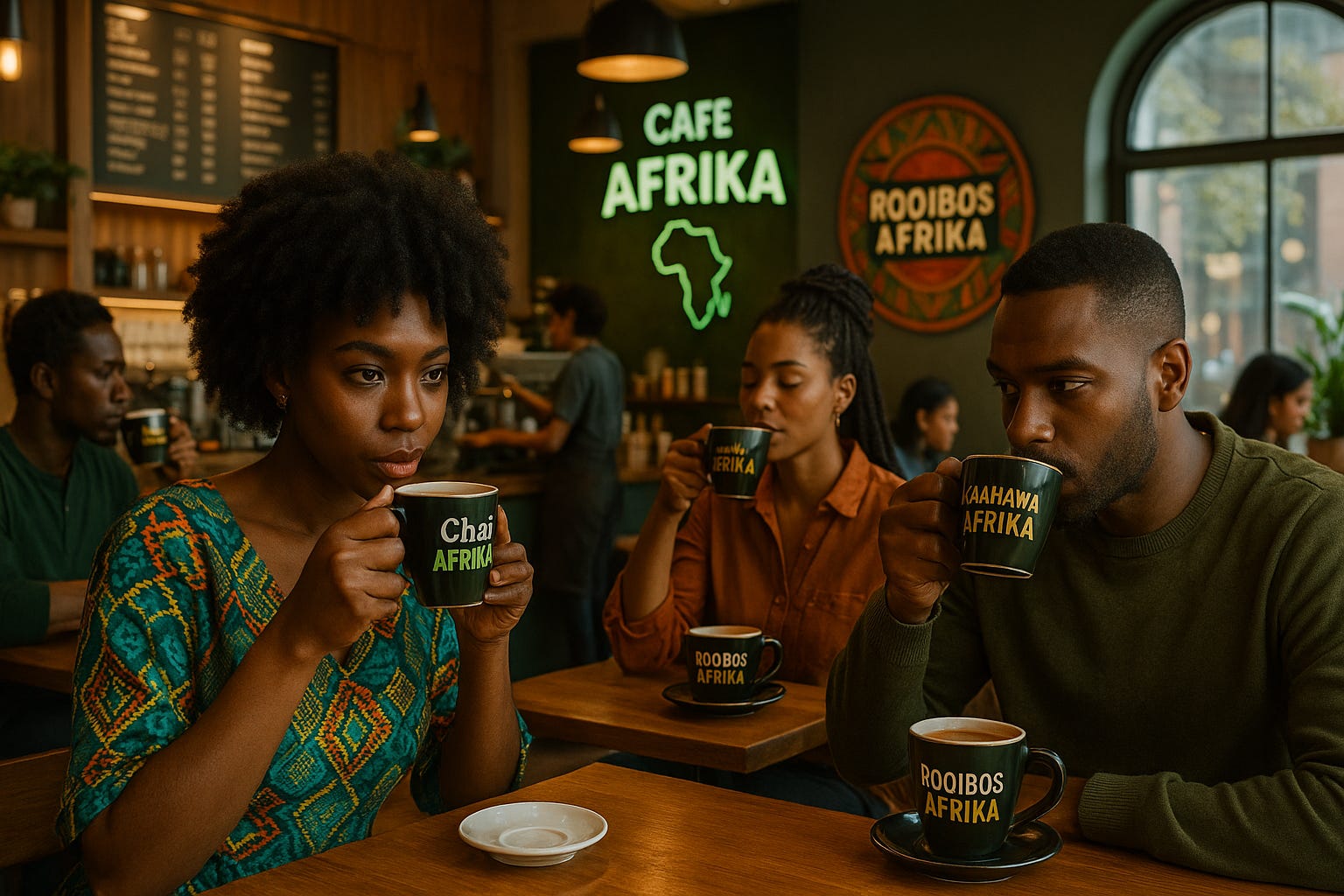
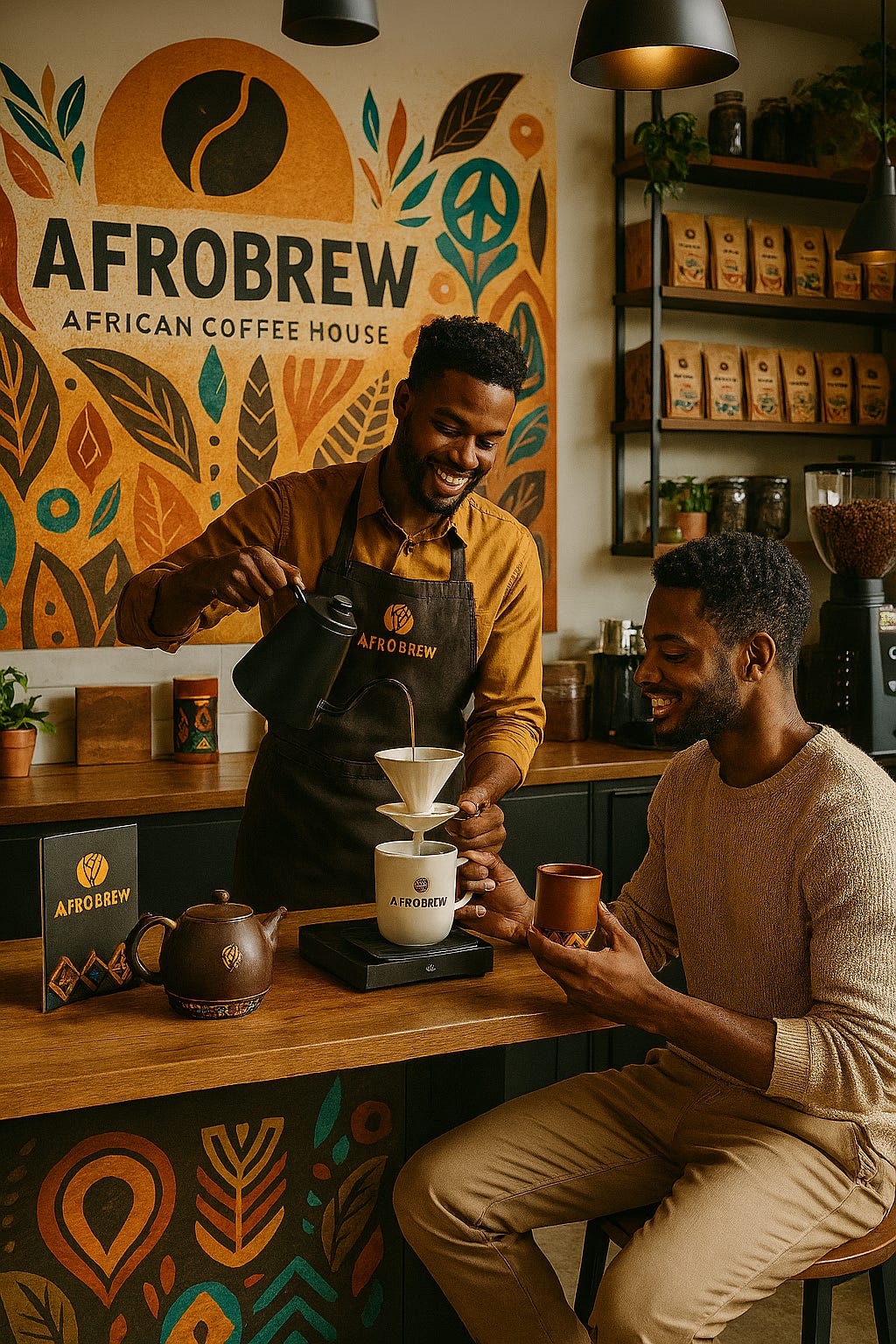
From Ethiopia’s coffee ceremonies and Morocco’s mint tea rituals to South Africa’s rooibos and West Africa’s puff puff, Africa holds a treasury of flavors and practices that are ready to be shared with the world. These products can serve multiple roles: premium single-origin exports, functional wellness beverages, ready-to-drink (RTD) innovations, and culturally authentic café experiences. When paired with African desserts, they can anchor a full food-and-drink culture capable of standing alongside French patisserie, Japanese matcha, or Brazilian yerba maté.
This article builds on the frameworks developed in Parts 1–3 and outlines how African hot drinks and desserts can move from heritage to global recognition. It explores market opportunities, innovation pathways, cultural positioning, and the systems required to translate tradition into scalable, sustainable, and profitable business models.
In Parts 1 , 2 and 3 of this series we considered Building the Future of Food Part 1: A Global Superfood & Herbal Knowledge Platform , Building the Future of Food Part 2: The Strategic Commercialisation of Ogogoro as a candidate Use Case and Building the Future of Food Part 3: Herbal Remedies and Traditional Medicine
Some references Beverages
1. Comprehensive guide to African Coffee Teas Beverages hot Drinks and Desserts.docx
Summary:
This document provides a detailed overview of African coffee, teas, beverages, hot drinks, and desserts. It covers a wide range of coffee varieties from countries like Ethiopia, Kenya, Rwanda, and Tanzania, including taste profiles, local consumption habits, and processing methods. It also explores traditional African teas such as Rooibos and Maghrebi Mint Tea, fermented beverages like Ethiopian T’ej, and specialty preparation methods like the Ethiopian coffee ceremony. The dessert section includes sweets from West, South, East, North, and Central Africa, highlighting ingredients, preparation techniques, and cultural significance.
2. Document Name: Global Market Analysis.docx
Summary:
This document presents a global market analysis of coffee, tea, and similar beverages. It examines market size, growth trends, and key drivers such as health and wellness, convenience, premiumization, sustainability, and plant-based alternatives. The analysis breaks down the competitive landscape by region—North America, Europe, Asia-Pacific, Latin America, and the Middle East & Africa—highlighting major players like Starbucks, Nestlé, and regional brands. It concludes with key success factors for competing in the market, including supply chain management, innovation, and digital integration.
Executive Summary
Africa stands at the threshold of a remarkable opportunity in the global food and beverage industry. Building on the foundations established in Parts 1-3 of this series (global superfood platforms, traditional spirit commercialization, and herbal intelligence systems), Part 4 explores how African hot drinks, teas, and their complementary desserts can emerge as a distinct, globally recognized category worth billions of dollars.
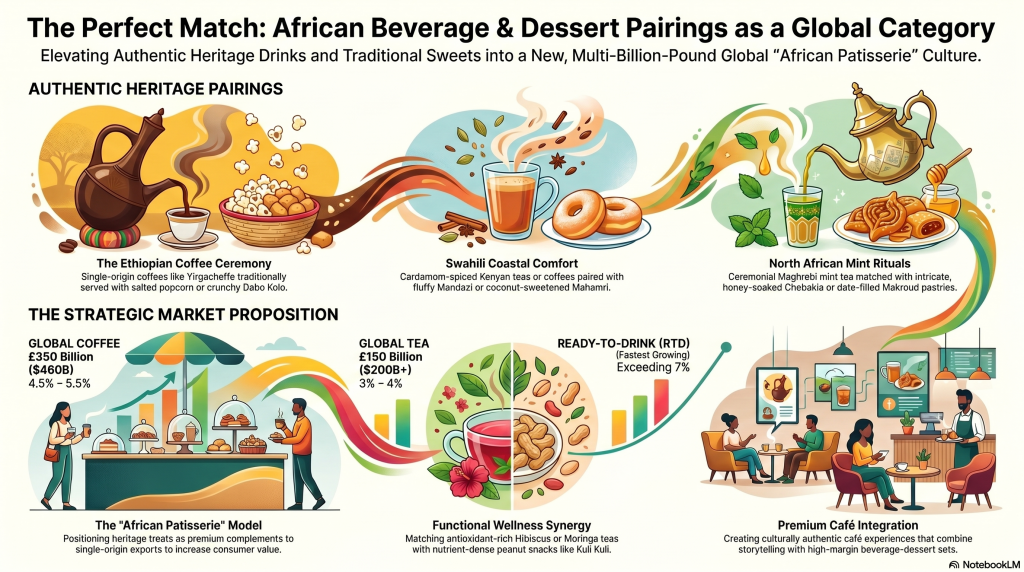
The global coffee market alone is valued at $460 billion with 4.5-5.5% CAGR, while the tea market exceeds $200 billion. The fastest-growing segment—ready-to-drink (RTD) beverages—shows growth rates exceeding 7% annually. Within this massive market lies an unprecedented opportunity for African heritage beverages to claim their rightful place alongside established categories like Japanese matcha or Brazilian yerba maté.
The Strategic Vision
Positioning African Beverages as a Global Category
The vision extends beyond simply exporting African coffee or tea. Instead, it involves creating an entirely new beverage and dessert category that combines:
Heritage Authentication: Coffee ceremonies from Ethiopia, mint tea rituals from Morocco, and desert pairing traditions from across West and East Africa create compelling narratives that modern consumers increasingly seek.
Health and Functionality: African beverages offer unique health benefits through adaptogens like moringa and hibiscus, gut health support through fermented drinks, and natural energy through innovative coffee-malt combinations.
Cultural Pairing Systems: African desserts like puff puff, mandazi, and malva pudding positioned as natural complements to African hot drinks, echoing successful models like French patisserie paired with coffee culture.
Innovation Opportunities: Mashups such as malt-coffee energy drinks and localized adaptations create entirely new product categories that leverage both tradition and modern consumer needs.
Market Opportunity Analysis
Global Market Context
The beverage industry is experiencing several convergent trends that create ideal conditions for African market entry:
Premiumization: Consumers are willing to pay premium prices for authentic, story-driven products with clear provenance and cultural significance.
Sustainability Focus: Ethical sourcing, fair trade certifications, and African-led branding align perfectly with current consumer values and purchasing decisions.
Health and Wellness: The functional beverage segment is exploding, with consumers seeking adaptogens, antioxidants, and natural energy sources.
Convenience Revolution: The RTD segment offers the fastest growth, providing multiple entry points for African beverages in portable, shelf-stable formats.
Cultural Curiosity: Modern consumers actively seek new flavor experiences and authentic cultural products, creating opportunities for heritage-based African beverages.
Competitive Landscape Assessment
Current global beverage competition reveals significant gaps where African products can establish market positions:
North America: Dominated by Starbucks, Nestlé, and Keurig Dr Pepper, but with growing room for specialty and health-focused brands. African energy fusion drinks and specialty tea house concepts could capture market share in the $100+ billion regional market.
Europe: Strong traditional consumption habits create opportunities for authentic, high-quality African imports. The success of specialty coffee chains like Lavazza and Illycaffè demonstrates consumer appetite for heritage-based beverages.
Asia-Pacific: The fastest-growing region shows enormous potential, particularly as coffee culture expands in traditional tea markets like China and India. African beverages could position themselves as premium, health-focused alternatives.
Latin America: Despite being coffee-producing regions, urban markets show growing demand for specialty and RTD products, creating opportunities for African innovation.
Middle East & Africa: Home markets provide testing grounds for global expansion while established diaspora communities in major cities offer natural initial customer bases.
African Heritage Beverage Categories
Premium Coffee Varieties
Africa’s position as the birthplace of coffee provides unparalleled authenticity credentials:
Ethiopian Excellence: Yirgacheffe’s bright, floral characteristics and wine-like acidity; Sidamo’s complex berry and citrus notes; Harar’s distinctive wine and chocolate undertones create a premium portfolio rivaling any global origin.
East African Powerhouses: Kenyan AA with its bold black currant and grapefruit notes; Rwandan Bourbon’s sweet, clean characteristics; Tanzanian Peaberry’s wine-like complexity offer diverse flavor profiles for different market segments.
Emerging Origins: São Tomé’s rare island terroir with cocoa and stone fruit notes; Ugandan Bugisu’s wine-like acidity; Ethiopian Kaffa’s wild, complex characteristics from coffee’s original homeland provide unique selling propositions.
Traditional Tea and Herbal Beverages
South African Herbal Teas: Rooibos’s naturally sweet, caffeine-free profile has already achieved global recognition. Honeybush, with its honey-like sweetness, and Buchu’s traditional medicinal properties offer expansion opportunities.
North African Ceremonial Teas: Maghrebi mint tea’s social ritual significance and Egyptian Shai’s robust character provide cultural authenticity and ceremonial value.
West African Functional Drinks: Bissap (hibiscus) tea’s tart, antioxidant-rich profile; Baobab tea’s vitamin C content; Moringa’s superfood status create natural health positioning.
East African Innovations: Ethiopian honey wine tea’s unique fermentation; Kenyan purple tea’s high anthocyanin content; traditional fermented grain drinks offer both innovation and tradition.
Innovation Fusion Concepts
African Energy Fusion: Coffee combined with traditional malt beverages creates a natural energy drink with cultural grounding and nutritional benefits, positioning against synthetic energy drinks.
RTD Premium Lines: Bottled cold rooibos lattes, hibiscus spritz, moringa matcha alternatives offer convenience without compromising authenticity.
Functional Adaptogen Blends: Combinations of traditional African herbs with modern wellness trends create products for health-conscious consumers.
African Dessert Integration Strategy
Regional Desert Specialties
West African Delights: Puff puff’s golden, fluffy texture pairs naturally with coffee; Chin chin’s crunchy sweetness complements tea; Kuli kuli’s groundnut profile offers healthy snacking.
South African Classics: Malva pudding’s rich, caramelized character creates premium dessert experiences; Koeksisters’ syrup-soaked sweetness; Melktert’s creamy custard provides familiar yet exotic options.
East African Traditions: Mandazi’s cardamom-spiced bread character; Mahamri’s coconut sweetness; Vitumbua’s rice pancake lightness offer diverse texture and flavor experiences.
North African Sophistication: Moroccan Chebakia’s rose and honey complexity; Makroud’s date-filled richness; Egyptian Basbousa’s semolina texture provide upscale positioning opportunities.
Pairing Strategy Development
Cultural Authenticity: Promote traditional pairings like Ethiopian coffee with honey wine cookies; Moroccan mint tea with Chebakia; Rooibos with Koeksisters.
Innovation Opportunities: Create new pairing experiences such as Kenyan AA with South African Malva pudding; Hibiscus tea with West African coconut candy.
Seasonal Programming: Develop seasonal menus highlighting different African regions and their traditional celebration foods and beverages.
Strategic Implementation Framework
Market Entry Strategy
Phase 1: Diaspora Market Development
- Target African diaspora communities in London, New York, Paris, Toronto
- Establish authenticity credentials and cultural connection
- Build initial customer base and feedback loops
Phase 2: Wellness Market Penetration
- Position functional beverages in health food stores and wellness cafés
- Emphasize antioxidant, adaptogen, and superfood characteristics
- Partner with health and wellness influencers and brands
Phase 3: Premium Café Integration
- Supply specialty coffee shops with authentic African single-origins
- Develop signature African beverage and dessert pairings
- Create cultural experience programming
Phase 4: RTD Market Launch
- Introduce shelf-stable African beverage options
- Leverage convenience trends and portable consumption
- Scale production for mass market distribution
Quality Standardization Requirements
Certification Systems: Establish quality protocols similar to wine appellations or Japanese tea grading systems, potentially including geographical indications (GI) for authentic regional products.
Safety and Compliance: Implement international food safety standards while maintaining traditional processing methods where possible.
Traceability Systems: Develop transparent supply chains that tell the story from origin to consumer, emphasizing fair trade and sustainable practices.
Cultural Authentication: Create standards that preserve traditional preparation methods while adapting to modern commercial requirements.
Innovation Laboratory Development
Flavor Development: Create dedicated R&D facilities for experimenting with traditional African ingredients in modern beverage formats.
Fermentation Expertise: Develop controlled fermentation processes that maintain the character of traditional drinks while ensuring consistency and safety.
Packaging Innovation: Design packaging that preserves product quality while telling cultural stories and maintaining authentic visual identity.
Nutritional Optimization: Research and document health benefits of traditional African beverages to support marketing claims and regulatory requirements.
Economic Impact and Business Models
Revenue Potential Analysis
Premium Coffee Segment: Single-origin African coffees can command $15-30+ per pound in specialty markets, with potential for hundreds of millions in annual sales.
Functional Beverage Market: The adaptogen and superfood beverage segment is growing at 8-12% annually, with African ingredients well-positioned for capture.
RTD Market Opportunities: The $50+ billion RTD market offers significant scaling potential for African beverage innovations.
Café and Experience Economy: African-themed cafés and cultural experiences can command premium pricing while building brand awareness.
Value Chain Development
Producer Benefits: Direct trade relationships with African farmers and processors ensure fair compensation while maintaining quality control.
Processing Innovation: Investment in African processing capabilities creates jobs and retains more value within origin countries.
Brand Development: Building authentic African beverage brands creates intellectual property value and long-term competitive advantages.
Cultural Export: Successful African beverage categories create platform for broader African food culture export.
Investment Requirements
Initial Capital: Estimated ($50-100 million) but factually unknown as Africa is vast and localisation, policy, environment, and population analysis is required for comprehensive market development, including supply chain development, brand building, and market entry.
Infrastructure Development: Processing facilities, quality control systems, and logistics networks require significant but manageable investment.
Marketing Investment: Building new beverage categories requires sustained marketing investment over 5-10 years for market establishment.
Research and Development: Ongoing R&D investment essential for product innovation and market adaptation.
Challenges and Risk Mitigation
Supply Chain Challenges
Quality Consistency: Implementing standardized growing, processing, and handling procedures across diverse African regions requires significant coordination and training.
Logistics Complexity: Developing reliable export logistics from multiple African countries to global markets requires infrastructure investment and partnerships.
Seasonal Variations: Managing seasonal production cycles and maintaining year-round supply requires sophisticated inventory management and possibly multiple source regions.
Market Development Challenges
Consumer Education: Building consumer awareness and appreciation for African beverages requires sustained marketing and education efforts.
Cultural Sensitivity: Ensuring authentic representation while making products accessible to global consumers requires careful balance and cultural consultation.
Competitive Response: Established beverage companies may develop competitive products or acquisition strategies requiring defensive planning.
Regulatory and Compliance
International Standards: Meeting diverse international food safety and import requirements across multiple markets requires comprehensive compliance programs.
Intellectual Property: Protecting traditional knowledge while enabling commercialization requires careful legal and ethical frameworks.
Sustainability Certification: Meeting increasingly stringent sustainability and fair-trade requirements require ongoing investment and monitoring.
Technology and Innovation Opportunities
Digital Marketing and E-commerce
Storytelling Platforms: Develop digital content that tells authentic African beverage stories and educates consumers about preparation and cultural significance.
Direct-to-Consumer: Build online sales channels that bypass traditional retail gatekeepers and maintain higher margins.
Subscription Models: Create regular delivery programs that build customer loyalty and predictable revenue streams.
Processing Technology
Modern Traditional Methods: Develop technology that scales traditional processing methods while maintaining authenticity and quality.
Quality Control Systems: Implement testing and monitoring systems that ensure consistent quality across diverse supply sources.
Packaging Innovation: Create packaging that preserves product quality while reducing environmental impact and supporting brand positioning.
Supply Chain Technology
Traceability Systems: Implement blockchain or similar technologies that provide complete supply chain transparency from farm to consumer.
Quality Monitoring: Develop sensor and monitoring systems that maintain quality throughout the supply chain.
Logistics Optimization: Use technology to optimize complex international shipping and distribution networks.
Future Market Evolution
5-Year Outlook
Market Establishment: African beverage categories become recognized options in specialty coffee shops and health food stores across major markets.
Brand Recognition: Leading African beverage brands achieve significant consumer recognition and loyalty.
Supply Chain Maturation: Reliable, high-quality supply chains enable consistent product availability and quality.
Product Innovation: Second-generation products incorporating consumer feedback and market learning achieve commercial success.
10-Year Vision
Category Leadership: African beverages achieve recognition as distinct global categories alongside established options like matcha or chai.
Market Integration: African beverage options become standard in mainstream coffee shops, grocery stores, and restaurants.
Cultural Impact: African beverage culture influences global consumption patterns and creates new social rituals and experiences.
Economic Development: Successful African beverage exports create substantial economic benefits for African producers and communities.
Conclusion: Building the Future
The opportunity to establish African hot drinks, teas, and complementary desserts as a major global food and beverage category represents more than a business opportunity—it’s a chance to share African culture, create economic development, and offer consumers authentic, healthy, and delicious alternatives to existing options.
Success requires combining respect for traditional knowledge and methods with modern business practices, quality standards, and market development strategies. The global beverage market’s size, growth trajectory, and current trends create ideal conditions for African market entry, but execution must be thoughtful, well-funded, and sustained over multiple years.
The framework outlined here provides a roadmap for transforming Africa’s rich beverage and dessert heritage into a thriving global industry that benefits producers, consumers, and communities while preserving and celebrating authentic African food culture.
The next steps involve assembling the necessary expertise, capital, and partnerships to begin systematic market development, starting with diaspora communities and expanding through specialty markets to mainstream adoption. With proper execution, African beverages and desserts can join the ranks of globally recognized food categories within the next decade.
This analysis builds on the framework established in Parts 1-3 of the “Building the Future of Food” series, applying systematic market development approaches to African heritage beverages and desserts. Implementation requires collaboration between African producers, international investors, cultural experts, and market development professionals.
Appendices
Overall: This summary guide provides a map of Africa’s hot drinks, coffees, teas, fermented beverages, and desserts. It shows their diversity, cultural significance, health benefits, and potential for modern commercialization.
African Coffees
- Ethiopia: Birthplace of coffee. Famous varieties include Yirgacheffe (floral, citrus), Sidamo (berry, chocolate), Harar (wine-like, fruity), Limu, Jimma, and Kaffa.
- Other Producers: Kenya (AA, AB, Peaberry), Rwanda (Bourbon), Burundi, Tanzania (Peaberry, AA), Uganda (Bugisu Arabica, Robusta), São Tomé, DRC (Kivu), Cameroon, Madagascar, Ivory Coast (Robusta), Angola, Malawi, Zimbabwe, Zambia.
- Profiles: Range from bright, fruity, wine-like acidity to earthy, chocolatey, and full-bodied.
- Cultural Role: Coffee ceremonies (Ethiopia), local consumption traditions, and export-driven specialty markets.
African Teas & Hot Drinks
- South Africa: Rooibos (caffeine-free, antioxidant-rich), Honeybush, Buchu, Kanna tea.
- North Africa: Maghrebi mint tea (green tea with mint, ceremonial pouring), Egyptian black tea (sweet, robust).
- West Africa: Bissap (hibiscus tea, tart and floral), Baobab tea (tangy, vitamin C-rich), Moringa tea (nutrient-dense).
- East Africa: Ethiopian honey wine tea, Kenyan purple tea (antioxidant-rich), Tanzanian Uji (fermented grain drink).
- Central Africa: Njangsa tea (Cameroon, nutty), Iboga tea (Gabon, ceremonial).
- Fermented & Alcoholic Beverages: Ethiopian T’ej (honey wine), South African Umqombothi (traditional beer), Palm wine (sometimes served warm).
Traditional Preparation Rituals
- Ethiopian Coffee Ceremony: Roasting, grinding, and brewing in a jebena, with three servings.
- Moroccan Tea Ceremony: Ceremonial pouring, multiple brews.
- South African Rooibos: Consumed daily, prepared with milk and sugar.
Health Benefits
- High antioxidants (rooibos, hibiscus, baobab).
- Caffeine-free options (rooibos, honeybush, moringa).
- Traditional medicinal uses (buchu for urinary health, moringa for nutrition, kanna for mood).
African Desserts
West Africa
- Nigeria: Puff puff (fried dough balls), Chin chin (crunchy pastry), Kuli Kuli (peanut bars), Zobo candy (hibiscus), sweet plantain chips.
- Ghana: Bofrot, Kelewele (spiced plantains), Coconut candy, Groundnut brittle.
- Senegal & Mali: Thiakry (sweet couscous pudding), Ngalakh (baobab-based), Degue (millet with sweet milk sauce).
South Africa
- Afrikaans: Malva pudding, Koeksisters, Melktert, Rusks.
- Cape Malay: Spiced koeksisters, Souskluitjies (dumplings).
- Modern: Peppermint crisp tart.
East Africa
- Kenya & Tanzania: Mandazi, Mahamri, Kaimati (syrupy dumplings), Vitumbua (rice pancakes), Kashata (coconut candy).
- Uganda: Sim Sim balls (sesame).
- Ethiopia: Dabo Kolo (barley snack), Honey wine cookies.
North Africa
- Morocco: Chebakia (honey pastries), Makroud, Gazelle horns, Halwa Shebakia.
- Tunisia: Baklawa, Makroud.
- Egypt: Basbousa, Konafa, Muhallabia.
- Algeria: Chouarak (sweet bread).
Central Africa
- Cameroon: Kola cake, chin chin.
- DRC: Mikate (doughnuts).
- CAR: Banana fritters.
Cultural and Nutritional Insights
- Common Ingredients: Coconut, dates, honey, peanuts, grains (millet, sorghum, rice), tropical fruits.
- Preparation Methods: Frying (puff puff, mandazi), syrup soaking (North African pastries), baking (South African tarts), no-cook (candies).
- Cultural Roles: Desserts often tied to religious celebrations, hospitality, and street food culture.
- Colonial Influence: Portuguese (pastéis de nata), French (baobab sweets, pain de singe), Arabic/Middle Eastern (dates, Turkish delight).
- Modern Fusion: Baobab ice cream, Rooibos crème brûlée.