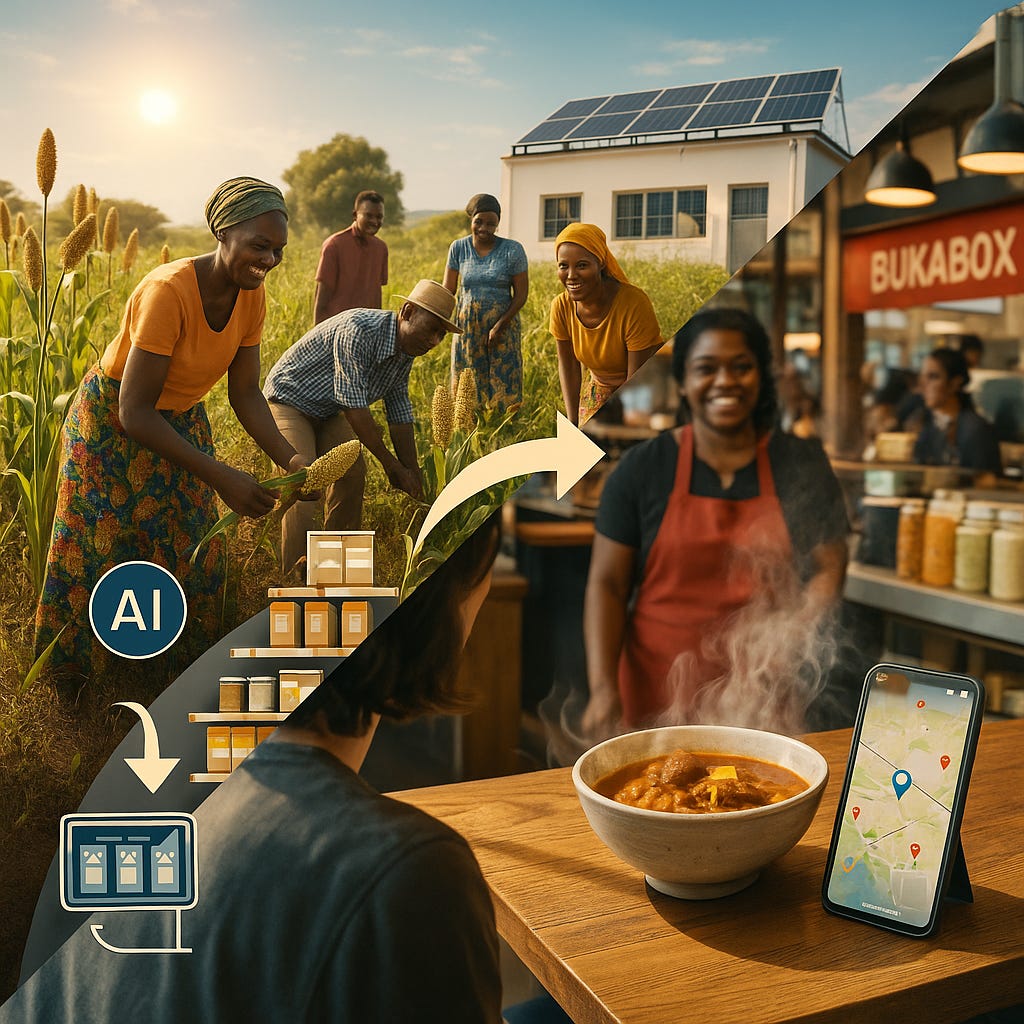
Preamble
Building a living library for African and diaspora food innovation. The work spans sovereignty, climate adaptation, value chains, and commercial playbooks. It helps Entrepreneur, worldwide Food discoverers, operators on the ground in Africa, and founders in diaspora markets, move from idea to tested venture. It also maps how cuisine preserves culture, and how products, hubs, and data systems convert that culture into opportunity. This update consolidates my ongoing work exploring food resilience in the world Africa, diaspora food innovation, and related business opportunities. This translates around the world, my familiarity with Africa is based on local knowledge. Some readers have requested a centralized guide to navigate these interconnected topics this serves as that compass ,knowing that there are more articles in the pipeline.
Thanks for reading! Subscribe for free to receive new posts and support my work.
What This Collection Covers
This resource library spans African food systems, cultural preservation through cuisine, and actionable business strategies for entrepreneurs working at the intersection of tradition and innovation.
For All people interested in food: For Food entrepreniurs, Food Innovators and Discoverers and everyone etc.
For Africa based innovators: Strategic frameworks for local food sovereignty, climate adaptation, and value chain development.
For diaspora communities: Models for cultural preservation, market entry, and sustainable food ventures that honour heritage while building economic opportunity.
See appendices and a related playbook to explore further Global Playbook & Opportunity Matrix artifacts
Published Work — Available Now
Foundation & Strategy
- Building the Future of Food Part 1: A Global Superfood & Herbal Knowledge Platform
Building the Future of Food Part 1: A Global Superfood & Herbal Knowledge Platform
- Building the Future of Food Part 6: Emergency Resilience & Climate Adaptive Agriculture in Africa
Building the Future of Food Part 6: Emergency Resilience & Climate Adaptive Agriculture in Africa
- Beyond Seeds: Reclaiming Agricultural Sovereignty in the Global South
Beyond Seeds: Reclaiming Agricultural Sovereignty in the Global South
Product Development & Market Innovation
Applicable and adaptable to all locations
- Building the Future of Food Part 2: The Strategic Commercialisation of Ogogoro (candidate use case)
- Building the Future of Food Part 3: Herbal Remedies and Traditional Medicine
Building the Future of Food Part 3: Herbal Remedies and Traditional Medicine
- Building the Future of Food Part 4: Hot Drinks, Coffee, Tea, Beverages and Desserts
Building the Future of Food Part 4: Hot Drinks, Coffee, Tea, Beverages and Desserts
- Building the Future of Food Part 5: Energy Drinks
Building the Future of Food Part 5: Energy Drinks
- Building the Future of Food Part 7: Innovation and Adaptation A Vegetarian/Vegan Case Study
Building the Future of Food Part 7: Innovation and adaptation: a Vegetarian or Vegan case study
Value Chain & Economic Development
Applicable and adaptable to all locations
- Turning Crops Into Prosperity: How Processing Millet, Sorghum, and Shea Nuts Lifts Economies, Communities, and the Environment
Diaspora & Cultural Innovation
Applicable and adaptable to all locations
- Building BukaBox: Bringing Nigeria’s Street Soul to London’s Food Scene
Building BukaBox: Bringing Nigeria’s Street Soul to London’s Food Scene
- It’s Hot in Here! Hacking Noodle Broth Using a Nigerian Pepper Soup Recipe
It’s hot in here!!! Hacking noodle broth using a Nigerian pepper soup recipe
Business Playbooks
- Heat Engine: A Playbook for a Global Hot Sauce Business
Heat Engine, A playbook for a global hot sauce business
- Flavorscape: A Food, Fruit and Vegetable App, Website or Database
Flavorscape: A Food, Fruit and Vegetable App, Website or Database
Novel ideas
Bioelectric farming
Ideas Trigger# 11: Bioelectric farming, what are the plants saying ?
Bioelectric Farming opportunities for Learning and Play
Links :
Building the Future of Food
Building the Future of Food Part 1: A Global Superfood & Herbal Knowledge Platform
Building the Future of Food Part 3: Herbal Remedies and Traditional Medicine
Building the Future of Food Part 4: Hot Drinks, Coffee, Tea, Beverages and Desserts
Building the Future of Food Part 5: Energy Drinks
Building the Future of Food Part 6: Emergency Resilience & Climate Adaptive Agriculture in Africa
Building the Future of Food Part 7: Innovation and adaptation: a Vegetarian or Vegan case study
Food Related Articles
Heat Engine, A playbook for a global hot sauce business
Beyond Seeds: Reclaiming Agricultural Sovereignty in the Global South
Building BukaBox: Bringing Nigeria’s Street Soul to London’s Food Scene
It’s hot in here!!! Hacking noodle broth using a Nigerian pepper soup recipe
Flavorscape: A Food, Fruit and Vegetable App, Website or Database
Ideas Trigger# 11: Bioelectric farming, what are the plants saying ?
Bioelectric Farming opportunities for Learning and Play
Pipeline Projects
1. Stockfish and Salt fish Reimagined
An in-depth exploration of traditional African dried fish products and viable substitutes for diaspora markets. This piece examines preservation techniques, flavour profiles, supply chain challenges, and business models for producing authentic alternatives abroad.
2. Diaspora Food Hubs as Cultural Infrastructure
How physical and digital food hubs function as cultural anchors and entrepreneurial launchpads. This framework explores real estate strategy, community programming, incubator models, and sustainable operations.
3. Discovery Through Sampling
A business model analysis of sampling packs, online demonstrations, curated guides, and data driven discovery tools that accelerate consumer adoption of unfamiliar cuisines.
4. Around the World in 365 Days
A rotating menu concept for fixed locations featuring daily regional spotlights, combined with pop up activations. This piece details the operational playbook, sponsorship strategies, brand partnerships, and how systematic cultural rotation creates both discovery and commercial viability.
5. The Anatomy of Food Discovery in Diaspora Communities
Food discovery in diaspora contexts is never simply transactional it is a complex interplay of memory, geography, and economic opportunity.
Location as Cultural Canvas
Diaspora food ecosystems emerge in specific urban patterns markets cluster in particular neighbourhoods, pop ups appear in predictable zones, and hidden kitchens operate through informal networks. These locations are not random; they map migration histories, affordability, zoning realities, and community density. Understanding these spatial patterns reveals both where food culture lives and where opportunity exists.
Information Architecture Meets Narrative
Discovery starts with a question: Where can I taste home? But the answer requires context—the grandmother who perfected the recipe, the trade routes that carried the spices, the substitutions made when certain ingredients became unavailable. Modern platforms now layer these narratives onto searchable databases, using AI to connect dishes with their origin stories, preparation methods, and cultural significance.
Economic Ecosystems in Motion
Diaspora food operates as a living economy with multiple engines:
- Pop ups test market demand with minimal capital risk
- Influencers amplify cultural pride while building audience trust
- AI powered tools help entrepreneurs analyse demand patterns, optimize menus, and identify underserved segments
- Food hubs evolve into full spectrum incubators, connecting heritage ingredients with contemporary markets
Technology as Discovery Layer
The digital infrastructure enabling this discovery includes:
- Mapping platforms that surface hidden gems and track emerging concentrations
- AI food directories that personalize recommendations based on heritage, dietary needs, and location
- Influencer networks that translate authenticity and spotlight innovation
- Agile pop-up platforms that enable rapid testing, storytelling, and community feedback loops
Food discovery across diaspora communities is ultimately about reclaiming identity through flavour, sharing legacy through business, and building economic futures rooted in cultural truth.
Who This Is For
Whether you are food writer, entrepreneur, on a food discovery journey, developing local food infrastructure in Africa, building diaspora food ventures globally, or exploring the intersection of cultural preservation and commercial viability these resources offer frameworks, case studies, and strategic tools for sustainable impact.
This work addresses food sovereignty, climate adaptation, cultural memory, and entrepreneurial opportunity as interconnected challenges requiring integrated solutions.
Appendices
Future possibilities
See related playbook to explore further Global Playbook & Opportunity Matrix artifacts
These are possible continuations or further development of published articles, playbooks and opportunities
- Climate adaptive staple portfolios.
Pair drought tolerant crops with localized processing to raise caloric security and margins. Focus on millet, sorghum, and shea processing clusters. Build micro mills and oil presses near farm gates. Track yield, energy use, and price stability per cluster. - Herbal intelligence layer.
Create a structured database for superfoods and traditional remedies that links ethnobotany, safety notes, and productization paths. Offer APIs to consumer apps and to formulators for teas, tonics, and functional snacks. Start with 50 priority plants, then expand. - Diaspora food hubs as cultural infrastructure.
Design mixed use hubs with kitchens, micro fulfillment, pop up bays, and learning spaces. Use shared services, rotating residencies, and a small grant plus revenue share model. Measure footfall, time to first sale, and graduation into permanent sites. - Discovery through sampling at scale.
Bundle tasting kits, short video demos, QR linked recipes, and data capture to lower trial friction for unfamiliar cuisines. Run monthly cohorts, then use the data to refine assortments and price points. - Rotating menu systems.
Pilot a 365 day rotation that spotlights a region per day. Pair with sponsorships, media tie ins, and supply chain partners. Treat it like a content calendar that drives predictable prep and predictable demand. - AI powered food directories.
Map hidden kitchens, markets, and pop ups. Personalize recommendations by heritage, dietary needs, and location. Expose insights to founders to inform site selection and product design. - Ethical ogogoro commercialization.
Create standards for safety, provenance, and terroir. Develop RTD formats, bar programs, and export compliant SKUs. Build a founder network that shares compliance templates and distributor intros. - Heat economy product ladder.
Systematize a hot sauce portfolio with tiers by Scoville range, flavor archetype, and cuisine pairing. Add co branded limited runs with diaspora chefs. Use a seasonal release calendar to drive repeat sales.
Suggested actions you can start now
• Stand up a versioned Notion or Airtable for the herbal and superfood corpus. Use fields for origin, preparation, safety, and commercialization notes. Ship a public read view in two weeks with 50 entries.
• Pick one city, then map diaspora food nodes within three months. Include markets, hubs, pop ups, and ghost kitchens. Publish a founders guide with rent ranges and licensing steps.
• Run a three month sampling sprint. Sell tasting kits online, bundle QR recipes, and collect feedback. Use the data to choose five products for retail.
• Prototype one rotating menu venue. Start with a 30 day pilot. Track prep time, waste, daily covers, and social mentions. Iterate weekly.
• Draft a light standard for ogogoro compliance. Include HACCP, labeling, export rules, and a quality glossary. Share it with early makers for review.
Novel ideas to test
• Flavor passports. Sell a subscription that ships regional kits with spices, sauces, and short history cards. Tie it to virtual tastings and chef AMAs.
• Market in a box. Provide pop up starter kits for new founders. Include permits checklist, menu engineering sheets, Square templates, and a week of commissary access.
• Zero waste desserts. Upcycle brewing and pressing byproducts into snacks and sweets. Publish recipes and margins to drive adoption.
• Diaspora heat map. Use community inputs to identify underserved neighborhoods. Offer targeted micro grants and mobile pop up units to seed activity.