Preamble
We stand at an inflection point in consumer culture. The democratization of manufacturing and global supply chains has created a paradox: a Chanel handbag and a meticulously crafted no-name alternative can now share identical materials, workmanship, and durability. The industrial revolution promised abundance; we have achieved it. But in doing so, we have undermined the very foundation upon which luxury was built exclusivity through scarcity of quality.
When a precision watch mechanism can be sourced by any manufacturer, when Italian leather is available to any atelier, when the “thing itself” becomes functionally identical across price points, a fundamental question emerges: What are we actually paying for?
The answer reveals a seismic shift. The old gods of Brand Heritage and Century-Old Legacy are being challenged by a new pantheon: Story, Personalization, and Designed Scarcity. We are witnessing the birth of The New New Design a paradigm where the product is not the object itself, but the narrative it embodies, the uniqueness it represents, and the cultural conversation it joins.
This is not about creating counterfeits or “dupes.” It is about recognizing that when quality becomes ubiquitous, value must be reimagined. For entrepreneurs, designers, and conscious consumers, the “branding gap” that chasm of perceived value between a luxury icon and its quality-equivalent alternative is not a barrier. It is the most exciting frontier in modern commerce.
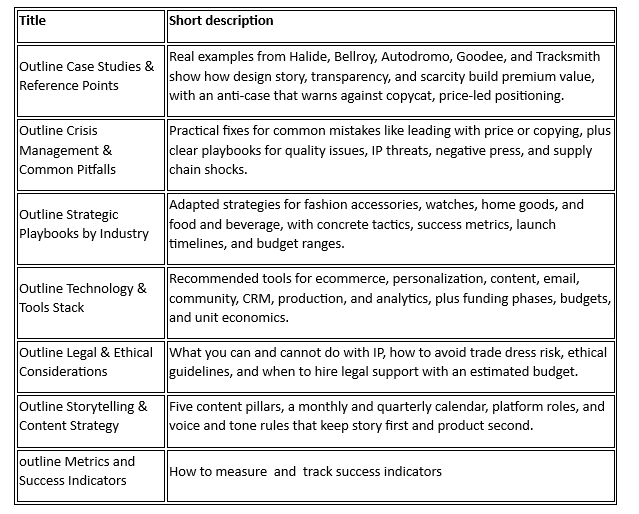
As usual some supporting documentation New New design Artifacts
Part I: The Consumer’s Calculus—Deconstructing What We Actually Buy
The Anatomy of Luxury
When you purchase a luxury item, you are engaging in a complex transaction that extends far beyond the physical object. You are buying:
- Historical Capital: The accumulated story of a brand decades or centuries of craftsmanship, innovation, and cultural presence
- Cultural Perception: The social signalling and identity affirmation that comes with ownership
- Residual Value: The expectation that your purchase will retain or appreciate in value
- The Collecting Experience: The pleasure of curation and the thrill of possession
- Service Infrastructure: Warranties, repairs, and the promise of stewardship
- Manufactured Uniqueness: Whether through limited production or exclusive access
This bundle has justified extraordinary price premiums. A watch that costs $500 to manufacture might retail for $15,000. The $14,500 difference? That is the price of story.
The Great Unbundling
But what happens when these elements can be disaggregated and reconstituted? When a new entrant can deliver identical material quality, create their own compelling narrative, engineer their own scarcity, and build their own cultural community all at a fraction of the legacy brand’s overhead?
This is the branding gap. And closing it requires understanding a fundamental truth: In an age of ubiquitous quality, the product becomes the story, and the story becomes the product.
Part II: The Three Pillars of New New Design
Pillar One: Hyper-Personalization as Premium
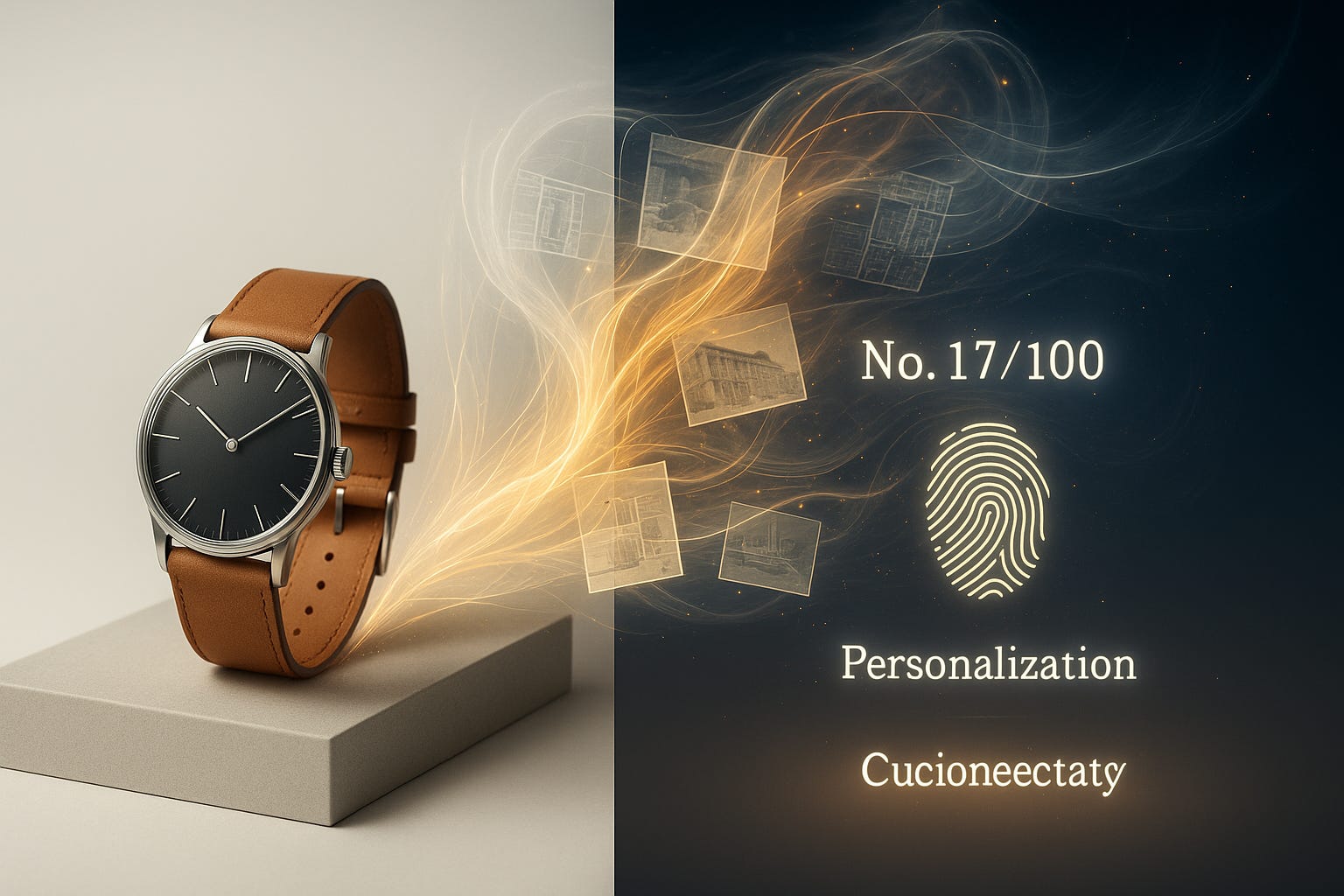
Personalization transforms commodities into artifacts. When everyone has access to the same base product, the ability to declare “this one is uniquely mine” becomes the ultimate luxury.
Consider the watch industry. A high-quality automatic movement is available to virtually any manufacturer. The case, the hands, the crystal all can be sourced at exceptional quality levels. What transforms this commodity into a personal treasure?
Strategic Personalization Options:
- Custom engravings that tell the owner’s story
- Modular components allowing configuration
- Limited edition materials or finishes
- Bespoke elements created through customer collaboration
- Numbered series that acknowledge early adopters
This is not superficial customization. It is the recognition that in a world of infinite replication, individuality is the scarcest resource. You are not paying for different materials; you are paying for the transformation of a mass-produced object into a personal talisman.
The Economic Model: Personalization allows tiered pricing within the same product line. Base model at cost-plus-reasonable-margin. Personalized versions at premium margins. The customer self-selects their willingness to pay for uniqueness.
Pillar Two: Narrative & Design as the Primary Product
What if the design itself, and the story behind it, becomes what you are primarily selling?
Imagine a fountain pen that does not carry a prestigious heritage brand name. Instead, its design draws inspiration from the marriage of leather and aluminium in classic Leica cameras that distinctive aesthetic where traditional materials met modernist industrial design. The pen’s value is not anchored in a century of brand history. It is found in the intelligence, coherence, and beauty of its design story right now.
Building Authentic Narrative:
- Design Heritage Referencing: Draw on legitimate design movements and historical aesthetics without copying. Reference the principles, not the products. A backpack inspired by 1970s modular hiking gear philosophy is not copying any specific backpack it is channelling an ethos.
- Transparency as Story: Document your design process, material selection, and manufacturing partnerships. The story of “how this was made” becomes part of the product’s value proposition.
- Cultural Positioning: Align your product with contemporary movements sustainability, right-to-repair, democratic luxury. These are not marketing angles; they are genuine value systems that resonate with modern consumers.
- Design Excellence as Legacy: The Eames Lounge Chair did not need a century of brand history when it launched. Its design was so excellent, so resolved, that it created its own legacy instantly. Aim for that level of coherence.
The Critical Distinction: You are not creating “affordable alternatives.” You are creating legitimate, standalone products that happen to be accessible. The story must be authentic and defensible, not derivative.
Pillar Three: Engineered Scarcity and Future Legacy
Mass-produced items become valuable through the alchemy of time, scarcity, and accumulated cultural story. Certain Nike sneakers, vintage electronics, and limited vinyl pressings prove this daily. The New New Design does not wait for this to happen accidentally it designs for it intentionally.
Creating Designed Scarcity:
- Limited Edition Runs: Not artificial constraint, but thoughtful production planning that acknowledges demand while maintaining exclusivity
- Seasonal or Collaborative Drops: Partnership collections that create moments of availability
- Version Evolution: When you update a product, the previous version becomes collectible
- Documentation: Numbered certificates, production records, and provenance tracking that enable secondary market validation
- Community First Access: Rewarding early adopters and community members with exclusive access to new releases
The Nike Sneakerhead Model: Nike has mastered this with mass-produced shoes that become valuable collectibles. The shoes are still manufactured at scale, but strategic releases, collaborations (think Travis Scott or Off-White), and retired colourways create a thriving collector culture. A $170 retail shoe can command $2,000 on the secondary market not because of material value, but because of story, timing, and designed scarcity.
This approach asks: “How can we design and release products today that will be the collectibles of tomorrow?” It is about creating tangible pieces of cultural history in real-time.
Part III: The Ethical Imperative Inspiration, Not Imitation
The strategy only succeeds with integrity. The world is awash in counterfeits and knockoffs, and that path leads nowhere sustainable.
Core Principles:
- Respect Intellectual Property: Never copy protected designs, trademarks, or patented features. This is not negotiable.
- Design from Inspiration, Not Reproduction: Reference design languages, historical movements, and aesthetic principles do not replicate specific products.
- Add, Don’t Subtract: Your product should contribute something new to the design conversation, not merely extract value from others’ creativity.
- Transparent Differentiation: Be clear about what you are and are not. You are not a “cheaper Rolex.” You are a distinctly designed timepiece with its own story that happens to use comparable materials and movements.
The goal is not to make a “dupe.” It is to create a legitimate, standalone object that earns its place in the world through design excellence and narrative authenticity.
Part IV: Framework for Implementation
Phase 1: Audit & Define (Foundation)
Objective: Identify your target category and articulate your unique design story
Key Actions:
- Product Deconstruction Analysis
- Select a high-end product category (watches, bags, pens, footwear, etc.)
- Forensically analyse the incumbent luxury products:
- Material specifications and sourcing
- Manufacturing processes and tolerances
- Functional performance metrics
- Aesthetic design language
- Price breakdown (estimated materials + labour + brand premium)
- Narrative Sourcing
- Identify authentic design references or movements that inspire you
- Examples: “Bauhaus minimalism meets Japanese wabi-sabi,” “1960s aerospace instrumentation aesthetic,” “Scandinavian outdoor culture of the 1970s”
- Research historical context deeply enough to speak authentically
- Define what makes your perspective unique
- Value Proposition Crystallization
- Complete this statement: “We offer [product category] with [luxury-equivalent quality] at [accessible price point] because [your design story] matters more than [legacy brand overhead]”
- Identify your target audience: Who values narrative and design over logo and legacy?
Deliverables:
- Competitive analysis document
- Design story brief (2-3 pages)
- Target audience persona
- Initial value proposition statement
Phase 2: Design & Differentiate (Creation)
Objective: Create the product and its differentiating features
Key Actions:
- Design for Distinctiveness
- Create original designs that reference your chosen aesthetic without copying
- Ensure every design decision can be explained and defended
- Test designs with your target audience for resonance
- Iterate until you achieve a coherent, recognizable design language
- Plan Personalization Architecture
- Map which elements can be customized without compromising production efficiency:
- Materials (leathers, metals, colours)
- Engravings or monogramming
- Modular components
- Configuration options
- Develop pricing tiers: Base → Customized → Fully Bespoke
- Create a personalization interface (online configurator or consultation process)
- Map which elements can be customized without compromising production efficiency:
- Engineer Scarcity from Launch
- Determine initial production run size
- Plan limited edition releases (seasonal colours, collaborative designs)
- Develop numbering/certification system
- Create “first edition” advantages for early adopters
- Manufacturing Partnership Selection
- Identify manufacturers who can deliver luxury-level quality
- Establish quality control protocols
- Ensure transparency in the supply chain (this becomes part of your story)
Deliverables:
- Finalized product designs
- Personalization menu and pricing structure
- Limited edition roadmap (12-18 months)
- Manufacturing partner agreements
Phase 3: Communicate & Cultivate (Market Entry)
Objective: Position your design story at the forefront of marketing and build community
Key Actions:
- Storytelling-First Marketing
- Create content that explains your design references and philosophy
- Develop a content calendar focused on “design education”
- Blog posts on design history and principles
- Behind-the-scenes manufacturing videos
- Material sourcing documentaries
- Designer interview series
- Make the design story the hero, not just the price point
- Radical Transparency
- Publish detailed breakdowns of your costs and pricing
- Share manufacturing processes openly
- Leverage “ubiquitous quality” as a strength: “This is the same leather supplier used by [luxury brands]”
- Create comparison content that is informative, not disparaging
- Community Architecture
- Build platforms for community gathering (Discord, Instagram, exclusive forums)
- Foster discussion around design philosophy, not just products
- Create opportunities for customer input on future designs
- Develop a brand ambassador program for passionate early adopters
- Press and Influence Strategy
- Target design-focused media, not just consumer product reviews
- Position for features in design publications (Wallpaper*, Dezeen, Core77)
- Collaborate with design influencers who align with your ethos
- Earn press that highlights your design story, not your “affordable alternative” positioning
Deliverables:
- Content marketing calendar (6 months)
- Transparency documentation (cost breakdowns, sourcing maps)
- Community platform launch
- Media relations strategy and press kit
Phase 4: Iterate & Expand (Growth)
Objective: Deepen your product line and cultural footprint
Key Actions:
- Narrative Evolution
- Introduce new products that expand your core design story
- Example: If you started with watches inspired by mid-century instrumentation, expand to desk accessories, eyewear, or bags in the same aesthetic language
- Maintain coherence every new product should feel like it belongs to the same design universe
- Strategic Collaborations
- Partner with artists, designers, or brands that share your aesthetic values
- Create limited collaborative editions that introduce your brand to new audiences
- Ensure collaborations advance your story, not dilute it
- Secondary Market Cultivation
- Monitor resale markets for your products
- A healthy secondary market validates your scarcity strategy
- Consider creating official resale or trade-in programs
- Celebrate when your limited editions appreciate it proves the model works
- Product Version Management
- When you improve a product, make the previous version officially “retired”
- Create clear version documentation
- This turns your product evolution into collectible history
Deliverables:
- Product line expansion plan
- Collaboration pipeline (3-5 partnerships)
- Secondary market monitoring reports
- Product versioning strategy
Part V: Domain-Specific Applications
Fashion & Accessories
Opportunity: Bags, shoes, watches, jewellery Key Strategy: Material transparency + Design heritage referencing Example: “Our bag uses the same Italian leather as luxury houses, but our design draws from 1930s expedition gear rather than relying on logo recognition”
Home Goods & Furniture
Opportunity: Lighting, seating, kitchen tools, textiles Key Strategy: Maker story + Limited production runs Example: “Each piece is made in numbered batches of 100, with design inspired by Scandinavian functionalism”
Technology & Electronics
Opportunity: Audio equipment, keyboards, cases, desk accessories Key Strategy: Modular personalization + Design-forward marketing Example: “Mechanical keyboards with aerospace-grade materials and customer-selected switch configurations”
Food & Beverage
Opportunity: Craft spirits, chocolate, coffee, specialty foods Key Strategy: Provenance story + Seasonal releases Example: “Single-origin chocolate with packaging inspired by vintage travel graphics, released in quarterly limited editions”
Conclusion: The Democratization of Value
The New New Design represents a fundamental power shift in consumer culture. It challenges the premise that value must be accumulated over centuries, that meaning requires institutional validation, that quality should be gatekept by price.
This paradigm is fundamentally democratic. It argues that you do not need a hundred years of advertising to create something profoundly valuable. You need brilliant design, authentic storytelling, and a strategy that makes customers co-authors of your narrative through personalization or early adoption.
The implications cascade outward:
For Creators: You can compete with legacy brands not by undercutting them, but by offering a different and for many, more meaningful value proposition. Your lack of century-old heritage is not a disadvantage; it is creative freedom.
For Consumers: You gain access to exceptional quality without paying for brand overhead. More importantly, you participate in building a new cultural story rather than merely buying into an established one.
For the Market: Competition shifts from logo recognition to design excellence. The brands that win will not necessarily be the oldest or best-funded, but those that tell the most compelling stories and deliver the most meaningful experiences.
For Culture: We move toward a more thoughtful, sustainable model of consumption where objects are valued for their inherent design merit and personal significance, not just their brand pedigree.
This is not about destroying luxury brands or dismissing the genuine value of heritage. It is about expanding the definition of what can be considered valuable. It is about recognizing that in a world where quality is ubiquitous, story, meaning, and personal connection become the ultimate luxury goods.
The future of value is not in what you own it is in the story your ownership tells and the role you played in writing it. The New New Design gives everyone the tools to write those stories themselves.
Appendices
Appendix A: How to Conduct a Design & Market Audit
A comprehensive audit forms the foundation of your New New Design strategy. This process takes 4-6 weeks and requires systematic analysis.
Step 1: Competitive Product Analysis
Objective: Understand exactly what luxury incumbents offer and what you are truly competing against.
Process:
- Select 3-5 Luxury Benchmark Products
- Choose products in your target category
- Vary price points ($500, $2,000, $10,000+)
- Include both heritage brands and newer luxury players
- Deconstruct Each Product
- Materials: Identify exact materials used (leather type, metal grade, textile weave). Contact suppliers if necessary.
- Manufacturing: Research production methods. Where is it made? By whom? What techniques?
- Functionality: Test performance objectively. Does the $10,000 watch keep better time than the $500 watch? (Usually no.)
- Design Language: Analyse aesthetic elements—proportions, details, finishing techniques
- Packaging & Presentation: Unboxing experience, documentation, certifications
- Estimate True Costs
- Research material costs from suppliers
- Estimate manufacturing costs (contact potential manufacturers)
- Calculate the “brand premium” (retail price minus estimated material + manufacturing costs)
- Example: A luxury handbag might have $200 in materials + $150 in labour = $350 true cost, sold at $3,000 = 757% brand premium
- Document the Gap
- Create a spreadsheet comparing luxury products to their quality-equivalent alternatives
- Identify where quality genuinely differs vs. where only branding differs
- This becomes your “ubiquitous quality” proof
Deliverable: Competitive Analysis Report with cost breakdowns, material specifications, and identified gaps
Step 2: Cultural & Historical Design Research
Objective: Find authentic design movements or historical aesthetics that can anchor your narrative.
Process:
- Identify Design Movements That Resonate
- Research 20th-century design movements: Bauhaus, Mid-Century Modern, Memphis, Brutalism, etc.
- Explore geographical design traditions: Scandinavian, Japanese Mingei, Italian Futurism
- Investigate specific historical moments: 1960s aerospace, 1930s expedition gear, 1970s hiking culture
- Deep Dive on Chosen References
- Read books and academic papers on your chosen movement
- Study original products from that era in museums or collections
- Understand the philosophy behind the aesthetic, not just the look
- Identify design principles that remain relevant
- Find Your Unique Angle
- What aspect of this movement speaks to contemporary needs?
- How can you reference it without copying it?
- What is your interpretation that has not been done?
- Example: “1960s NASA instrument panels → modern minimalist design with functional materiality”
Deliverable: Design Heritage Brief documenting your references, principles, and unique perspective
Step 3: Audience Definition & Value Perception
Objective: Understand who values design and story over logo and legacy.
Process:
- Create Psychographic Profiles
- Not just demographics (age, income) but values and beliefs
- Interview 20-30 potential customers about luxury purchases
- Questions to ask:
- “What was your last luxury purchase? Why that brand?”
- “If you could own the exact same quality product without the logo, would you? Why or why not?”
- “What makes something worth collecting?”
- “How do you decide what’s worth paying more for?”
- Segment Your Audience
- Design Enthusiasts: Care about aesthetic excellence and design history
- Conscious Consumers: Reject brand overpayment on principle
- Collectors: Seek unique items with future value potential
- Early Adopters: Excited to discover new brands before they are mainstream
- Personalization Seekers: Want products that feel uniquely theirs
- Map Value Perception
- What does each segment pay premium for?
- What do they reject paying for?
- Where does your offering align with their values?
Deliverable: Audience Personas (3-5 detailed profiles) with value perception maps
Step 4: Financial Modelling
Objective: Determine if the economics work at various price points and production scales.
Process:
- Cost Structure
- Materials cost per unit
- Manufacturing cost per unit
- Shipping & fulfilment per unit
- Platform/technology costs (e-commerce, personalization tools)
- Marketing & content creation costs
- Fixed overhead (salaries, rent, insurance)
- Pricing Strategy
- Base model price (cost + 2-3x margin)
- Personalized model price (base + $X for customization)
- Limited edition price (base + scarcity premium)
- Calculate break-even point at different price tiers
- Scenario Planning
- Conservative: Sell 100 units in Year 1 at base price
- Moderate: Sell 500 units (60% base, 30% personalized, 10% limited)
- Ambitious: Sell 2,000 units with full product line
Deliverable: Financial Model spreadsheet with pricing tiers and scenario projections
Step 5: Synthesis & Strategy Document
Objective: Combine all research into an actionable strategic brief.
Process:
Compile all previous deliverables into a master document structured as:
- Executive Summary
- Market Analysis (from Step 1)
- Design Story (from Step 2)
- Target Audience (from Step 3)
- Financial Model (from Step 4)
- Strategic Recommendations
- Go-to-Market Timeline
Deliverable: Master Strategy Document (30-50 pages) that becomes your roadmap