Idea Snapshots
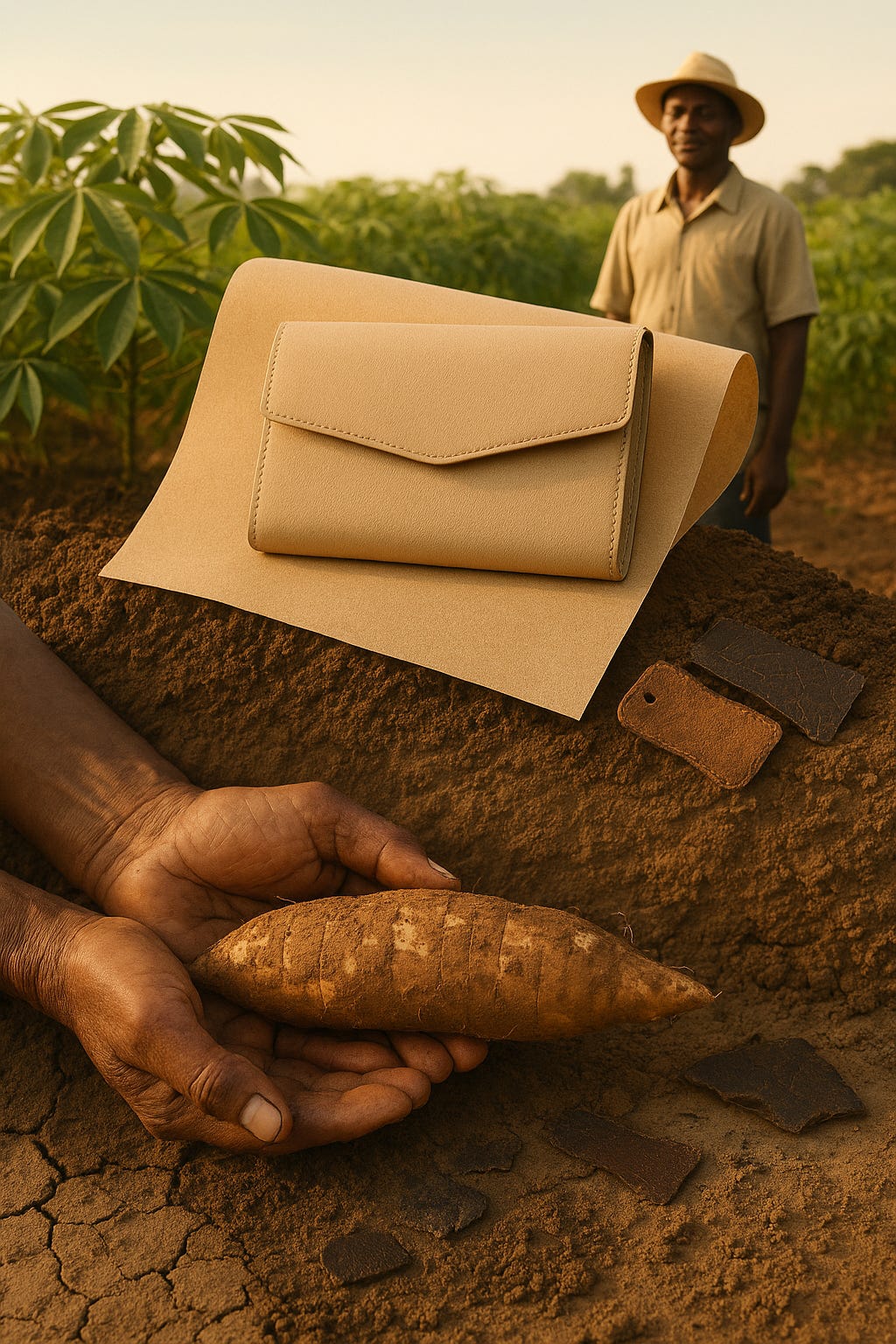
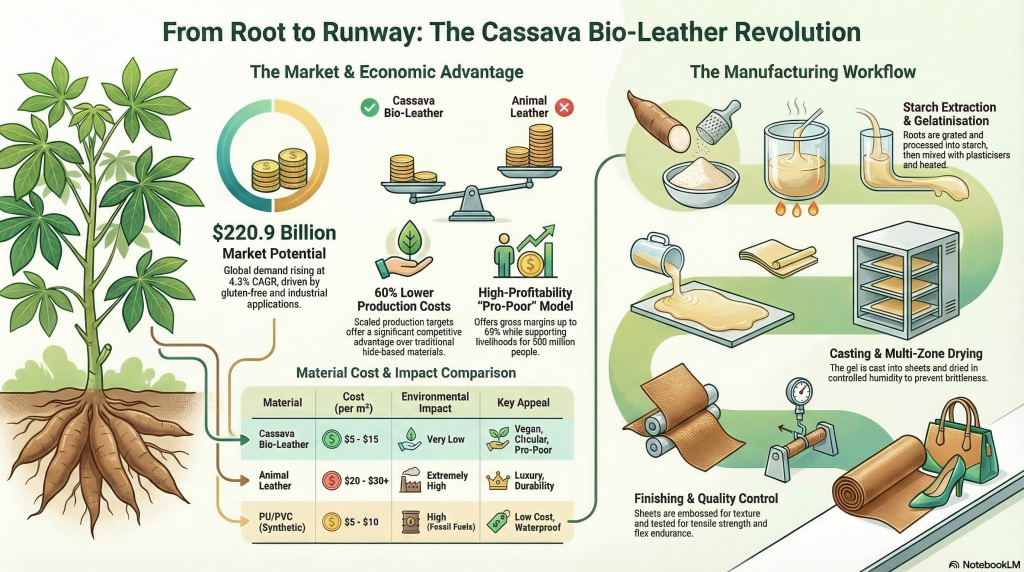
Brief, practical glimpse into a scalable materials idea. Cassava bioleather converts cassava starch into a flexible, compostable, leather like material that can power new product lines in fashion, interiors, and packaging. It solves the problems of high carbon animal leather and plastic based PU by giving you a clean, vegan option that can be locally produced in cassava growing regions. The idea uses an existing crop and turns it into a high value materials platform that works across many industries.
Is This New?
Originality Check:
[ ] Completely novel
[X] Remix of existing concepts
[X] Niche specialization
[X] Cross domain adaptation
Analysis:
Plant based leathers exist, but cassava is not a mainstream feedstock. Most brands use pineapple, cactus, apple, or mycelium. Cassava has advantages that others cannot match. It grows in poor soils, supports rural farmers, and scales easily across Africa and Asia. The idea stands out because it links materials innovation with farmer income, degraded land restoration, and a very large existing agricultural base.
As usual : Market analysis, alternative material, Hardware requirement and other artifacts: Bioleather
Market Position
The Landscape:
The sustainable materials market is crowded at the concept level but open in real adoption. It is fragmented across many small bioleather startups. Large brands still rely on PU, PVC, and animal leather due to consistency and cost.
The Opportunity:
Cassava offers a high volume, low cost feedstock that fits into current cassava value chains. This gives you a cost advantage, a strong climate narrative, and the chance to enter as a materials supplier with a differentiated raw material base.
The Scale:
A viable mid sized outcome looks like a regional processing network supplying fashion and consumer goods manufacturers. You win by owning a specialized materials niche, not by replacing all leather worldwide.
Stakeholder Ecosystem: Identified, Needs, Pain Points, Features
Smallholder farmers: Need stable offtake, fair pricing, local processing options.
Cassava processors: Need new high margin applications to diversify revenue.
Materials labs: Need applied research partners and real market use cases.
Fashion and consumer brands: Need traceable, low carbon alternatives that meet performance standards.
Consumers: Need ethical, vegan, affordable materials that look and feel premium.
Features the idea delivers:
Traceable supply chains, vegan material, compostable end of life, flexible use cases, lower carbon footprint.
References:
Content drawn from Bioleather, Concept Bioleather, and Global Cassava Market Analysis files.
Product vs Feature
The Test:
Cassava bioleather is a full product category. It benefits from a modular platform approach.
The Defense:
You gain defensibility through formulation science, consistency, regional supply chain partnerships, and brand story. You also build trust by linking your material directly to climate adaptation and farmer income.
Core Components
What You Need:
- Biopolymer formulation expertise
- Cassava processors or cooperatives with reliable supply
- A pilot materials line for casting, drying, and finishing
First Steps:
- Build a small batch prototype with a lab partner.
- Run durability and performance tests with targeted use cases like bags or wallets.
- Pitch two or three design led brands for co development.
The Contrarian View
Challenge This Idea:
Durability may not match animal leather for heavy use. Water resistance may require coatings. Competition from cactus, pineapple, and mycelium could limit attention. Cassava expansion could raise land use concerns.
Why It Might Still Work:
You solve these concerns with local processing, careful sourcing standards, performance focused R&D, and transparent environmental data. Cassava is widespread and resilient which gives you scale advantages that other plant feedstocks lack.
Cross Domain Potential
If cassava bioleather struggles in fashion, you can shift it to packaging, home goods, or interiors. You can also blend cassava with other fibers to improve stiffness, texture, or breathability.
Next Steps for Builders
Week 1:
Identify a materials science partner and test early formulations.
Month 1:
Produce sample sheets with consistent thickness and texture. Validate them with two potential buyers.
Quarter 1:
Build a mini pilot line that can supply small brand collaborations. Begin certification and traceability setup.
Resources to Explore:
A materials innovation lab, a cassava cooperative, and sustainability certification bodies.
Research Source or Market Data:
Global cassava market reports, bioleather R&D papers, sustainable materials demand reports.
Example to Study:
Piñatex, Desserto, and Mylo for positioning and early adoption strategies.
Final Thoughts
Cassava bioleather represents a shift toward climate smart materials that start with farming communities instead of factories. It ties soil restoration, rural income, and global sustainability goals together. This idea matters because it links design, science, and development in a simple product that people can touch.