Preamble
From Stream of Consciousness to Strategy Deck: How a Jersey Idea Became a Business Case. When you woke up last week and had the idea for Jerseys used in the process detailed in my Substack Capturing a Stream of Consciousness About an Idea using AI and the output was created (see appendices A) . You asked the new eager Analyst at your Business Design consultancy to develop and create a business case. She ideates and develops a research\ context document, for her own use to understand my verbal brief plus output i.e. wild ramblings (see appendices B, I chose to publish with permission her detailed analysis ) and finally voila !! she produces a Business case : what does that look like ? See end of conclusion for my critique.
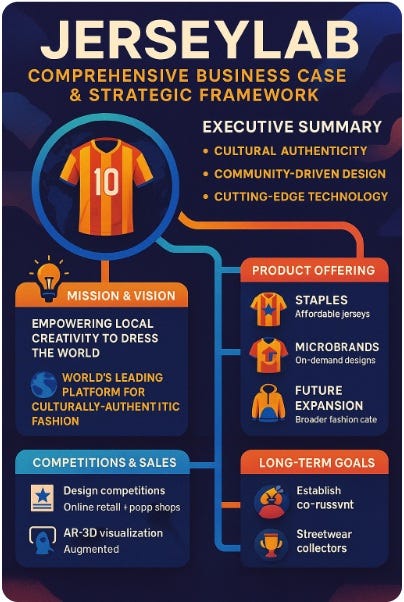
JERSEYLAB: Business Case & Strategic Framework (Stage 1 : Outline)
Executive Summary
JERSEYLAB represents a revolutionary approach to fashion retail, combining cultural authenticity, community-driven design, and cutting-edge technology to create a global brand that celebrates local identity. By democratizing fashion design through country-specific competitions and leveraging AR/3D visualization technology, JERSEYLAB positions itself at the intersection of several high-growth markets: streetwear, custom apparel, and culturally-conscious fashion.
1. Business Vision & Concept Definition
1.1 Brand Identity
Mission Statement: “Empowering local creativity to dress the world – one jersey at a time.”
Vision: To become the world’s leading platform for culturally-authentic, community-designed fashion that bridges local identity with global accessibility.
Core Values:
- Cultural Authenticity: Celebrating unique local design perspectives
- Community Empowerment: Providing platforms for emerging designers
- Ethical Practices: Fair compensation and sustainable production
- Innovation: Leveraging technology to enhance customer experience
- Inclusivity: Making fashion accessible across diverse communities
1.2 Product Positioning
JERSEYLAB operates in the “Cultural Streetwear” category, positioning itself between:
- Premium Streetwear (Supreme, Off-White) – Cultural relevance without exclusivity
- Fast Fashion (H&M, Zara) – Quality and authenticity over speed
- Custom Apparel (Nike ID, Adidas miCoach) – Community-driven vs. brand-controlled customization
1.3 Long-term Goals
- Year 1-2: Establish presence in 3-5 pilot countries
- Year 3-5: Expand to 20+ countries with 500+ active designers
- Year 5+: Evolve into full lifestyle brand with multiple product categories
2. Market Research & Competitive Landscape
2.1 Industry Analysis & Market Size
Primary Markets:
- Streetwear Market: USD 347.14 billion in 2024, projected to reach USD 637.13 billion by 2032, with a CAGR of 7.89%
- Custom Apparel Market: Expected to reach USD 2,454.5 million from 2025-2029, expanding at a CAGR of 8.4%
- Decorated Apparel Market: Valued at USD 28.98 billion in 2023 and expected to grow at a CAGR of 13.0% from 2024 to 2030
Key Market Drivers:
- Cultural Influence & Social Media: Driven by cultural influence, celebrity endorsements, social media and digital marketing
- Personalization Demand: Increasing demand for personalized and unique clothing items
- Technology Integration: 3D printing revenues expected to reach nearly $35 billion by 2028
- Consumer Spending Power: Average per capita disposable income in the U.S. reached $51,147 in 2024, supporting demand for customized apparel
2.2 Geographic Opportunities
- Asia Pacific: Dominated the streetwear market with 36.17% market share
- North America: Rising disposable incomes and preference for unique apparel drive consistent demand
- Custom T-shirt Market: Asia Pacific dominated globally, accounting for over 39.4% of revenue share in 2024
2.3 Competitive Landscape Analysis
Direct Competitors:
- Threadless: Community-driven t-shirt designs
- Strengths: Established community, global reach
- Weaknesses: Limited to t-shirts, US-centric designs
- Design by Humans: Artist-driven apparel platform
- Strengths: Quality designs, artist royalties
- Weaknesses: Limited cultural localization
- Redbubble: Marketplace for independent artists
- Strengths: Large artist network, diverse products
- Weaknesses: Lacks cultural cohesion, quality control issues
Indirect Competitors:
- Nike/Adidas Custom: Corporate customization
- Local Fashion Brands: Country-specific but limited reach
- Fast Fashion with Graphics: H&M, Zara graphic lines
2.4 Market Gaps & Opportunities
- Cultural Authenticity Gap: Major brands lack genuine local cultural input
- Designer Empowerment Gap: Limited platforms for emerging designers to monetize
- Technology Integration Gap: Few brands effectively use AR/3D for jerseys
- Diaspora Market Gap: Underserved communities seeking cultural connection
3. Business Model & Monetization Strategies
3.1 Revenue Streams
Primary Revenue (80% of total):
- Product Sales
- Staple Jerseys: $25-35 (40% of sales)
- Limited Edition/Microbrand: $45-65 (35% of sales)
- Customized Jerseys: $35-50 (25% of sales)
- Designer Royalties (Revenue sharing model)
- 5-8% of net sales to winning designers
- Tiered based on sales volume and exclusivity
Secondary Revenue (20% of total):
- Contest Sponsorships: $5,000-50,000 per country competition
- Platform Licensing: Technology licensing to other brands
- Digital Collectibles/NFTs: Future revenue stream (5-10% potential)
3.2 Cost Structure
Production Costs (45% of revenue):
- Manufacturing: $8-12 per jersey (offshore production)
- Materials: Premium cotton/polyester blends
- Quality Control: $1-2 per unit
Technology & Platform (15% of revenue):
- AR/3D Development: $200K-500K initial investment
- Platform Maintenance: $50K-100K annually
- Mobile App Development: $150K-300K
Marketing & Community (20% of revenue):
- Contest Management: $20K-50K per country
- Designer Payments: 5-8% of net sales
- Digital Marketing: 8-12% of revenue
Operations (20% of revenue):
- Logistics & Fulfillment: 6-8% of revenue
- Customer Service: 2-3% of revenue
- Administrative: 8-10% of revenue
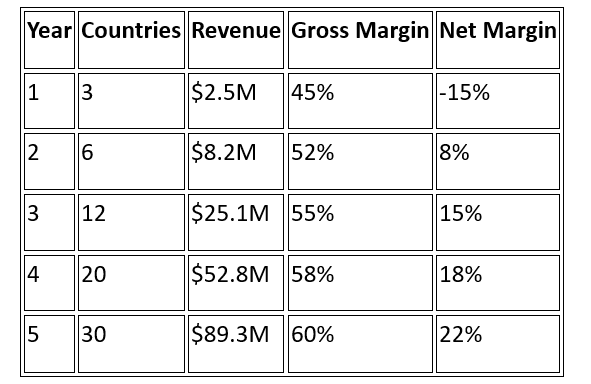
3.3 Financial Projections (5-Year)
4. Target Audience & Customer Insights
4.1 Primary Customer Segments
Segment 1: Cultural Enthusiasts (35% of target market)
- Demographics: Ages 18-35, diaspora communities
- Psychographics: Strong cultural identity, seeks authenticity
- Spending: $200-500 annually on culturally-relevant fashion
- Channels: Social media, cultural events, word-of-mouth
Segment 2: Streetwear Collectors (30% of target market)
- Demographics: Ages 16-28, urban/suburban, middle-upper income
- Psychographics: Fashion-forward, values uniqueness and limited editions
- Spending: $500-1,500 annually on streetwear
- Channels: Instagram, TikTok, streetwear forums
Segment 3: Conscious Consumers (25% of target market)
- Demographics: Ages 22-40, college-educated, diverse backgrounds
- Psychographics: Values ethical production, supports emerging artists
- Spending: $300-800 annually on sustainable fashion
- Channels: LinkedIn, ethical fashion blogs, sustainability platforms
Segment 4: Sports Fashion Enthusiasts (10% of target market)
- Demographics: Ages 18-45, sports fans, active lifestyle
- Psychographics: Appreciates quality athletic wear with unique designs
- Spending: $400-1,000 annually on sports-inspired fashion
- Channels: Sports platforms, fitness communities, team merchandise stores
4.2 Customer Journey Mapping
Awareness Stage:
- Social media content showcasing designs
- Designer stories and cultural backgrounds
- Influencer collaborations and endorsements
Consideration Stage:
- AR try-on experiences
- Design voting participation
- Community engagement and reviews
Purchase Stage:
- Seamless mobile/web checkout
- Customization options
- Limited-time availability messaging
Retention Stage:
- Designer royalty updates
- Early access to new collections
- Community recognition and rewards
4.3 Customer Personas
“Maya the Cultural Connector”
- 26, Nigerian living in London
- Marketing professional, $55K income
- Seeks clothing that represents heritage
- Active on Instagram and LinkedIn
- Values: Authenticity, community support, quality
“Jordan the Streetwear Enthusiast”
- 21, American college student
- Fashion design major, limited budget but fashion-forward
- Follows streetwear trends, creates content
- Primary platforms: TikTok, Instagram, Discord
- Values: Uniqueness, creativity, peer recognition
“Priya the Conscious Consumer”
- 32, Indian-American entrepreneur
- Tech industry, $85K income
- Prioritizes ethical and sustainable brands
- Research-driven purchaser
- Values: Transparency, social impact, quality
5. Operational & Scalability Plan
5.1 Phase 1: Foundation (Months 1-12)
Market Entry Strategy:
- Pilot Country Selection: Nigeria (strong design culture, diaspora market)
- Designer Recruitment: Partner with 50-100 local designers
- Technology Development: MVP platform with basic AR functionality
- Initial Production: 2,000-5,000 units, offshore manufacturing
Key Milestones:
- Platform launch with 10 initial designs
- First design competition with 200+ submissions
- 1,000 jersey sales in first 6 months
- 5,000 app downloads
5.2 Phase 2: Validation (Months 13-24)
Expansion Strategy:
- Additional Markets: Ghana, Kenya (African expansion)
- Diaspora Targeting: UK, US markets for African diaspora
- Technology Enhancement: Advanced AR, 3D customization
- Production Scaling: 10,000-20,000 units capacity
Success Metrics:
- $500K+ revenue in year 2
- 50+ active designers across 3 countries
- 25% repeat purchase rate
- 4.5+ app store rating
5.3 Phase 3: Growth (Months 25-48)
Scaling Operations:
- Geographic Expansion: India, Brazil, Mexico markets
- Product Line Extension: Hoodies, accessories, limited collaborations
- Local Manufacturing: Pilot microfactory partnerships
- Technology Advancement: AI-powered design recommendations
Operational Excellence:
- Supply chain optimization for 15+ countries
- Quality assurance systems across all production
- Customer service centers in key markets
- Designer support and development programs
5.4 Manufacturing & Supply Chain Strategy
Phase 1-2: Offshore Production
- Primary Partners: Vetted manufacturers in Bangladesh, Vietnam
- Quality Standards: OEKO-TEX certified materials, ethical labor practices
- Capacity: 50,000-100,000 units annually
- Lead Times: 3-4 weeks production, 1-2 weeks shipping
Phase 3+: Hybrid Model
- Local Microfactories: Key markets (US, UK, Germany)
- Offshore Bulk Production: High-demand staples
- Made-to-Order: Premium customization options
- Sustainability Focus: Organic materials, carbon-neutral shipping
5.5 Technology Infrastructure
Core Platform Requirements:
- Mobile-First Design: iOS/Android native apps
- Web Platform: Responsive e-commerce site
- AR Integration: WebAR and native AR experiences
- Payment Processing: Global payment gateway support
- Multilingual Support: Localized for each market
Advanced Features:
- AI-powered Recommendations: Based on cultural preferences
- Social Voting System: Transparent, engaging competition platform
- Designer Dashboard: Royalty tracking, performance analytics
- Customer Personalization: Size recommendations, style preferences
6. Marketing & Branding Strategy
6.1 Brand Positioning Framework
Brand Pillars:
- Cultural Authenticity: “Real designs from real cultures”
- Community Empowerment: “Every designer has a story”
- Innovation: “Fashion meets technology”
- Quality: “Premium materials, ethical production”
Unique Value Proposition:
“The only jersey brand that lets you wear your culture and vote for the next design sensation.”
6.2 Marketing Mix Strategy
Product Strategy:
- Limited edition releases create urgency
- High-quality materials justify premium pricing
- Cultural storytelling differentiates from competitors
- AR try-on reduces purchase friction
Pricing Strategy:
- Premium Positioning: 20-30% above fast fashion
- Value Justification: Quality materials, designer royalties, cultural authenticity
- Dynamic Pricing: Limited editions command higher prices
- Promotional Pricing: Early adopter discounts, designer launch specials
Promotion Strategy:
- Content Marketing: Designer spotlight videos, cultural stories
- Influencer Partnerships: Micro-influencers in each target market
- Social Media: Instagram/TikTok visual content, YouTube documentaries
- Community Events: Pop-up shops at cultural festivals, design exhibitions
Place Strategy:
- Direct-to-Consumer: Primary channel through website/app
- Pop-up Retail: Strategic locations in diaspora communities
- Partner Retail: Select boutiques and cultural centers
- Online Marketplaces: Complementary presence on Etsy, Amazon (limited selection)
6.3 Launch Marketing Campaign: “Design Your Heritage”
Campaign Objectives:
- Generate 50,000+ social media impressions per country
- Recruit 100+ designers for first competition
- Drive 10,000+ app downloads in launch month
- Achieve 1,000+ jersey pre-orders
Creative Strategy:
- Hero Video: Documentary-style piece featuring winning designers
- Social Content: Behind-the-scenes design process, cultural stories
- Interactive Elements: AR filters for social media, design challenges
- PR Strategy: Fashion and cultural media outreach
6.4 Customer Acquisition Strategy
Digital Marketing:
- SEO/Content: Cultural fashion keywords, designer spotlight content
- Social Media Advertising: Facebook/Instagram targeted campaigns
- Influencer Marketing: 20+ micro-influencers per market (1K-100K followers)
- Email Marketing: Designer newsletters, cultural fashion trends
Offline Marketing:
- Cultural Events: Fashion weeks, cultural festivals, diaspora gatherings
- University Partnerships: Design schools, cultural student organizations
- Retail Partnerships: Pop-ups in relevant boutiques and galleries
Retention Marketing:
- Loyalty Program: Early access, exclusive designs, voting power
- Community Building: Designer meet-and-greets, customer showcases
- Referral Program: Discount incentives for successful referrals
7. Risk Analysis & Mitigation Strategies
7.1 Market Risks
Competition from Major Brands
- Risk: Nike, Adidas launching similar programs
- Mitigation: Strong cultural partnerships, first-mover advantage, exclusive designer relationships
Economic Downturn Impact
- Risk: Reduced discretionary spending on fashion
- Mitigation: Diverse price points, focus on value proposition, essential wardrobe positioning
7.2 Operational Risks
Supply Chain Disruptions
- Risk: Manufacturing delays, quality issues
- Mitigation: Multiple supplier relationships, quality assurance protocols, local production backup
Technology Platform Failures
- Risk: App/website downtime, AR functionality issues
- Mitigation: Robust hosting infrastructure, regular testing, technical support team
7.3 Legal & Regulatory Risks
Intellectual Property Disputes
- Risk: Design copyright claims, brand trademark issues
- Mitigation: Clear designer agreements, IP attorney consultation, trademark registration
International Trade Regulations
- Risk: Tariffs, import restrictions, customs delays
- Mitigation: Trade compliance expertise, diversified manufacturing, local production strategy
7.4 Financial Risks
Cash Flow Management
- Risk: Seasonal demand variations, inventory buildup
- Mitigation: Made-to-order model, diversified product seasonality, line of credit
Currency Fluctuations
- Risk: Multi-country operations exposed to exchange rate volatility
- Mitigation: Currency hedging strategies, local pricing adjustments, natural hedging through local costs
8. Success Metrics & KPIs
8.1 Financial Metrics
- Revenue Growth: 200%+ annually in first 3 years
- Gross Margin: Target 55%+ by year 3
- Customer Acquisition Cost: <$25 per customer
- Customer Lifetime Value: >$150 per customer
- Designer Payout Ratio: 5-8% of net sales
8.2 Operational Metrics
- Order Fulfillment Time: <7 days average
- Quality Return Rate: <2% of orders
- Designer Retention: >80% annual retention
- Customer Satisfaction: >4.5/5 rating
- Platform Uptime: >99.5%
8.3 Community Metrics
- Active Designers: 100+ per major market
- Design Submissions: 1,000+ per competition
- Voting Participation: 10,000+ votes per competition
- Social Media Engagement: 5%+ engagement rate
- User-Generated Content: 500+ posts monthly
8.4 Growth Metrics
- Geographic Expansion: 1-2 new countries quarterly
- Product Line Extensions: 2-3 new categories annually
- Technology Features: Monthly app updates and improvements
- Partnership Development: 5-10 strategic partnerships annually
9. Investment Requirements & ROI Projections
9.1 Initial Capital Requirements
Seed Funding: $1.2M (12-18 months runway)
- Technology Development: $400K
- Initial Inventory: $200K
- Marketing & Branding: $300K
- Operations & Team: $250K
- Working Capital: $50K
Series A: $5M (Scale to 10+ countries)
- Technology Enhancement: $1.5M
- Inventory & Supply Chain: $1.5M
- Marketing Expansion: $1.2M
- Team Expansion: $800K
- Working Capital: $200K
9.2 ROI Projections
- Break-even: Month 18-24
- 5-Year Revenue: $89.3M
- 5-Year Valuation: $200-400M (based on 2-4x revenue multiple)
- IRR for Seed Investors: 40-60%
- IRR for Series A Investors: 25-35%
10. Strategic Recommendations
10.1 Immediate Actions (Next 6 months)
- Secure Initial Funding: Target $1.2M seed round
- Build Core Team: CTO, Head of Design, Marketing Lead
- Develop MVP Platform: Basic AR, voting system, e-commerce
- Launch Nigeria Pilot: First design competition and jersey sales
- Establish Manufacturing: Partner with ethical offshore manufacturer
10.2 Medium-term Priorities (6-18 months)
- Technology Enhancement: Advanced AR features, mobile app launch
- Market Expansion: Add 2-3 additional African markets
- Product Line Extension: Introduce hoodies and accessories
- Strategic Partnerships: Cultural organizations, fashion influencers
- Series A Fundraising: Prepare for growth capital round
10.3 Long-term Vision (2-5 years)
- Global Expansion: 20+ countries, multiple continents
- Full Lifestyle Brand: Complete apparel line, home goods, accessories
- Technology Innovation: AI-powered design, virtual fashion shows
- Social Impact: 1,000+ designers empowered, cultural preservation initiatives
- Exit Strategy: IPO or strategic acquisition by major fashion conglomerate
Conclusion
JERSEYLAB represents a compelling opportunity to create a new category in fashion retail by combining cultural authenticity, community engagement, and cutting-edge technology. With strong market tailwinds in streetwear, customization, and culturally-conscious consumption, the brand is positioned to capture significant market share while creating meaningful social impact.
The business model’s scalability, combined with strong unit economics and defensible competitive advantages, makes JERSEYLAB an attractive investment opportunity with the potential to become a billion-dollar global fashion platform.
Success will depend on flawless execution of the technology platform, authentic community building, and maintaining quality while scaling operations globally. With proper funding and team assembly, JERSEYLAB can establish itself as the definitive platform for cultural fashion design and retail.
My critique see: Critique (Its an outline so I regard that as iteration 1)
Appendices
Appendices A
Idea Output from AI or Jersey Idea
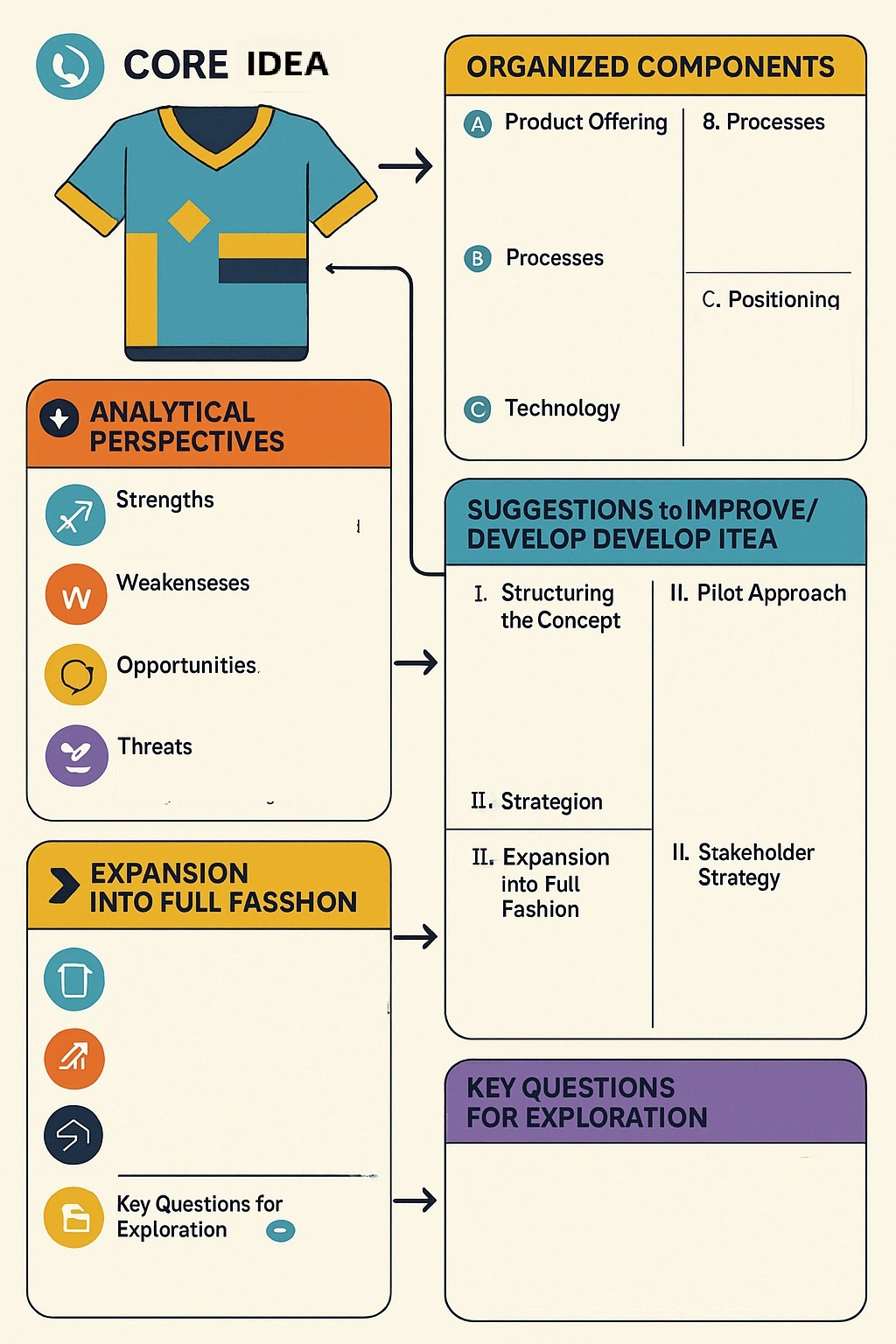
🧠 1. Core Idea Summary
You propose a global sports/leisure jersey brand that:
- Engages local designers in each country to create culturally relevant jerseys
- Hosts country-level design competitions to crowdsource top designs
- Sells two product types:
- Branded staple jerseys (affordable, showcasing consistent design language)
- Microbrand jerseys, created on-demand and selected by public vote
- Integrates online retail, pop-up shops, and AR/3D visualization tools
- Plans to expand into broader fashion categories using the same crowdsourcing and localization model
🗂️ 2. Organized Components
A. Product Offering
- Staples: Brand-core, mass-market, affordable
- Microbrands: Country-specific, limited edition
- Personalization: Names, numbers, national/regional features
- Future Expansion: Athleisure, national style, full outfits
B. Processes
- Design Competitions: Local collaborations, social media voting
- Production: Begin offshore (e.g., China/Bangladesh); later pivot to local microfactories
- Distribution: E-commerce, pop-ups, export
- Technology: 3D previews, AR try-ons, social media integration
C. Positioning
- Sports-inspired, not limited to specific sports
- Fashion meets cultural identity
- Ethically conscious: royalties, fair competition, local empowerment
🔍 3. Analytical Perspectives
SWOT Analysis
Strengths
- Unique blend of fashion, tech, and culture
- Community-driven content
- Perennial interest in jerseys
Weaknesses
- Complex production/logistics
- Costs of localization and community engagement
- Potential copyright/IP issues
Opportunities
- National pride and diaspora markets
- Tech-driven fashion innovation
- Partnerships with schools, influencers
Threats
- Fast fashion competitors
- Platform scalability risks
- IP theft or idea replication
PESTLE Highlights
- Political: Trade regulations, customs
- Economic: Balancing ethical sourcing with cost
- Social: Youth culture, national pride, streetwear trends
- Technological: AR, automation, personalization
- Legal: IP rights, designer royalties
- Environmental: Made-to-order production, sustainability
💡 4. Suggestions to Improve/Develop the Idea
I. Structuring the Concept
- Three Tiers:
- Staples (mass-market)
- Limited Editions (top-voted)
- Customizable Jerseys (user-personalized)
- Three Brand Levels:
- Master brand (e.g., “JERSEYLAB”)
- JERSEYLAB Local: Country capsules
- JERSEYLAB Global: Rotating cross-cultural collabs
II. Pilot Approach
- Phase 1: Launch in one country (e.g., Nigeria)
- Phase 2: Test production options (offshore vs local)
- Phase 3: AR try-on launch and voting
- Phase 4: Expand to diaspora-rich regions (e.g., UK, US)
III. Platform Development
- Unified app/platform for:
- Design submission and voting
- AR try-on selfies
- Personalization and purchase
- Royalty tracking for designers
IV. Stakeholder Strategy
- Users: Youth, diaspora, streetwear fans
- Partners: Designers, influencers, schools, cultural agencies
- Monetization: Product sales, NFTs, contest sponsorships
V. Ethical and Revenue Model
- Designer Payments:
- Cash prize for winners
- Royalties per sale
- Paid gigs for high-potential submissions
- Sustainable Production:
- Start ethically, evolve toward glocal microfactories
- Made-to-order = minimal waste
🔁 5. Expansion into Full Fashion
Start with jerseys as the MVP, then evolve into:
- A full crowd-designed fashion label
- Streetwear, athleisure, and cultural fashion lines
🎯 6. Key Questions for Exploration
- What platform manages voting and submissions?
- How do you ensure fairness and transparency?
- Will there be curation, or is it fully crowdsourced?
- What legal frameworks protect designer IP?
- What are the metrics for success?
Business Model Canvas: JERSEYLAB
Key Partners
- Local designers and artists
- Microfactories / ethical manufacturers
- AR/3D tech providers
- Influencers, cultural institutions
- E-commerce and logistics providers
Key Activities
- Design competitions
- Social engagement and voting
- AR integration and personalization
- Online/offline retail execution
Value Propositions
- Jerseys infused with local pride and culture
- Limited-edition, co-created fashion
- Ethical sourcing and designer royalties
- Scalable model with built-in localization
Customer Relationships
- Community-driven contests
- Loyalty via customization
- Transparent designer recognition
Customer Segments
- Fashion-forward youth
- Diaspora communities
- Streetwear and jersey enthusiasts
- Cultural organizations
Channels
- Direct-to-consumer via JERSEYLAB.com
- Pop-up shops in key diaspora hubs
- Influencer-led campaigns
Key Resources
- Platform/app for voting, shopping, and submissions
- AR/3D visualization tools
- Network of creatives and producers
Cost Structure
- Tech development (AR, e-commerce)
- Contest marketing
- Ethical production scaling
- Royalties and legal/IP support
Revenue Streams
- Jersey sales
- Customizations and limited drops
- Sponsored contests
- Digital collectibles/NFTs (future phase)
🚀 Lean Canvas Overlay
Problem
- Cultural uniformity in global fashion
- Inaccessible platforms for emerging designers
- Lack of ethical sourcing and transparency
Solution
- Locally co-created jerseys with global reach
- Voting-based exposure and monetization for designers
- Fair royalties and community involvement
Next Steps
- Pilot in Nigeria: Run a national design contest + AR try-on pop-up.
- Launch MVP platform for voting, personalization, and purchase.
- Build creator network and cultural partnerships.
- Validate with limited capsule drops to test demand and refine operations.
Appendices b
JERSEYLAB Analysis: Critical Areas for Further Investigation or JERSEYLAB Analyst Brief
Executive Overview
JERSEYLAB positions itself as a cultural streetwear platform combining community-driven design competitions with AR technology. The concept structures around three distinct product tiers (Staples, Limited Editions, Customizable) and three brand levels (Master, Local, Global). While the business case presents ambitious projections, several critical areas require deeper analysis before investment or execution.
1. Business Model Architecture & Validation
PRIORITY: CRITICAL – Three-Tier Product Strategy Analysis
- Staple Jerseys: Mass-market positioning vs. premium cultural branding contradiction
- Limited Edition Microbrands: Public voting system scalability and fairness mechanisms
- Customizable Jerseys: Personalization technology costs and production complexity
- Brand Hierarchy: Master/Local/Global brand architecture market confusion risks
Key Questions:
- How will three-tier pricing ($25-65 range) impact brand perception and market positioning?
- What voting mechanisms prevent manipulation and ensure authentic community engagement?
- Can customization technology integrate seamlessly with offshore then local production pivot?
2. Market Validation & Competitive Analysis
PRIORITY: HIGH – Requires Immediate Research
- Market Size Verification: Validate claimed market sizes (streetwear $347B, custom apparel growth rates)
- Cultural Fashion Segment Analysis: Quantify actual demand for culturally-authentic fashion vs. general streetwear
- Competitive Response Risk: Assess likelihood and timeline of major brands (Nike, Adidas) launching similar programs
- Price Point Validation: Test consumer willingness to pay premium (20-30% above fast fashion) for cultural authenticity
Key Questions:
- What evidence exists for the “Cultural Authenticity Gap” in current market?
- How do diaspora communities currently purchase culturally-relevant fashion?
- What barriers exist for emerging designers to monetize their work?
3. Technology Infrastructure & Platform Development
PRIORITY: HIGH – Unified Platform Complexity Assessment
- Multi-Function Platform: Design submission, voting, AR try-on, personalization, and purchase integration
- AR Implementation: Quality jersey try-on experiences vs. development budget ($400K-1.5M)
- Voting System Architecture: Transparent, fair, and scalable community engagement platform
- Designer Dashboard: Royalty tracking, performance analytics, and IP protection systems
- Mobile-First Experience: iOS/Android apps handling complex interactions and AR features
Key Questions:
- What are realistic development timelines for unified platform vs. phased rollout?
- How will AR try-on technology handle diverse body types and jersey fit variations?
- What backend infrastructure supports simultaneous voting, customization, and e-commerce?
- How will platform prevent vote manipulation and ensure authentic community participation?
4. Production Strategy & Supply Chain Evolution
PRIORITY: HIGH – Offshore-to-Local Transition Analysis
- Phase 1: Offshore manufacturing (China/Bangladesh) quality control and ethical sourcing
- Phase 2: Microfactory transition timeline, costs, and operational complexity
- Made-to-Order Model: Inventory management, lead times, and customer expectations
- Quality Consistency: Maintaining standards across multiple production methods and locations
- Cost Structure Impact: How production evolution affects unit economics and pricing strategy
Key Questions:
- What are realistic timelines and costs for microfactory establishment in key markets?
- How will quality control systems adapt from centralized to distributed production?
- Can made-to-order model support both mass staples and limited edition demands?
- What are the true cost implications of transitioning from offshore to local production?
5. Financial Model Validation & Revenue Stream Analysis
PRIORITY: CRITICAL – Multi-Revenue Stream Viability
- Primary Revenue: Three-tier product sales with varying margins and volumes
- Secondary Revenue: Contest sponsorships, NFTs, digital collectibles feasibility
- Designer Royalty Model: 5-8% royalty sustainability across different product tiers
- Phased Launch Economics: Nigeria pilot financial requirements vs. projected returns
- Customer Acquisition Cost: Achieving <$25 CAC across diaspora communities and cultural segments
Financial Red Flags Requiring Investigation:
- Revenue scaling assumptions from single-country pilot to global platform
- Technology development costs vs. complex platform requirements
- Designer payment structure impact on unit economics across three tiers
- Contest sponsorship revenue projections and market demand validation
6. Phased Launch Strategy & Pilot Validation
PRIORITY: HIGH – Nigeria Pilot Framework Analysis
- Phase 1: Single-country design contest with AR try-on pop-up validation
- Phase 2: Offshore vs. local production testing and cost comparison
- Phase 3: Platform voting system launch and community engagement metrics
- Phase 4: Diaspora market expansion (UK, US) customer acquisition validation
- Success Metrics: Contest participation, conversion rates, community retention
Key Questions:
- Why Nigeria as pilot market vs. established diaspora markets with proven purchasing power?
- What specific success metrics determine progression from Phase 1 to Phase 2?
- How will pilot results validate assumptions about global scalability?
- What are the minimum viable metrics for each phase before moving forward?
7. Community Building & Designer Ecosystem
PRIORITY: HIGH – Stakeholder Engagement Strategy
- Designer Network Development: Building and maintaining 50-500+ designer communities per market
- Voting System Integrity: Preventing manipulation while encouraging authentic participation
- Cultural Authenticity: Mechanisms to ensure genuine representation vs. appropriation risks
- Fair Competition Framework: Transparent processes for design selection and royalty distribution
- Community Retention: Long-term engagement strategies beyond initial novelty
Key Questions:
- How will the platform curate vs. crowdsource to maintain quality and cultural authenticity?
- What legal frameworks protect designer IP while enabling platform scalability?
- How will voting transparency be maintained while preventing system gaming?
- What are realistic designer retention rates and community growth projections?
8. Go-to-Market Strategy & Customer Acquisition
PRIORITY: HIGH – Multi-Channel Distribution Analysis
- Direct-to-Consumer Platform: E-commerce integration with AR and customization features
- Pop-up Strategy: Diaspora hub locations and cultural event partnerships
- Influencer Marketing: Micro-influencer effectiveness in cultural fashion segments
- Cultural Institution Partnerships: Schools, organizations, and community center collaborations
- Cross-Cultural Appeal: Balancing local authenticity with broader market appeal
Critical Success Factors:
- Achieving meaningful engagement in design competitions (1,000+ submissions per contest)
- Converting voting participants to customers (target conversion rates)
- Building repeat purchase behavior across three product tiers
- Establishing authentic cultural partnerships without appropriation risks
9. Risk Mitigation & Operational Challenges
PRIORITY: MEDIUM – Complex Operational Risk Assessment
- Multi-Tier Production Complexity: Managing three different product categories with varying production requirements
- Platform Scalability Risks: Handling simultaneous design contests, voting, and e-commerce across multiple countries
- Cultural Sensitivity Management: Avoiding appropriation while enabling cross-cultural appreciation
- IP Protection Framework: Designer rights protection across international markets and platform usage
- Quality Control Across Tiers: Maintaining standards from mass staples to limited editions to custom pieces
SWOT Integration:
Strengths to Leverage: Unique cultural-tech-fashion intersection, community-driven content Weaknesses to Address: Complex logistics, localization costs, potential IP issues Opportunities to Capture: National pride markets, tech-driven fashion innovation Threats to Mitigate: Fast fashion replication, platform scalability challenges, idea theft
10. Investment Requirements & Funding Strategy
PRIORITY: HIGH – Phased Capital Requirements
- MVP Development: Platform development, AR integration, and Nigeria pilot execution
- Technology Infrastructure: Unified app development supporting multiple complex functions
- Community Building: Designer recruitment, contest marketing, and cultural partnerships
- Production Setup: Initial offshore manufacturing and future microfactory transitions
- Market Expansion: Phased rollout across diaspora markets and new geographies
Funding Validation Requirements:
- MVP platform demonstrating core functionality (voting, AR, customization)
- Nigeria pilot showing measurable community engagement and sales conversion
- Designer ecosystem proving sustainable royalty model and content quality
- Clear path to profitability with validated unit economics across three product tiers
11. Recommended Analysis Framework
Phase 1: Business Model Validation (Months 1-3)
- Three-Tier Strategy Testing: Validate market demand and pricing across Staples/Limited/Custom categories
- Nigeria Pilot Planning: Design competition framework, success metrics, and community engagement strategy
- Designer Ecosystem Development: Recruit and interview 50+ Nigerian designers for pilot program
- Platform Requirements Definition: Detailed specifications for voting, AR, and customization integration
Phase 2: Technical Proof-of-Concept (Months 2-4)
- MVP Platform Development: Core voting and design submission functionality
- AR Try-On Prototype: Basic jersey visualization and user experience testing
- Production Partner Validation: Offshore manufacturer quality and cost verification
- Designer Dashboard Beta: Royalty tracking and submission management system
Phase 3: Market & Financial Validation (Months 3-6)
- Nigeria Competition Launch: Execute full design contest with community voting
- Sales Conversion Testing: Measure voting participant to customer conversion rates
- Unit Economics Validation: Real production costs, shipping, and margin analysis
- Community Retention Analysis: Designer and customer engagement sustainability
Phase 4: Scale Preparation (Months 5-8)
- Diaspora Market Research: UK/US Nigerian community purchasing behavior and preferences
- Platform Scalability Testing: Multi-country, multi-competition technical requirements
- Production Evolution Planning: Microfactory feasibility and transition timeline
- Series A Preparation: Investor materials based on validated pilot results
12. Critical Success Metrics for Validation
Nigeria Pilot Benchmarks:
- Design Competition Participation: 200+ quality submissions, 10,000+ votes
- Community Engagement: 50+ active designers, 80% retention for second competition
- Sales Conversion: 15%+ of voting participants make purchases
- Platform Performance: AR try-on usage >60%, <2 second load times
- Unit Economics: Gross margins >45% across all three product tiers
Technical Platform Benchmarks:
- User Experience: >4.0/5.0 app store ratings, <3% abandonment rate during AR try-on
- Voting System Integrity: Zero successful manipulation attempts, transparent result validation
- Designer Satisfaction: >4.5/5.0 designer experience rating, clear royalty tracking
- Production Integration: Seamless order processing from customization to fulfillment
Financial Validation Benchmarks:
- Customer Acquisition: <$30 CAC achievable through cultural marketing channels
- Repeat Purchase Rate: >25% within 12 months across customer segments
- Designer Royalty Sustainability: 5-8% payout model maintains >40% platform margins
- Revenue Distribution: Balanced performance across three product tiers
13. Go/No-Go Decision Framework
GREEN LIGHT Criteria:
- Nigeria Pilot Success: Design competition achieves participation and engagement benchmarks
- Platform Functionality: MVP demonstrates seamless voting, AR, and purchasing experience
- Community Validation: Authentic designer engagement and sustainable royalty model proven
- Unit Economics: Clear path to profitability across three-tier product strategy
- Cultural Authenticity: Genuine partnerships established without appropriation concerns
YELLOW LIGHT Indicators (Proceed with Caution):
- Partial Technical Success: Core platform works but AR/customization needs refinement
- Mixed Community Response: Good designer engagement but weak customer conversion
- Financial Challenges: Positive unit economics but higher CAC than projected
- Cultural Sensitivity Issues: Minor concerns manageable through policy adjustments
RED LIGHT Indicators:
- Platform Failure: Technical issues prevent seamless user experience
- Community Rejection: Low designer participation or customer interest in cultural fashion
- Financial Unfeasibility: Negative unit economics or unsustainable royalty model
- Cultural Appropriation Risks: Inability to maintain authentic cultural representation
- Competitive Response: Major brands launching similar programs before market establishment
Conclusion
JERSEYLAB presents an innovative concept combining cultural identity, community-driven design, and fashion technology through a structured three-tier product strategy. The phased approach (Nigeria pilot → production evolution → diaspora expansion) provides a logical framework for validation and scaling. However, the concept’s complexity—managing simultaneous design competitions, AR technology, multi-tier production, and cultural authenticity—requires rigorous validation before implementation.
Critical Success Dependencies:
- Platform Integration: Seamless user experience across voting, AR try-on, customization, and purchase
- Community Authenticity: Genuine cultural partnerships and designer engagement without appropriation
- Production Evolution: Successful transition from offshore to local microfactory model
- Financial Sustainability: Viable unit economics across three product tiers with designer royalties
Recommendation: Execute Nigeria pilot as comprehensive proof-of-concept, focusing on community engagement, platform functionality, and unit economics validation. Investment decisions should be contingent on pilot success across all key metrics—technical performance, community response, financial viability, and cultural authenticity.
The structured approach from the second document provides a more realistic pathway than the aggressive projections in the original business case, but success still requires flawless execution across multiple complex dimensions simultaneously.