Idea Snapshots — Brief, strategic glimpses into business possibilities.
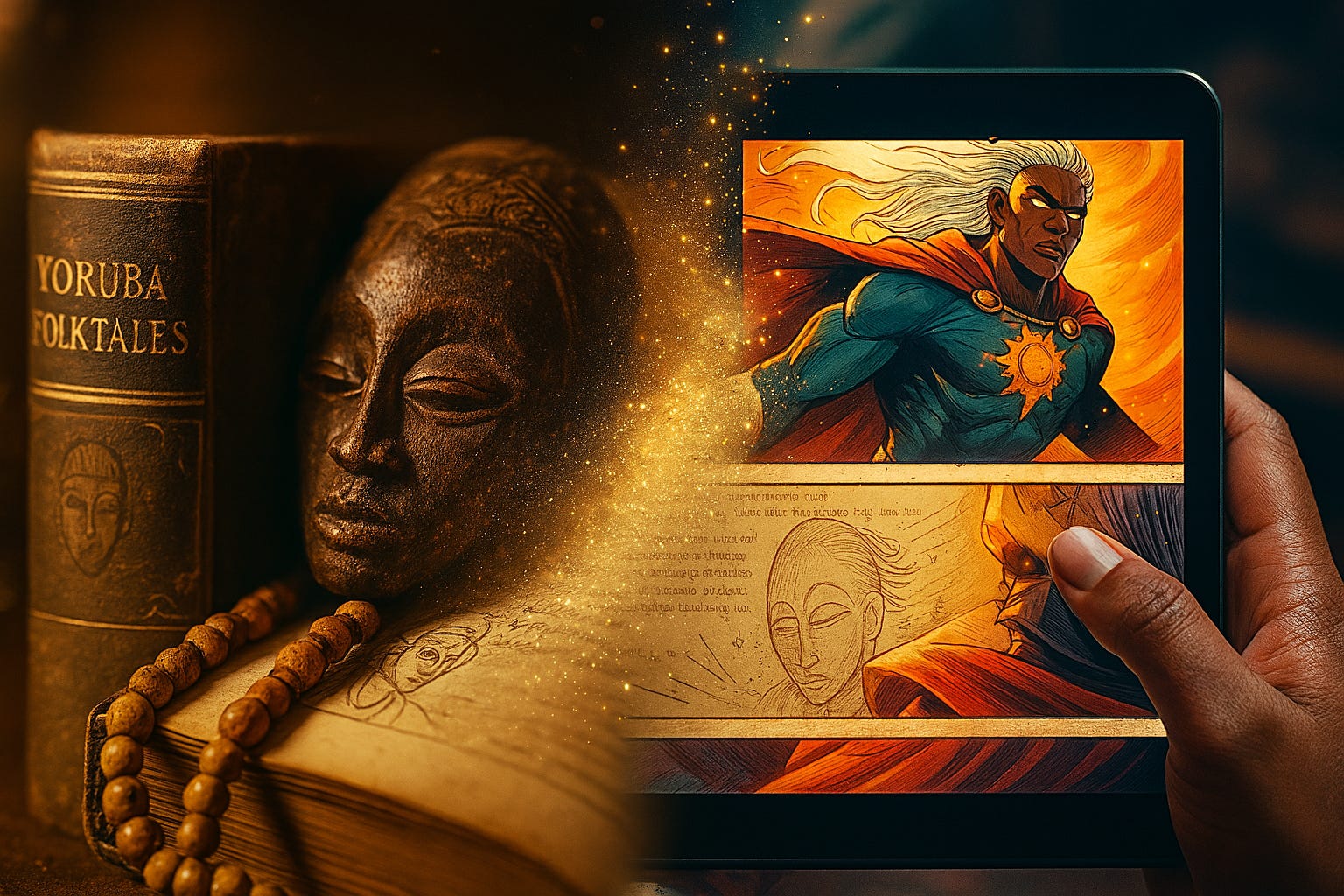
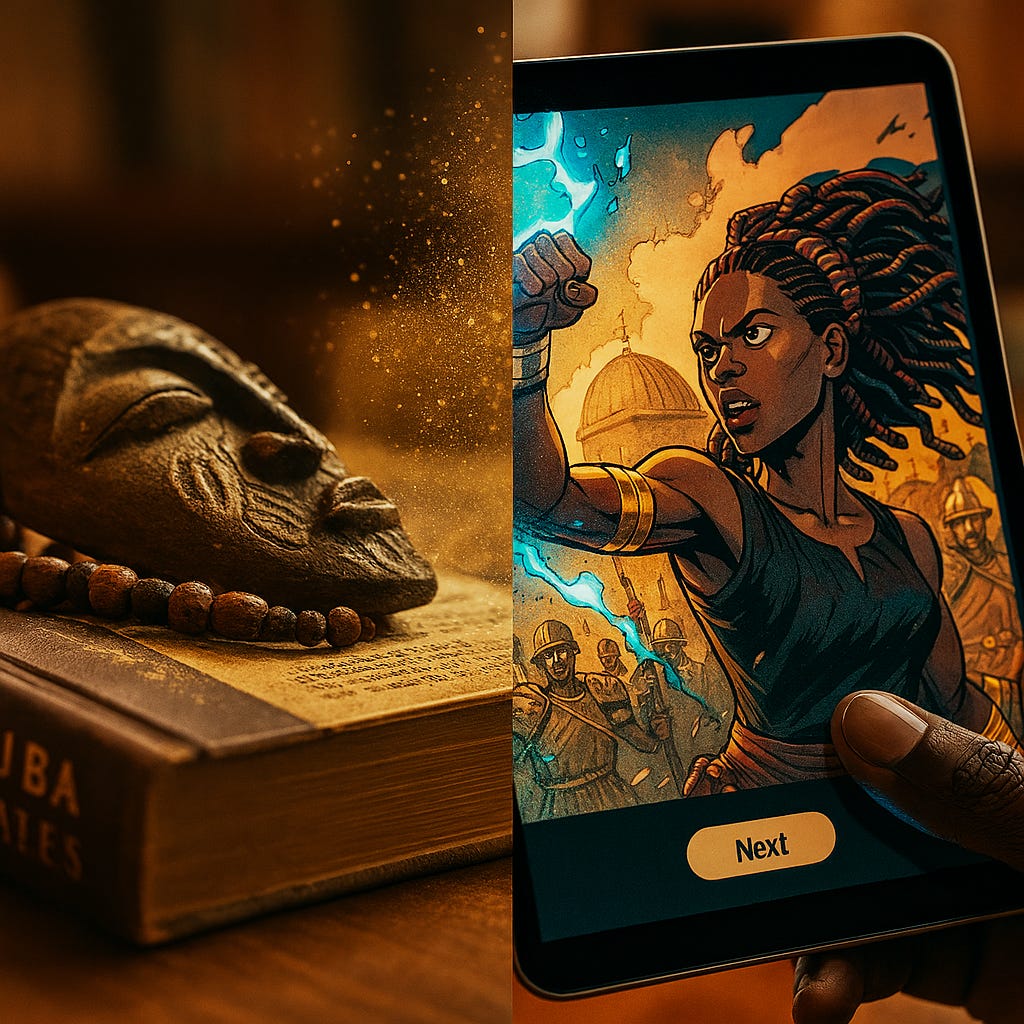
Africa holds centuries of novels, poems, folktales, and oral traditions that are now in the public domain but they’re trapped in out-of-print books, scattered archives, and formats that younger generations don’t engage with. Meanwhile, African youth are consuming manga, webtoons, and digital comics at scale. What if you could bridge this gap by adapting African heritage literature into visually stunning comics, visual novels, and webcomics? This isn’t just preservation it’s cultural reclamation with commercial legs. You’d build a pipeline that turns forgotten stories into accessible IP, creates opportunities for African artists and writers, and potentially spawns the next wave of African creative franchises.
Is This New?
Originality Check:
- [ ] Completely novel
- [x] Remix of existing concepts
- [x] Niche specialization
- [x] Cross-domain adaptation
Brief analysis: Public domain adaptation isn’t new (Marvel adapted mythology, Manga adapted Romance of the Three Kingdoms), and African storytelling platforms exist. But nobody has systematically combined public domain African literature with modern visual formats at scale. Most heritage digitization projects stop at PDF scans. Comic platforms focus on new content. This bridges both it’s archive meets entertainment studio. The angle is specific: African public domain + contemporary visual language + hybrid commercial/cultural model. That combination is uncharted territory.
As usual some document: Vision, SRS, Concept, etc. AfriStory Visual Heritage Lab artifacts
Market Position
The Landscape: The global comics and manga market is worth $15-17 billion annually and growing, with webtoons and digital formats driving expansion. Africa’s creative sector is fragmented strong individual artists, emerging animation studios, but no dominant platform for heritage-based visual storytelling. Public domain digitization efforts exist but rarely extend to creative adaptation. Comic cons are appearing in Lagos, Nairobi, and Johannesburg, signaling appetite.
The Opportunity: Three converging forces create space: (1) African youth consuming visual stories on mobile devices, (2) a vast, underutilized public domain catalog, and (3) global demand for diverse narratives. You’re not competing with Marvel or Shonen Jump you’re building the category. The niche is “African heritage meets modern comics,” which has no established incumbent.
The Scale: Realistically, this starts as a niche cultural project with 10,000-50,000 early adopters (diaspora, students, cultural enthusiasts). Success at scale means becoming the Webtoon of African heritage stories 100,000+ monthly active readers, licensing deals with animation studios, and educational institutional adoption. Not a unicorn, but a sustainable $5-20M revenue business within 5-7 years if execution is sharp.
Stakeholder Ecosystem
Identified Stakeholders, Needs, Pain Points & Features:
1. African Youth Readers
- Needs: Engaging, mobile-friendly stories that connect to their heritage
- Pain Points: Traditional literature feels inaccessible; imported manga/comics lack cultural resonance
- Features: Free webcomic access, vertical scroll reading, vibrant African-inspired art styles, diverse genres
2. Diaspora Communities
- Needs: Connection to African heritage, shareable cultural content
- Pain Points: Limited access to authentic African stories in modern formats
- Features: Premium subscription for full catalog, downloadable editions, community discussion features
3. African Artists & Writers
- Needs: Paid work opportunities, creative challenges, portfolio building
- Pain Points: Limited local clients, unclear paths to monetization
- Features: Creator dashboard, fair compensation, open adaptation contests, mentorship programs
4. Cultural Institutions (Archives, Libraries, Universities)
- Needs: Broader reach for archived materials, youth engagement
- Pain Points: Physical archives deteriorating, limited digital accessibility
- Features: Partnership programs, co-branding opportunities, educational licensing packages
5. Schools & Educational Institutions
- Needs: Culturally relevant teaching materials, student engagement tools
- Pain Points: Curriculum lacks African perspectives, students disengaged from traditional texts
- Features: Educational bundles, classroom licenses, curriculum-aligned content, teacher resources
6. Animation & Game Studios
- Needs: Original IP for adaptation, culturally rich source material
- Pain Points: High development costs for original stories, risk in unproven concepts
- Features: Clear IP licensing, adaptation-ready story treatments, rights database access
7. Investors & Publishers
- Needs: Scalable creative ventures, authentic African IP
- Pain Points: Risk assessment challenges in emerging markets
- Features: Clear business model, measurable traction metrics, hybrid revenue streams
Product vs. Feature
The Test: Could an existing platform (Webtoon, Kindle, Netflix) just add “African heritage comics” as a category? Technically yes but they won’t. Why? No incumbent has the cultural expertise, rights verification systems, or creator networks specific to African public domain works. This requires deep archival research, country-by-country rights navigation, and cultural sensitivity. It’s not just content; it’s infrastructure.
The Defense: Defensibility comes from three layers: (1) Rights Database — building the catalog is time-intensive and legally complex; (2) Cultural Authority — positioning as the trusted steward of African heritage adaptation creates brand moat; (3) Creator Community — nurturing African artists builds network effects. Speed matters too—being first to claim this space establishes category leadership before larger players notice.
Core Components
What You’d Need:
- Heritage Research Capability: Archivists, historians, or partnerships with African universities and libraries to identify, verify, and catalog public domain works across multiple African countries and languages
- Creative Production Pipeline: Writers who can adapt prose/oral narratives to visual scripts, artists with visual storytelling skills, and a style guide that blends African aesthetics with modern comic language
- Rights & Legal Framework: Legal counsel familiar with international copyright law, country-specific public domain rules, and a conservative rights verification system to avoid infringement
- Digital Platform Infrastructure: Web and mobile reader experience with freemium monetization, content management system for series/chapters, and analytics to track engagement
- Community & Partnership Network: Relationships with cultural institutions for source material access, artist communities for talent pipeline, and diaspora organizations for market reach
First Steps:
- Build the Rights Matrix (Month 1-2): Research public domain laws in 5 pilot African countries; create a spreadsheet database of 50-100 candidate works with author death dates, editions, and current accessibility; identify 3-5 “safe” works with clear public domain status to start
- Commission Proof-of-Concept Adaptations (Month 2-4): Partner with 2-3 African comic artists to adapt one short folktale and one excerpt from a historical novel; produce 10-15 page visual treatments in different art styles; test which resonates
- Launch Pilot Anthology & Gather Feedback (Month 4-6): Release a free digital anthology of 3-5 short adaptations via simple website or Medium; share with targeted communities (African student groups, diaspora forums, comic enthusiast groups); collect email signups and survey responses to validate demand
The Contrarian View
Challenge This Idea:
- “Nobody cares about old stories.” Public domain often means “forgotten for a reason.” If these stories were compelling, they’d still circulate. Younger audiences want contemporary voices, not dusty folktales repackaged.
- “Rights are a nightmare.” Public domain varies by country, edition, and translation. You’ll spend years in legal quicksand before publishing a single page. One lawsuit could kill the project.
- “The market is too small.” African readers with disposable income for premium content are limited. Diaspora is a niche. Global audiences already have endless content. Who’s actually paying?
- “Cultural appropriation concerns.” Adapting oral traditions or texts recorded by colonial ethnographers is fraught. Communities may resist commercialization of sacred stories. You’ll be accused of exploitation.
- “It’s just a feature.” Existing platforms (Webtoon, Tapas, even African startups like Kugali) could add heritage adaptations anytime. Why would they need your entire infrastructure?
Why It Might Still Work:
- On relevance: Stories don’t need to be new to be powerful mythology drives billion-dollar franchises (Marvel, Percy Jackson). The issue isn’t age; it’s format. Make it visual, mobile-friendly, and narratively tight, and dormant stories come alive. Early tests with a pilot anthology will validate this quickly.
- On rights: Start conservative—focus only on works with clear public domain status (author died 70+ years ago, no complex estate issues). Build the database slowly. Legal risk is manageable if you don’t rush. Partner with law schools or IP clinics for affordable counsel.
- On market size: Freemium digital distribution costs almost nothing. You don’t need millions of paying users to sustain 10,000 subscribers at $3-5/month plus institutional licensing creates runway. The real monetization is long-term IP licensing to studios and educational sales.
- On cultural sensitivity: Build advisory boards with cultural experts, involve communities in adaptation decisions, and prioritize attribution and profit-sharing with descendant communities where applicable. Transparency and collaboration mitigate backlash. This is an opportunity to do right what colonial archives did wrong.
- On being just a feature: No platform has the specialized knowledge to execute this. It’s not plug-and-play. The defensibility is in the hard, unsexy work—rights research, cultural expertise, creator community. By the time incumbents notice, you’ve built a moat.
Cross-Domain Potential
If This Doesn’t Work Here:
- Latin American Indigenous Literature: Mayan codices, Aztec poetry, gaucho epics adapt public domain Latin American heritage into visual formats for Spanish/Portuguese-speaking youth
- Southeast Asian Folklore & Epics: Ramayana variations, Philippine mythology, Vietnamese legends—untapped visual storytelling potential across a massive digital-native population
- Appalachian & Southern U.S. Folklore: Adapt public domain American folk tales, spirituals, and regional oral traditions into graphic novels targeting domestic heritage tourism and education markets
- Middle Eastern & Persian Poetry: Transform Rumi, Hafez, and pre-modern Arabic poetry into illustrated narrative comics or animated shorts for diaspora and educational markets
- Slavic Folklore & Soviet-Era Literature: Adapt Russian fairy tales, Ukrainian epics, and out-of-copyright Soviet literature into visual novels targeting Eastern European diaspora
The model is portable: Heritage literature + visual adaptation + digital distribution + hybrid cultural/commercial model. Replace “African” with any underrepresented cultural corpus, and the blueprint holds.
Next Steps for Builders
If you wanted to pursue this:
Week 1: Immediate Validation Action
- Interview 10 potential readers (African youth, diaspora, educators) about their current reading habits, interest in heritage stories, and willingness to pay for visual adaptations
- Identify 3 specific public domain works you could start with and verify their copyright status in at least one African country
- Sketch or mock up 2-3 sample comic pages adapting a folktale to visualize the concept
Month 1: Early Development Milestone
- Partner with 1-2 African comic artists for a paid pilot project: adapt one complete short story (8-12 pages)
- Build a simple landing page with email signup describing the vision and showcasing sample art
- Research and document public domain laws in 5 African countries; begin building a database of 50 candidate works
Quarter 1: Launch-Ready Checkpoint
- Release a free pilot anthology (3-5 short adaptations, 30-50 total pages) as a PDF and web-reader version
- Drive 500-1,000 downloads/views through targeted outreach (African student associations, diaspora forums, comic communities, cultural organizations)
- Collect feedback via survey; validate top 3 audience pain points and willingness to pay
- Secure at least one partnership conversation with a university archive or cultural institution
- Define business model specifics: pricing tiers, institutional licensing structure, creator compensation framework
Resources to explore:
- Project Gutenberg Africa & Wikisource: For public domain African texts already digitized
- HathiTrust & Internet Archive: Large repositories with African colonial-era publications (verify public domain status)
- African Comics & Animation Communities: Kugali (UK), Comic Republic (Nigeria), Loyiso Mkize (South Africa) for networking and talent scouting
- Creative Commons & Copyright.gov Resources: For understanding international copyright and public domain rules
- Webtoon Canvas, Tapas, or GlobalComix: Platforms to study digital comic UX and monetization models
Final Thoughts
This idea sits at the intersection of preservation and innovation taking what’s been left behind and reimagining it for the people who should have always had access to it. It’s not just a business; it’s an act of cultural stewardship with commercial upside. The world has endless new stories, but there’s something powerful about resurrecting voices that were silenced by time, format, and accessibility. If done right, AfriStory Visual Heritage Lab doesn’t just create comics it creates a movement. One where African youth see their heritage as cool, where diaspora reconnect through visual narratives, and where global audiences discover stories they never knew existed.
Alternative takes or pathways:
- Focus exclusively on one country (Nigeria, South Africa, Kenya) to simplify rights and build deep local credibility before expanding pan-African
- Partner with existing African comic platforms (like Kugali) rather than building a standalone platform—focus on content production only
- Start with oral traditions recorded in the 1900s-1950s (likely public domain) rather than navigating older written literature with complex provenance
- Build this as an open-source / Creative Commons project first to rally community support before commercializing
This is part of [Ideas Snapshots] — a collection of lightweight business blueprints, strategic outlines, and entrepreneurial prompts. Not every idea needs to be built. Some are meant to inspire, remix, or adapt.
What would you do differently with this idea? Reply or share your take.
References
Several African authors especially those who published before 1925 or died more than 70 years ago have works in the public domain. These include early ethnographers, folklorists, and pioneering literary figures.
Where to find these works
- Internet Archive: Search for African folktales, colonial ethnographies, and early fiction
- Project Gutenberg: Limited African content, but includes some public domain texts
- HathiTrust & Google Books: Useful for older academic and ethnographic works
- Goodreads Public Domain Shelves: Includes African and African-American authors
Additional Resources
Oral Traditions Documented Pre-1925:
- Many collections of oral narratives, proverbs, and songs were transcribed by missionaries, colonial administrators, and early African scholars
- These include Akan, Hausa, Swahili, and other literary traditions
Context matters
Many early works were written by Europeans documenting African cultures. While they preserve valuable stories, they often reflect colonial biases. Authors like Plaatje offer more authentic African perspectives and are especially valuable for reclaiming literary heritage.
Important Notes:
- Copyright varies by country (life + 50/70/100 years)
- Works published before 1929 are generally public domain in the US
- Some countries have special protections for folklore and traditional knowledge
- Always verify specific edition rights before republishing
List
Here’s a curated list of notable African and Africa-related authors whose works are now in the public domain:
📖 Authors with public domain works
Elphinstone Dayrell (Nigeria)
- British colonial administrator who collected Efik and Igbo folktales
- Notable work: Folk Stories from Southern Nigeria (1910)
James A. Honeÿ (South Africa)
- Compiled South African Folk-Tales (1910), including Zulu and Xhosa stories
Alice Werner (South Africa/Zambia)
- Linguist and folklorist who published Zulu Tales and Myths and Legends of the Bantu (1915)
Carl Christian Reindorf (Ghana)
- Historian and pastor; wrote History of the Gold Coast and Asante (1895), blending oral tradition and colonial records
A.B. Ellis (West Africa)
- British officer and ethnographer; documented Yoruba, Ewe, and other cultures in the late 1800s
Solomon T. Plaatje (South Africa)
- Early African intellectual and activist; Native Life in South Africa (1916) and Mhudi (written in 1919, published posthumously in 1930)
Early African Writers & Intellectuals
Thomas Mofolo (Lesotho, 1876–1948)
- Chaka (1925) – Epic novel about the Zulu king
- Pitseng (1910) – Early Sesotho novel
- Moeti oa Bochabela (1907) – First novel in Sesotho
Samuel Edward Krune Mqhayi (South Africa, 1875–1945)
- Xhosa poet and novelist, “Father of Xhosa Poetry”
- Ityala Lamawele (1914) – Novel in Xhosa
- Various poetry collections from early 1900s
Shaykh Anta Diop (various West African scholars)
- Islamic scholars from Timbuktu and other centers wrote extensively in Arabic (pre-1925 works are in public domain)
R.R.R. Dhlomo (South Africa, 1901–1971)
- Early works from the 1920s-30s may be entering public domain depending on jurisdiction
- An African Tragedy (1928)
Colonial-Era Ethnographers & Writers
Henri Junod (Mozambique/South Africa)
- The Life of a South African Tribe (1912-1913) – Extensive ethnographic work
Dudley Kidd
- The Essential Kafir (1904) – Early ethnographic text (note: historical terminology)
R. Sutherland Rattray (Ghana)
- Ashanti (1923) – Folk-tales, proverbs, and culture
- Religion and Art in Ashanti (1927) – May be entering public domain
North African Authors
Taha Hussein (Egypt, 1889–1973)
- Early works from the 1920s are in public domain in many jurisdictions
- The Days (Al-Ayyam, 1929) – Autobiography