Preamble
So, you want to be a worldwide pepper sauce baron? The opportunity: a pepper sauce APP or sauce producer or both. The Pepper Sauce Revolution: Possible pathways to Global Domination for Small-Scale – to- large Producer
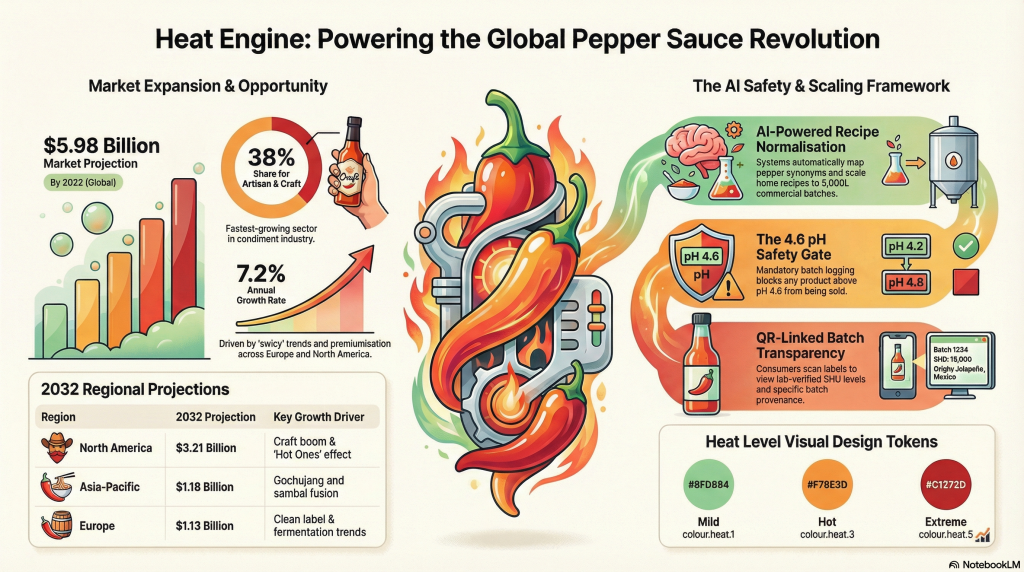
The global hot sauce market is exploding, projected to reach $5.98B by 2032. Yet legacy producers face supply chain crises (like Sriracha’s shortages), creating openings for agile small-batch makers. Simultaneously, AI is transforming food innovation.
You want to build a worldwide hot sauce business. The fastest way is to treat heat as part of a data and information chain . Supply shocks like the Sriracha shortage created gaps that agile makers can fill. At the same time, AI lets you mine recipes, predict crop swings, and tune formulations by region.
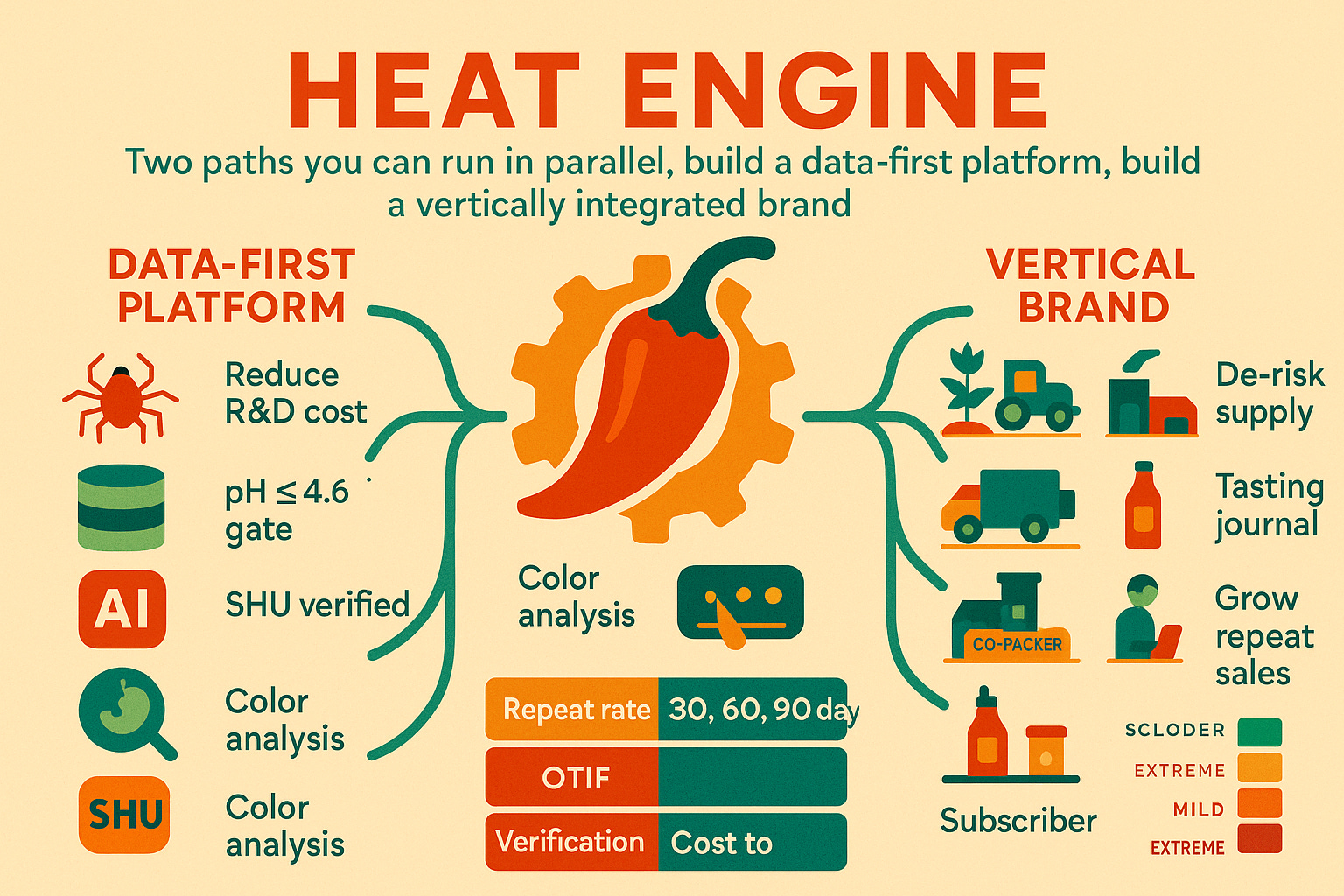
This piece gives you two clear paths. Path one, build the data layer first. Aggregate recipes, peppers, and lab signals into a searchable platform, then monetize through tools, APIs, and services. Path two, build the brand and the supply chain. Use predictive sourcing, AI recipe scaling, and co-packers to launch SKUs, then license your tech. You can also run both paths together.
Your success depends on four controls. Hit pH targets at or below 4.6 with logged readings. Back heat claims with SHU certificates. Diversify pepper supply by region and season. Prove taste fit with a simple tasting journal and flavour map. Do these, and you turn experimentation into a system you can scale.
Analysis
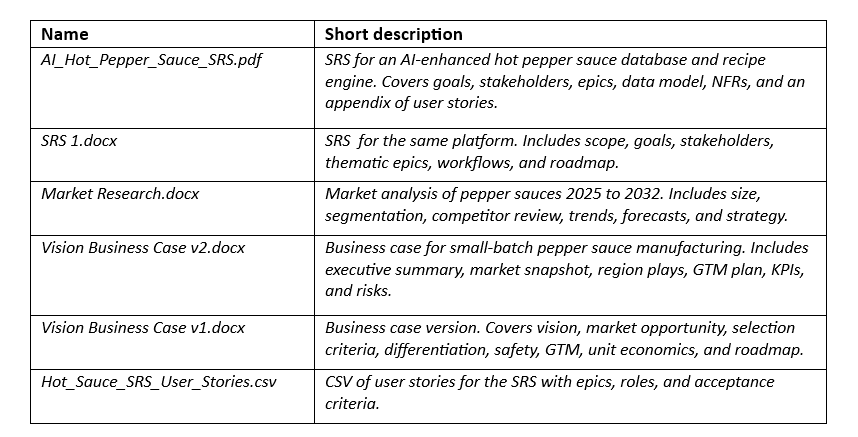
As usual my outline analysis located@ Pepper Artifacts Which consist of
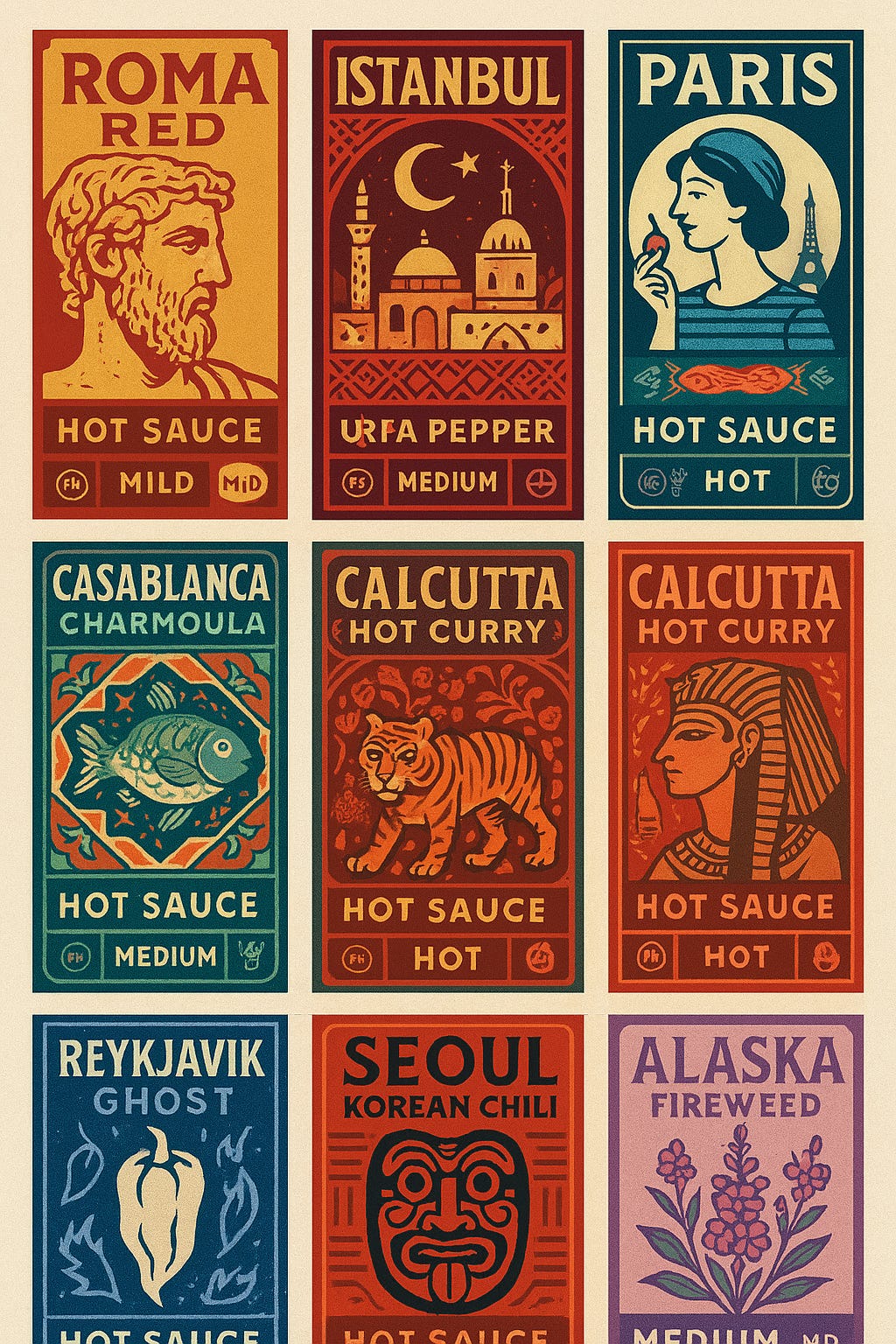
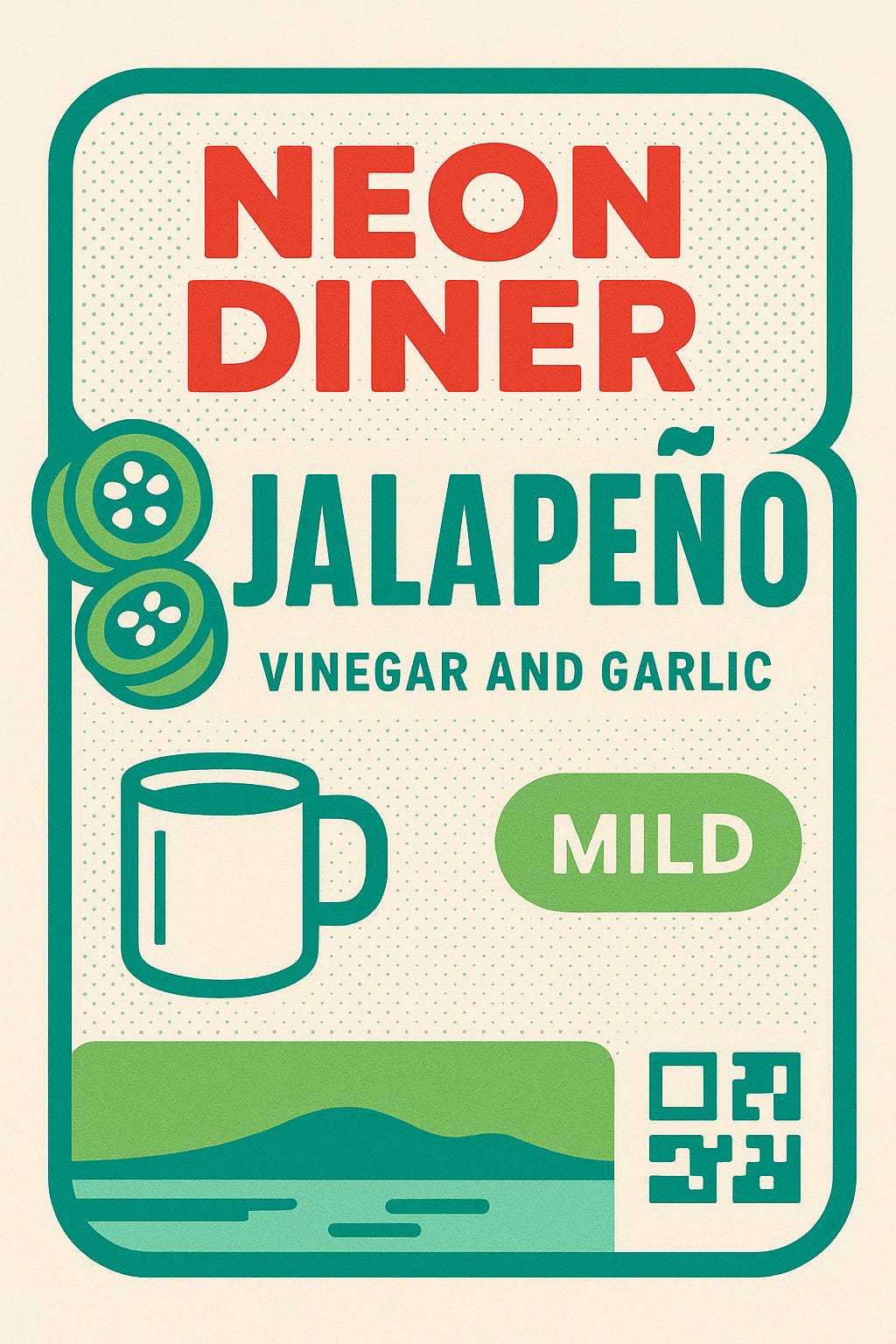
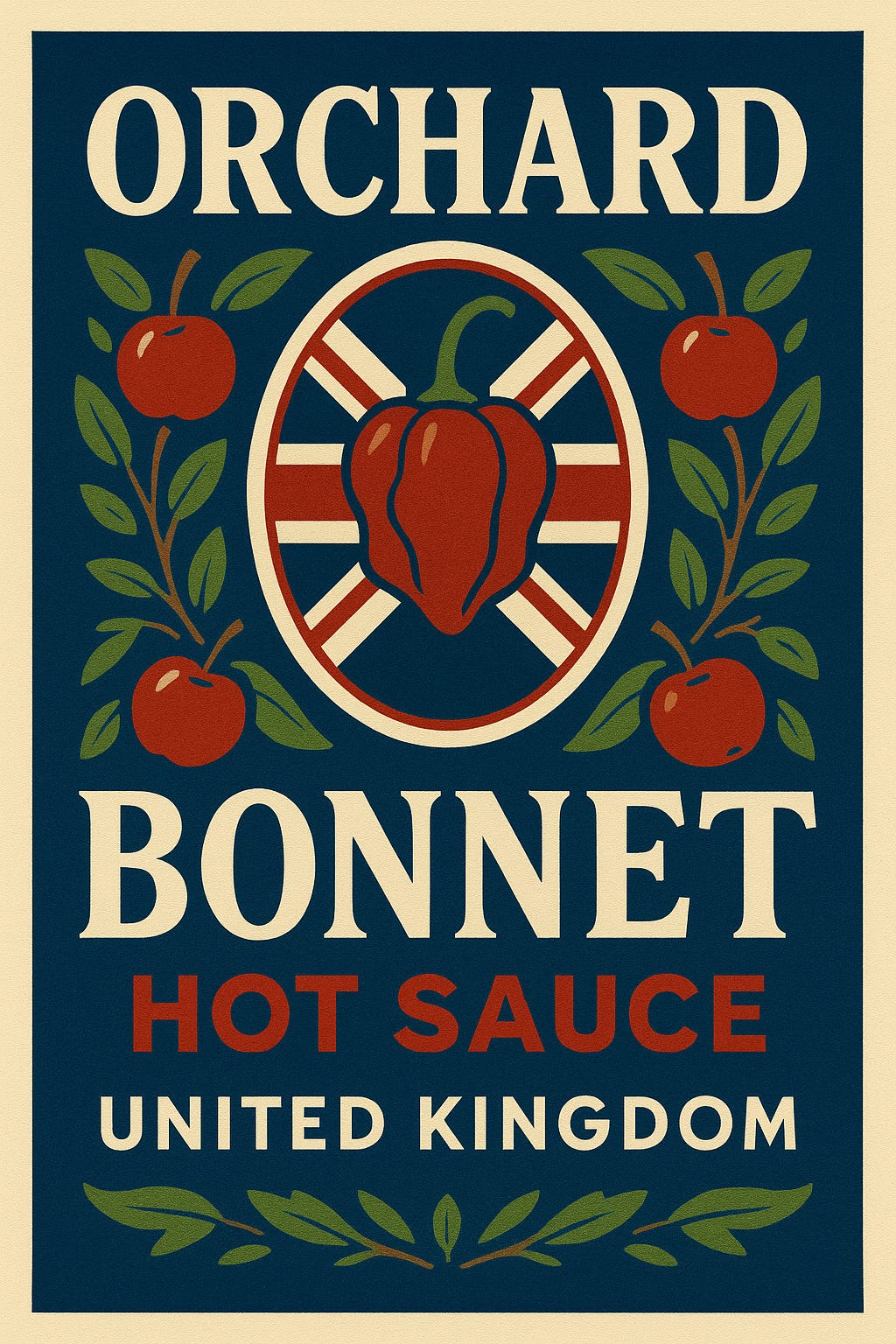
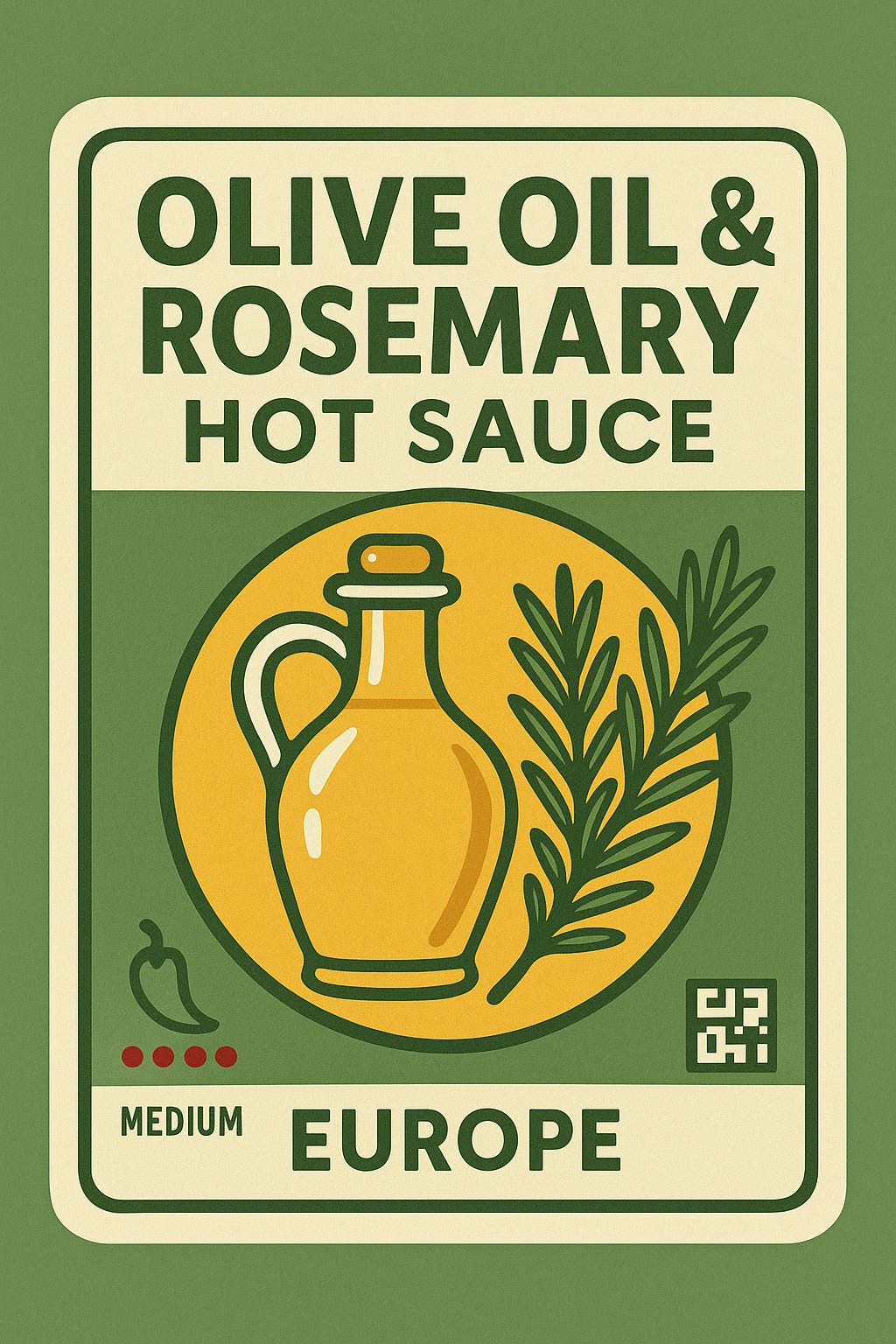
· Label generation prompt inspiration: visual design pack for 10 hot sauce labels
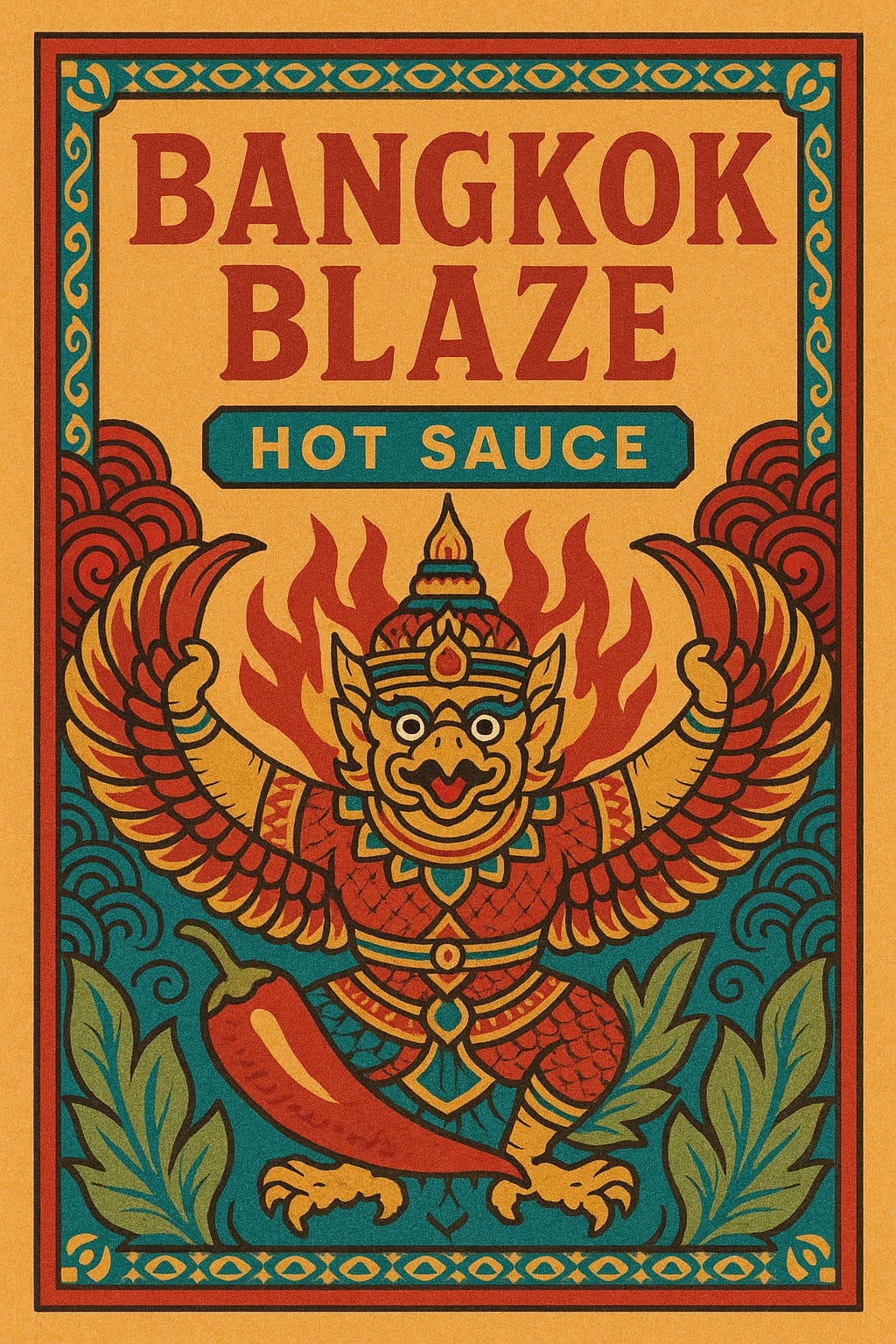
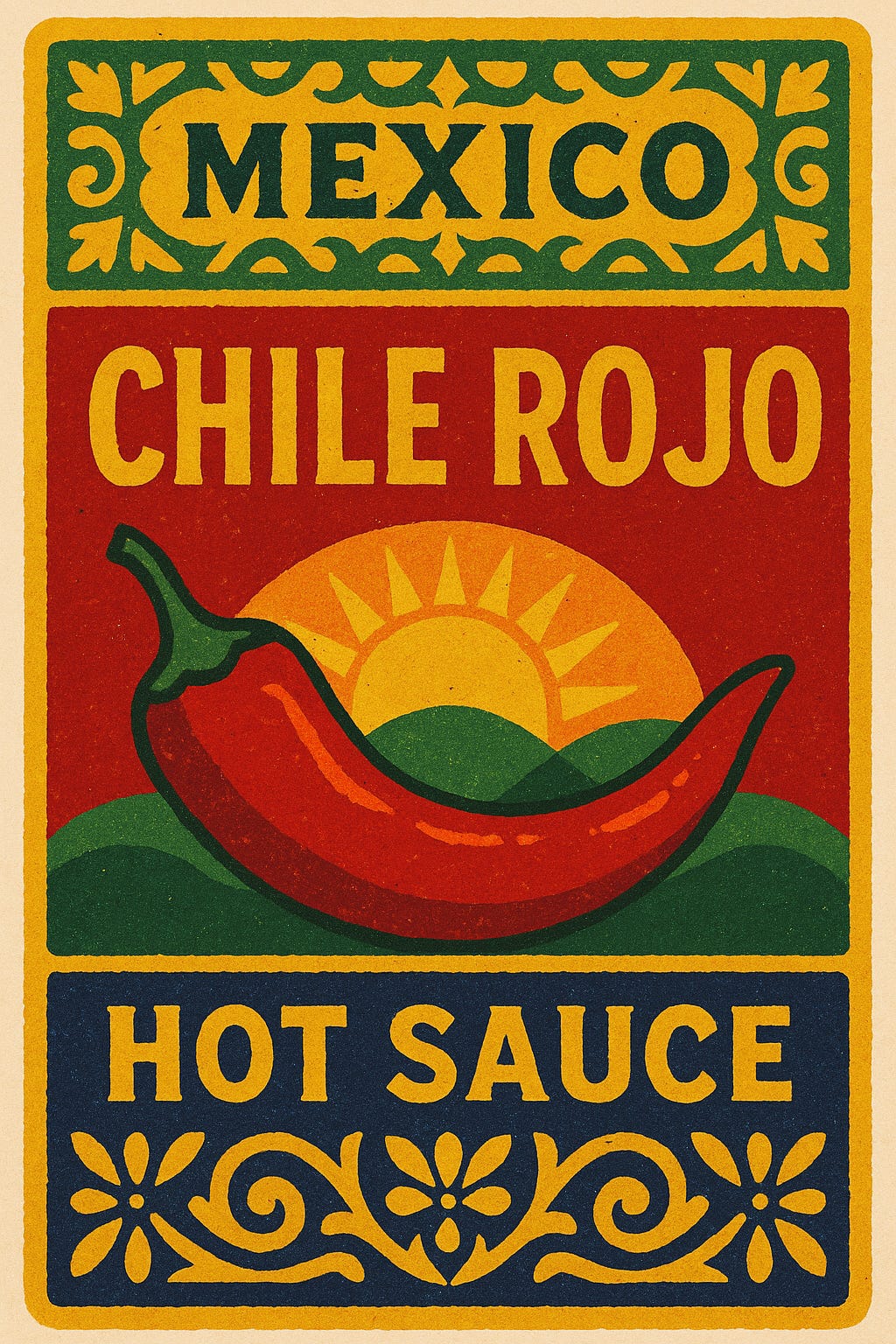
· Fun stuff imagine a pepper brand and its label then you start imagining the taste see hypothetical Brands labels
Approaches
Here is how to merge these trends using two distinct approaches for building an AI-enabled pepper sauce empire (I personally recommend reading any of the vision artifacts as a first step Pepper Artifacts ):
Approach 1: The Data-First Platform Play
(Build the brain, then the brand)
Strategy:
Launch an open-source AI platform that aggregates global pepper knowledge before monetizing through premium tools and partnerships.
Tech Stack:
- AI Web Crawlers + NLP: Scrape 10,000+ global recipes, categorizing by:
python
# Sample NLP categorization
categorize_recipe(recipe_text):
heat_level = detect_scoville(ingredients) # e.g., “Ghost Pepper: 1M SHU”
cuisine_origin = identify_regional_keywords(“adobo”, “harissa”, “gochujang”)
use_case = tag_application(“marinade”, “condiment”, “beverage_pairing”)
- Flavor Mapping Engine: Visualize pepper profiles (e.g., “Scotch Bonnet: fruity → floral → intense heat”)
- Recipe Builder: Export scalable formulations (home kitchen → 50L batches)
Business Model:
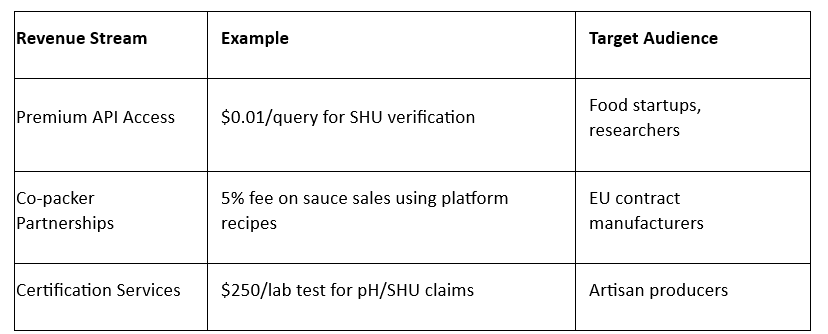
Edge: Become the “Google of heat” – own the data layer. Mitigates upfront production risks while capturing value across the supply chain.
Approach 2: The Vertical Integration Powerhouse
(From database to distribution)
Strategy: Leverage proprietary AI to control the entire value chain – pepper sourcing, recipe development, and branded sauce production.
Tech Integration:
- Predictive Sourcing AI: Cross-reference agricultural databases with real-time pricing:
“Nigeria’s ata rodo harvest peaks in Q3 – stock 40% frozen mash for EU winter production.”
- Dynamic Recipe Engine: Adjust formulations based on:
- Local ingredient costs
- Regional taste preferences (e.g., reduce vinegar for EU markets)
- Regulatory constraints (e.g., pH < 4.6 for shelf stability)
- DTC Personalization: User taste journals → custom blend subscriptions
Business Execution:
- Phase 1: Launch 3 AI-optimized SKUs (e.g., “Fermented Mango Habanero”) via UK co-packers
- Phase 2: Monetize tech through:
- SaaS Lite: $99/month “Pro Recipe Scaling” tool for indie makers
- White-Label Production: Co-manufacture for gourmet brands using your AI
- Phase 3: Export platform + sauces to GCC/UAE with halal-certified AI formulations
Edge: Higher margins (55% wholesale) with built-in demand testing via platform data.

Critical Success Factors for Both Models
- Pepper Intelligence: Integrate with UN FAO/agricultural databases for real-time crop pricing and seasonality alerts.
- Compliance AI: Auto-generate labels meeting EU/UK/US regulations (e.g., allergen flags, HS codes).
- Dual-Sourcing Guardrails: AI monitors supplier risks (e.g., “Mexico drought → shift 30% jalapeño order to Turkey”).
- Flavor-First Validation: Use computer vision + ML to correlate user taste journal ratings with chemical profiles (pH/capsaicin levels).
Which Path Wins?
- Bootstrapped Innovators: Start with Approach 1. Minimal CAPEX ($50k for MVP), revenue from data services funds sauce production.
- Funded Food-Tech: Approach 2 accelerates moat creation. Expect $200k-$500k seed funding for integrated kitchen/tech build.
“The next Tabasco won’t win on heat alone – it’ll be powered by algorithms that master terroir, trends, and supply chain math.”
*Both models exploit whitespace: 78% of hot sauce launches fail within 18 months (Food Navigator 2025). AI slashes R&D costs while ensuring shelf-ready products resonate with regional palates. For small producers, this isn’t just disruption – it’s survival.*
Data Sources:
- Fortune Business Insights: Hot Sauce Market 2032 Projections
- U.S. FDA 21 CFR 114 (Acidified Foods Compliance)
- Global Trade HS Code 210390 (Sauces/Tariff Structures)
- Supply Chain Dive: Huy Fong Sriracha Shortage Case Study
Appendices
Design a comprehensive, AI-enhanced global pepper to hot pepper sauce database and recipe engine.
Objectives:
- Compile pepper – hot pepper sauce recipes from around the world using AI-powered web crawling and NLP categorization.
- Create a modular recipe table that includes:
- Pepper varieties and combinations
- Regional origins and cultural context
- Use cases (e.g., marinades, dips, condiments)
- Pairing suggestions (foods, beverages)
- Seasonality and growing zones
- Equipment needed (home, artisanal, industrial)
- Scaling options (small batch, medium production, commercial scale)
AI Components:
- Web crawler to extract structured recipe data
- NLP model to categorize by flavor profile, heat level, and regional style
- Recommendation engine for pairing and substitutions
- Interface for users to log tasting notes and create custom blends
- Interface to enable the recording and comparison with existing pepper sauces databases
User Interface Features:
- Interactive tasting journal with tagging and rating
- Filtering by pepper type, cuisine, heat level, and preparation method
- Visualization tools for flavor mapping and regional trends
- Exportable recipe builder for small-scale production
Considerations:
- Open-source vs proprietary data licensing
- Multilingual support for global inclusivity
- Integration with agricultural databases for seasonality
- Modular design for future expansion (e.g., fermented sauces, dry rubs)
Conclusion
- Decide your primary path this quarter, platform first or brand first.
- Ship one measurable feature in 30 days, for example pH logging per batch or semantic recipe search.
- Set three guardrails, pH gate at 4.6, SHU lab link required for claims, at least two suppliers per key pepper.
- Launch three AI workflows, recipe scaling to target yield, color capture with Delta E tracking, substitution suggestions with rationale.
- Track four core KPIs, 30, 60, 90 day repeat rate, on time in full to retailers, SHU and pH verification pass rate, cost to formulate per SKU.
- Expand by region with a seasonality plan, freeze mash buffers before low yield quarters, align co-packers and labels.
- Package your advantage, a public read API and a Pro Recipe Scaling tool, then use them to source partners and white label deals.
Label generation inspiration: visual design pack for 10 hot sauce labels