Idea Snapshots — Brief, strategic glimpses into business possibilities.
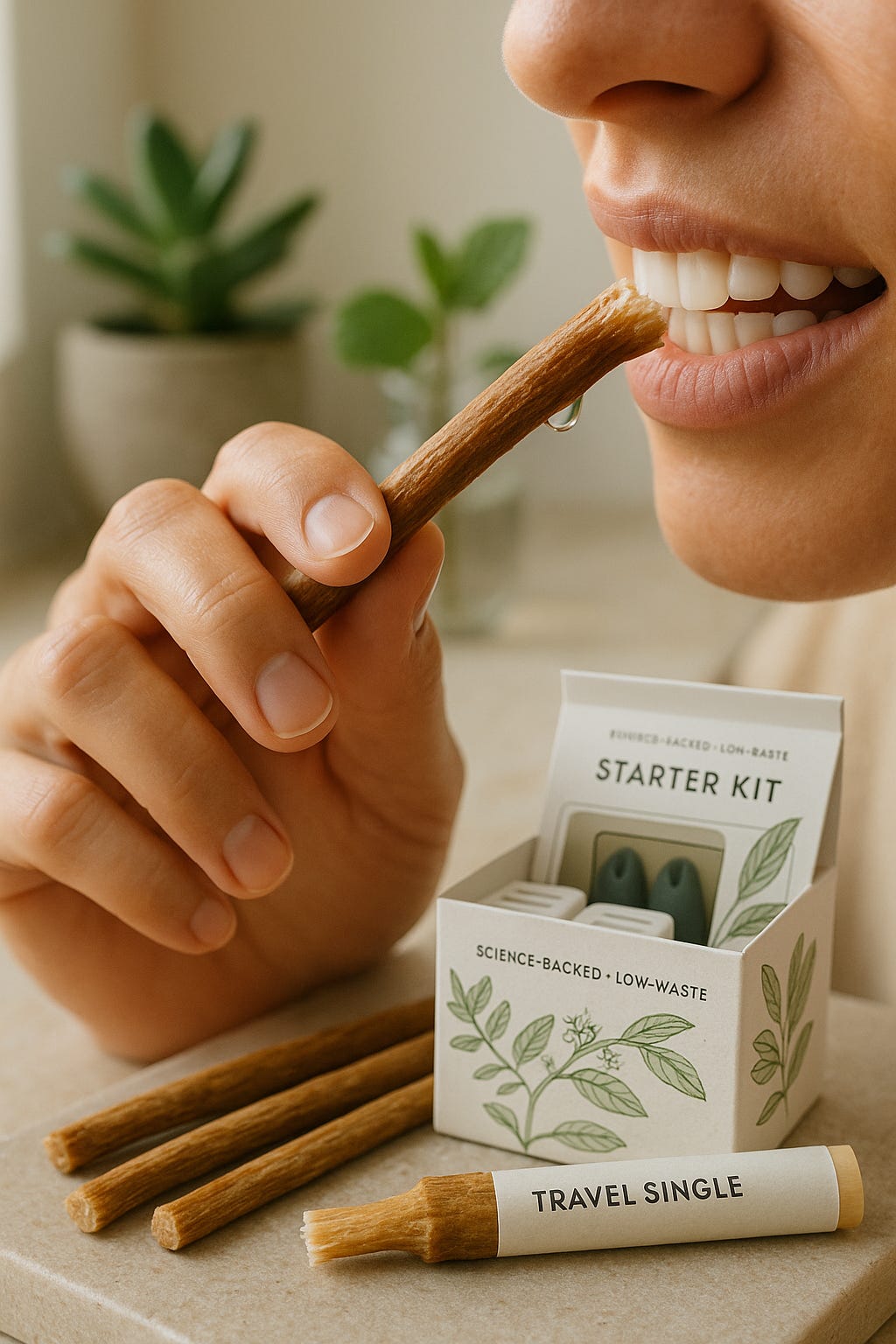
This is quite basic and a happy departure from my usual techno futuristic stuff. Chewing sticks deliver everyday oral care without paste or power. The core idea is to commercialize ethically sourced African species, led by Salvadora persica, as a credible, lab-validated complement to brushing. The product serves people who want natural ingredients, less plastic, and culturally respectful choices and sustainable solutions. It solves three problems at once: it reduces bacterial load between brushings, cuts plastic and water use, and offers a portable routine that works at work, on a commute, while fasting, or on the go.
Is This New?
Originality Check:
· [ ] Completely novel
· [X] Remix of existing concepts
· [X] Niche specialization
· [X] Cross-domain adaptation
Miswak and other chewing sticks exist. The novel angle is a multi-species, quality-controlled line with modern QC, validated antibacterial activity, clear usage guidance, and ethical sourcing. The differentiation is scientific substantiation, consistent specs, and brand experience that respects origin cultures while meeting modern retail standards. Rather than replacing toothbrushes, this positions chewing sticks as a situational alternative and complement backed by lab data and user studies.
As usual some outline analysis and artifacts. Is this profitable see business plan in: Chewing sticks
Market Position
The Landscape: Natural oral care is growing and fragmented. Options include bamboo brushes, herbal pastes, and single-species miswak. Quality, labeling, and claims vary widely. Few products combine cultural authenticity with rigorous QC and substantiated efficacy claims.
The Opportunity: A science-first, culturally respectful brand that positions chewing sticks as a complement to brushing, not a cure-all. Start with diaspora and halal channels, plus DTC and natural retailers where education is welcome. The product fits moments when traditional brushing isn’t convenient travel, fasting periods, work breaks, and mid-day freshening.
The Scale: Aim for a viable middle ground. Target strong unit economics with above 50% blended gross margin, 30% repeat purchase by month 6, and three retail partners in year 1. Success looks like a trusted, evidence-led niche brand with clear refills and certified sustainability credentials, not a commoditized SKU racing to the bottom.
Stakeholder Ecosystem:
· Suppliers and Harvesters: Need fair pay, legal harvest documentation, rotational practices, long-term agreements, and training on harvest windows and quality standards
· Regulators: Require clear category positioning (cosmetic/oral hygiene accessory), safety limits, accurate labeling, and substantiated claims without disease treatment language
· Retailers: Need viable margins (especially natural and ethnic specialty), education tools, demo materials, and reliable supply with moisture-controlled logistics
· Consumers: Want effective gum care, antibacterial action, easy-to-follow instructions, cultural respect, and transparency about sourcing and impact
· NGOs and Certifiers: Support biodiversity protection, traceability, fair trade verification, and measurable impact metrics (plastic avoided, water saved)
References: Chewing Sticks : Comprehensive vision document v2, analysis checklist, QC specs, and user study protocols provide the evidence framework for claims and market entry.
Product vs. Feature
The Test: Stands alone as a product with starter kits, refills, travel singles, and accessories (protective caps, holders). Also integrates seamlessly into broader oral care routines as a complement rather than replacement.
The Defense: Defensible through rigorous species selection and quality specs, validated in vitro and in vivo efficacy, community partnerships with fair-trade MOUs, distinctive packaging with clear usage guidance, and a certification roadmap (Organic, FairWild, FSC, B Corp). The brand story combines cultural authenticity with scientific rigor hard to replicate without deep sourcing relationships and QC infrastructure.
Core Components
What You’d Need:
· Verified species supply with lot traceability, curing SOPs, and harvest documentation
· Validated microbial reduction process and QC release tests for moisture, active markers, and microbial counts
· Evidence plan covering in vitro antibacterial assays and 4–6 week user studies measuring plaque and gingival outcomes
· Packaging that manages moisture, maintains fiber integrity, and communicates proper use clearly
· Claims governance framework and regulatory review for each target market (US, EU, UK)
First Steps:
1. Lock primary species (Salvadora persica) and target markets; map regulatory category and label requirements
2. Define moisture targets, micro limits, and active marker ranges; draft SOPs for harvest, curing, cutting, and packaging
3. Run in vitro antibacterial assays against common oral pathogens (S. mutans, P. gingivalis, F. nucleatum); produce pilot batches and validate against QC specs
The Contrarian View
Challenge This Idea: Adoption outside cultural niches may be slow. Sensory variability (taste, texture, fray performance) could limit repeat use. Species misidentification or batch contamination pose safety and reputation risks. Over-claiming antibacterial or therapeutic benefits could trigger regulatory pushback and reclassification as a medical device or drug. Consumer education requires significant investment and may not scale efficiently.
Why It Might Still Work: Education via short demo videos, pre-frayed options, and starter kits with instruction cards lowers the usability barrier. Blended lots and active marker ranges tied to release specs ensure consistency. Claims limited to antibacterial activity and gum support not disease treatment keep the product in cosmetic/accessory categories. Supplier MOUs with GPS lot tracking, HACCP plans, and third-party lab testing reduce contamination and traceability risks. The diaspora and halal channels provide a culturally receptive first market with built-in trust and lower education costs, creating a bridgehead for expansion.
Cross-Domain Potential
If This Doesn’t Work Here: If mainstream oral care adoption stalls, reposition chewing sticks as specialty tools for travel, tourism (utility or gifts), Oral or dental care case studies, outdoor recreation, and emergency preparedness (no water or power needed). Explore institutional channels: pilgrimage travel packs for Hajj and Umrah, university welcome kits for international students, corporate wellness programs emphasizing sustainability, and military or aid organization field kits. Consider gum-soothing extensions targeting periodontal care or post-dental procedure recovery. Wellness gift kits combining chewing sticks with other low-waste personal care items could tap the conscious consumer market.
Next Steps for Builders
If you wanted to pursue this:
· Week 1: Map regulatory category and label content for UK/EU and US; confirm in vitro test panel design; prepare supplier MOU templates; identify contract labs for micro and heavy metals testing
· Month 1: Complete in vitro antibacterial assays and produce pilot batches; validate moisture, microbial, and active marker specs; draft packaging design, claims copy, and education assets; secure ethical oversight for user study
· Quarter 1: Run 4–6 week user study with 60–100 participants measuring plaque index, gingival bleeding, NPS, and ease of use; finalize labels and claims based on data; launch in 1–2 focused channels (ethnic groceries, halal stores, or natural retailers) with demo content; collect reviews and monitor refill velocity
Resources to explore:
· QA and HACCP templates for botanical products (FDA guidance on cosmetics and dietary supplements, EU Cosmetics Regulation)
· Retail education and sampling playbooks from natural product trade associations
· Cultural and linguistic guides for diaspora marketing (halal certification bodies, African diaspora community organizations)
· In vitro antimicrobial testing protocols (CLSI standards, ISO 20776)
· User study design resources (clinical trial registries, ethical review board templates)
· Sustainable sourcing certifications (FairWild Foundation, FSC, B Corp assessment)
Final Thoughts
Chewing sticks can sit alongside the toothbrush rather than replace it. A respectful, evidence-led approach creates trust, supports source communities, and reduces plastic and water use. The prize is a compact, credible oral care habit that fits real life and honors its roots. This isn’t about romanticizing tradition or vilifying modernity it’s about expanding the oral care toolkit with an option that meets different moments and values. The path forward requires balancing cultural authenticity with scientific rigor, fair trade commitments with commercial viability, and education with ease of use. Alternative takes could include focusing solely on travel/emergency use to sidestep daily habit formation challenges, partnering with dental hygienists for professional endorsement, or creating subscription boxes that pair chewing sticks with complementary natural oral care products.
This is part of Ideas Snapshots — a collection of lightweight business blueprints, strategic outlines, and entrepreneurial prompts. Not every idea needs to be built. Some are meant to inspire, remix, or adapt.
What would you do differently with this idea? Reply or share your take.