When Fiction Becomes Blueprint
In 1966, when Captain Kirk first flipped open his communicator aboard the USS Enterprise, he was using what looked like pure fantasy a wireless handheld device for instant voice communication across vast distances. Fast forward sixty years, and that “fantasy” has become mundane reality. The flip phone dominated the 1990s and 2000s. Satellite phones now connect researchers at the poles, sailors mid-ocean, and relief workers in disaster zones. Smartphones have evolved beyond voice into pocket supercomputers that would astound even Gene Roddenberry.
The communicator’s journey from script to product demonstrates science fiction’s unique power: it does not merely predict the future, it provides a shared vision that engineers, entrepreneurs, and entire industries can rally around. When technologists saw Kirk’s communicator, they did not ask “Is this possible?” They asked “How do we make this real?”
Today, another Star Trek icon beckons with similar promise: the tricorder. That compact, handheld scanner that Spock used to detect life signs through cave walls, that Dr. McCoy wielded to diagnose alien diseases in seconds, that engineering crews relied upon to analyse radiation and structural integrity this fictional device has captured imaginations precisely because it solves real problems we face every day. Problems in emergency medicine, environmental monitoring, field science, and disaster response.
Unlike the communicator, which arrived gradually through incremental advances in radio and semiconductor technology, the tricorder represents a more ambitious convergence challenge. It demands the integration of multiple sophisticated sensor modalities, artificial intelligence for real-time interpretation, miniaturized power systems, and intuitive interfaces that work for specialists and generalists alike. Yet the technological building blocks are emerging. The question is no longer whether we can build something tricorder-like, but how quickly we can close the remaining gaps and whether we have the vision to pursue it.
This article maps that journey: from fiction to field kit, from scattered technologies to unified platform, from today’s fragmented diagnostic landscape to tomorrow’s integrated scanner.
What the Tricorder Promises: A Functional Specification
Before analysing gaps, we must understand what made the fictional tricorder so compelling. It was not a single feature it was the seamless integration of capabilities that each required specialized equipment in the real world.
Core capabilities across all variants:
- Comprehensive sensor suite: Simultaneous detection of life signs, energy fields, radiation, chemical compounds, and environmental conditions at ranges up to several meters, sometimes penetrating light obstacles
- On-the-spot scientific analysis: Instant geology, meteorology, atmospheric composition, and even subspace readings essentially a portable laboratory
- Rich data infrastructure: Massive storage capacity, time-stamped logging, cross-referencing with ship databases, and secure communication links
- Adaptive interface: One-handed operation with role-specific controls, visual readouts, audio alerts, and configurable functions
- True portability: Pocket-sized form factor with all-day battery life
Specialized variants:
- Standard tricorder: General-purpose scanning for exploration, security, and science teams
- Medical tricorder: Point-of-care diagnostics reading heart rate, respiration, neural activity, and identifying diseases or injuries instantly often with detachable probes for focused scans
- Engineering tricorder: Technical readings on power systems, structural integrity, and machinery health
Representative use cases from the series:
In exploration missions, crews would survey new planets by mapping atmospheric composition, pressure, temperature, and radiation before confirming landing safety. They would use spectroscopy-style scans to classify unknown rocks and ores during fieldwork, or track missing personnel by detecting biosignatures through foliage or thin walls.
For medical scenarios, the tricorder enabled rapid triage after incidents reading vitals and flagging likely causes like hypoxia or infection without lab delays. It detected internal bleeding, fractures, or pathogen exposure noninvasively, then logged continuous monitoring data during transport that synced to sickbay upon return.
Engineering and security teams would scan warp coils and shield emitters for overloads and microfractures, measure radiation levels or toxic gases before entering compromised compartments, and tap into the ship’s sensors remotely to extend range or pull reference data while in the field.
The tricorder was not just a collection of sensors, it was decision support wrapped in an intuitive package that any trained crew member could operate effectively under pressure.
The Gap Analysis: Where We Stand Today
The tricorder’s promise remains aspirational, but the gap is narrowing. Multiple technology threads are converging, each solving pieces of the puzzle. Understanding what exists, what is missing, and what is theoretically achievable provides the roadmap forward.
1. Sensing Breadth and Specificity
Current state: Today’s diagnostic and analytical tools are highly fragmented. We have excellent point solutions, handheld ultrasound devices like the Butterfly iQ3 that fit in a pocket and provide whole-body imaging, pulse oximeters for oxygen saturation, single-lead ECG devices, infrared thermometers, glucometers, handheld Raman spectrometers for chemical identification, Geiger counters, and air quality sensors for environmental monitoring.
Tricorder standard: One device scanning biology, chemistry, radiation, structure, and environment with high specificity across all domains simultaneously.
The gap: Fragmentation, limited analyte coverage per device, and uneven accuracy across use cases. No single handheld integrates imaging, vitals, laboratory-grade diagnostics, and environmental sensing with clinical decision support.
Path forward: Design a modular sensor bay architecture with hot-swappable cartridges—one for biological sensing (ultrasound, PPG, thermal imaging), one for spectroscopy (Raman, UV-Vis-NIR hyperspectral), one for environmental monitoring (gas sensors, radiation detection, UWB radar). Unify them through a shared high-speed bus, common power management, and synchronized data timestamping. Early prototypes can tether existing commercial sensors through a central hub before collapsing into custom integrated circuits.
2. Non-invasive Diagnostics and Disease Identification
Current state: We excel at screening vitals and detecting a handful of conditions noninvasively. However, reliable broad-spectrum non-invasive differential diagnosis remains unsolved. Non-invasive continuous glucose monitoring and blood pressure tracking show promise but lack consistency across populations.
Tricorder standard: Instant, non-invasive diagnosis across dozens of conditions with minimal user intervention.
The gap: Limited biomarkers accessible without blood draws or tissue samples. Weak ground truth datasets linking non-invasive signals to confirmed diagnoses across diverse phenotypes.
Path forward: Implement multimodal signal fusion combining spectroscopy (Raman, NIR), advanced imaging (ultrasound with AI interpretation), acoustic analysis (heart and lung sounds), and continuous vitals. Train models on large paired datasets linking these signals to clinical outcomes. Expand low-burden sampling pathways—saliva assays and breathomics can capture metabolites and volatiles that currently require blood work. Use targeted microfluidic cartridges only when model uncertainty crosses a threshold, preserving the non-invasive experience for most scans.
3. Range and Penetration: Scanning Through Barriers
Current state: Most sensors require close proximity or direct contact. Ultrasound needs acoustic coupling gel. Ultra-wideband (UWB) radar and RF sensing can detect motion and some vitals through clothing or light walls, but with significant constraints on range, accuracy, and environmental interference.
Tricorder standard: Scanning at several meters through barriers like fabric, foliage, or thin structural materials.
The gap: Fundamental physics limits signal propagation, power budgets constrain active sensing, and safety regulations restrict emission levels. Signal-to-noise ratios degrade rapidly with distance.
Path forward: Deploy safer, more sophisticated UWB radar arrays optimized for near-field biosensing. Combine with computational imaging techniques that fuse optical, thermal, and acoustic data to infer what lies behind obstacles. Prioritize near-field use cases (one to three meters) where physics is more forgiving, then incrementally extend range as antenna design, signal processing, and regulatory understanding mature. Room-scale vital sign monitoring via RF already works in controlled settings—miniaturizing this into a handheld form factor is an engineering challenge, not a physics barrier.
4. Environmental and Chemical Sensing in Real Time
Current state: Handheld Raman and FTIR spectrometers can identify substances on contact or at short range. Gas sensors detect select volatile organic compounds. Radiation meters work reliably but each covers narrow energy ranges. Integration across modalities is minimal.
Tricorder standard: Fast, broad material identification and radiation profiling in a single sweep.
The gap: Sensitivity to trace compounds, comprehensive spectral libraries, and effective sample presentation without extensive preparation.
Path forward: Combine Raman spectroscopy with UV-Vis-NIR hyperspectral imaging for complementary molecular fingerprinting. Build cloud-connected spectral libraries that continuously expand as users scan known materials. Implement on-device pre-filters and anomaly detection to flag unknown or dangerous substances immediately. For radiation, integrate multiple detector types (scintillators, semiconductors) to cover alpha, beta, gamma, and neutron emissions in one compact module.
5. On-Device AI Reasoning and Interpretation
Current state: Powerful AI models exist, but most diagnostic workflows still rely on cloud processing, introducing latency, connectivity dependence, and privacy concerns. Edge AI is advancing rapidly but remains power-hungry for complex multimodal inference.
Tricorder standard: Instant on-device expert reasoning with actionable feedback, no waiting, no network required.
The gap: Efficient multimodal foundation models that run on battery power while delivering calibrated uncertainty estimates and explainable outputs.
Path forward: Develop edge-optimized neural architectures specifically for medical and scientific sensing, models that fuse time-series vitals, spectral data, and imaging into unified representations. Leverage quantization, pruning, and custom accelerators (neuromorphic chips, tensor processing units) to reduce power consumption. Implement Bayesian layers or ensemble methods that produce calibrated uncertainty scores, allowing the system to communicate confidence clearly: green for high certainty, yellow for review recommended, red for immediate specialist consultation. Outputs should include plain-language summaries with links to underlying evidence and suggested next actions.
6. Data Fusion and Clinical Decision Support
Current state: Apps integrate a few data streams, often without sophisticated clinical reasoning. Standards for cross-sensor data integration are weak. Most systems present raw readings and leave interpretation to the user.
Tricorder standard: Seamless fusion of all sensor inputs with ranked differential diagnoses and next-best-action prompts.
The gap: Lack of interoperability standards, limited validation of decision algorithms across diverse populations, and insufficient explainability.
Path forward: Build a common timeline data model that aligns heterogeneous sensor streams, vitals at one-second intervals, ultrasound frames at 30 Hz, Raman spectra every few seconds, all synchronized with microsecond precision. Layer Bayesian or causal inference engines on top that map sensor findings to differential diagnoses, explicitly modelling conditional dependencies. Start with narrow, well-validated clinical pathways (chest pain, dehydration, COPD exacerbation) before expanding. Each recommendation must trace back to evidence—specific sensor readings, literature citations, or learned patterns, enabling clinician review and override.
7. Form Factor and Power Management
Current state: Phone-tethered sensor probes exist and work well for single modalities. Attempts to integrate multiple active sensors into one handheld device quickly encounter thermal, size, and battery constraints.
Tricorder standard: Palm-sized unit with all-day operational power.
The gap: Power budget sufficient for active ultrasound, spectroscopy, radar, wireless connectivity, and edge AI inference without overheating or draining batteries in hours.
Path forward: Design custom application-specific integrated circuits (ASICs) for digital signal processing, always-on sensor hubs, and low-power radar transceivers. Implement intelligent duty cycling, sensors activate only when needed, AI models run only on demand, and aggressive sleep states engage between scans. Thermal management through advanced materials (graphene heat spreaders, phase-change cooling) and strategic component placement prevents hotspots. Battery technology improvements (solid-state lithium, silicon anodes) will help, but smart power management is equally critical.
8. Reliability, Calibration, and Bias Mitigation
Current state: Medical devices require regular calibration and quality assurance. Consumer health gadgets show variable accuracy across skin tones, body compositions, and environmental conditions, a pattern that risks amplifying health disparities.
Tricorder standard: Consistent, trustworthy accuracy across users and conditions without frequent manual recalibration.
The gap: Sensor drift over time, algorithmic bias, and lack of field-deployable calibration routines.
Path forward: Embed self-calibration protocols that run automatically, reference targets for spectroscopy, phantom signals for ultrasound, known physiological patterns for vitals. Maintain traceable standards and cryptographic audit logs of every calibration event. Conduct bias audits during development and post-market surveillance, oversampling underrepresented demographics and challenging environmental conditions. Publish performance stratified by age, sex, skin tone, body mass index, and geography. Transparency builds trust and identifies gaps before they cause harm.
9. Connectivity and Interoperability
Current state: Bluetooth and Wi-Fi provide connectivity, but proprietary data formats and weak integration with electronic health records (EHRs) create silos that block clinical workflows.
Tricorder standard: Secure links to hospitals, bases, or field operations centres with full bidirectional record synchronization.
The gap: Lack of universal interoperability standards and insufficient offline robustness for remote or contested environments.
Path forward: Adopt FHIR (Fast Healthcare Interoperability Resources) as the native data model, every scan produces a FHIR bundle that any compliant EHR can ingest. Design for offline-first operation: all scans, interpretations, and decision support work without connectivity, with automatic synchronization when networks become available. Implement cryptographic audit trails that prove data integrity and provenance even if devices are compromised. Role-based access control ensures only authorized personnel see sensitive data.
10. User Experience and Training Requirements
Current state: Many diagnostic devices require specialist training. Consumer tools offer simplicity but narrow functionality. The gap between “easy to use” and “clinically capable” remains wide.
Tricorder standard: Any trained crew member, not just specialists can perform scans and act on clear, actionable guidance.
The gap: Complex controls, ambiguous readouts, and insufficient real-time feedback on scan quality.
Path forward: Design single-button workflows with guided scan checklists the device walks users through probe placement, sample collection, and environmental factors. Display live quality metrics during acquisition: “Ultrasound image quality 85%, adjust probe angle slightly right.” Provide results in plain language with visual aids, avoiding medical jargon unless the user profile indicates specialist training. Include contextual help, video demonstrations, and links to protocols directly in the interface.
11. Regulatory Pathways and Clinical Validation
Current state: Each diagnostic function requires independent clinical evidence and regulatory approval. Multifunction devices face longer, more complex pathways.
Tricorder standard: Broad clearance implied by the device’s ubiquity in fictional Starfleet service.
The gap: Need for indication-specific evidence across dozens of potential uses.
Path forward: Pursue an incremental regulatory roadmap. Begin with Class II clearances for vitals monitoring and basic imaging, then add targeted analytes (troponin, CRP, lactate) with bounded claims. Progress to higher-risk diagnostics as evidence accumulates. Conduct prospective randomized trials comparing tricorder-guided care to standard workflows, measuring outcomes like time-to-treatment, diagnostic accuracy, and patient safety. Engage regulatory agencies early—FDA’s Digital Health Centre of Excellence and Breakthrough Device Program can accelerate pathways for truly transformative platforms.
12. Ethics, Privacy, and Misuse Controls
Current state: Basic informed consent and data protection exist, but limited safeguards prevent compelled scans, covert profiling, or surveillance misuse.
Tricorder standard: Ethical deployment in sensitive settings, respecting autonomy and dignity.
The gap: Insufficient policy frameworks, governance structures, and technical guardrails to prevent abuse.
Path forward: Design consent flows directly into the device—scans cannot proceed without documented agreement, with exceptions only for emergency medical circumstances under clear protocols. Include visible scan indicators (lights, sounds) so subjects know when active sensing occurs. Store sensitive biometric data in secure enclaves with hardware-backed encryption. Maintain tamper-evident logs that record who scanned whom, when, and under what authority. Develop clear doctrine for use in law enforcement, workplace screening, and conflict zones, balancing legitimate needs against individual rights. Engage ethicists, civil liberties advocates, and affected communities in design decisions, not just during post-hoc review.
The Roadmap: From Prototype to Platform
Closing these gaps requires a phased approach that balances ambition with pragmatism, allowing early deployments to generate evidence and revenue while advancing toward the full vision.
Phase 1: The Proto-Tricorder Kit (2025–2027)
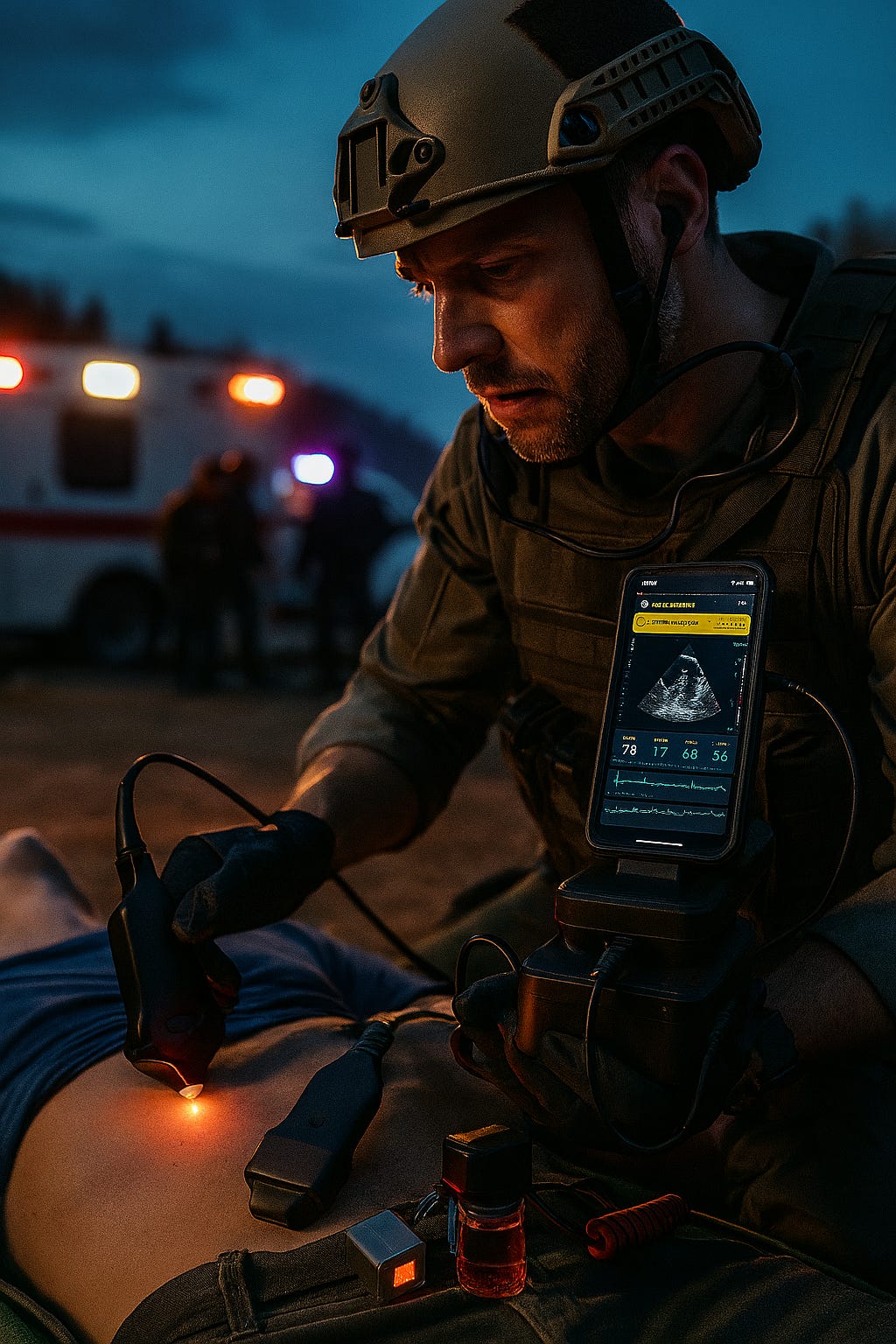
Architecture: Phone-tethered modular system rather than fully integrated handheld. Bundle existing commercial components: smartphone as compute and display hub, Butterfly iQ3 or equivalent pocket ultrasound probe, clip-on Raman or FT-NIR spectrometer, UWB radar module for contactless vitals, thermal camera, digital stethoscope, and small microfluidic reader for targeted assays (troponin, CRP, lactate). House everything in a ruggedized case with unified power and data management.
Software: Single application with three operational modes: medical, science, engineering sharing core services for identity management, audit logging, spectral libraries, and AI inference. Medical mode offers preset clinical pathways (trauma triage, chest pain, respiratory distress); science mode supports environmental sampling and material identification; engineering mode assists with equipment diagnostics and structural assessment.
AI capabilities: Edge models for basic triage with traffic-light risk stratification (green/yellow/red). Uncertainty quantification ensures the system knows what it does not know. FHIR-compliant data export enables seamless handoff to hospitals or labs.
Target users: Emergency medical services, expedition medicine teams, rural clinics, field regulators conducting food and drug inspections, hazmat responders.
Key validation studies:
- Prehospital triage study comparing proto-tricorder findings to hospital diagnoses
- Field drug testing accuracy versus laboratory mass spectrometry
- Environmental safety assessments in disaster scenarios
Success metrics:
- Time from scene arrival to actionable diagnosis: target under 5 minutes
- Diagnostic agreement with hospital reference standard: target >90% for included conditions
- User satisfaction and confidence scores: target >80% “would use again”
- False positive rate: target <5% for high-stakes findings
Outcome: A capable field triage and environmental analysis toolkit that demonstrates value and builds evidence for integrated next-generation hardware.
Phase 2: Integrated Handheld Platform (2028–2032)
Architecture: Custom-designed tricorder v1.0 with all sensors integrated into a single palm-sized device. Core components on a unified circuit board: UWB radar transceiver, photoplethysmography sensors, near-infrared spectroscopy, compact Raman module, multi-gas environmental sensors, radiation detection (scintillator and semiconductor), and ports for snap-in ultrasound and microfluidic cartridges. Power management through custom ASICs and intelligent duty cycling. Thermal design ensures comfortable handling during extended operation.
Software: Conversational AI copilot provides real-time guidance, coaching users through probe placement, interpreting image quality, and suggesting next steps based on findings. Case-based reasoning with Bayesian inference delivers ranked differential diagnoses with uncertainty bounds. Offline-first architecture with opportunistic sync.
Wet lab simplification: Plug-and-play microfluidic cartridges automate small immunoassay panels (troponin, CRP, D-dimer, procalcitonin) with built-in quality control—no manual pipetting, minimal training required.
Advanced capabilities:
- Non-invasive blood pressure trending via pulse transit time and waveform analysis
- Breath volatile organic compound panels for metabolic and infectious disease screening
- Personal baseline learning: device adapts to individual physiology over time, improving sensitivity to changes
Regulatory milestones: Secure Class II clearances for specific triage protocols (chest trauma, febrile illness, respiratory distress, opioid overdose response). Begin pivotal trials for Class III indications (acute MI rule-out, sepsis screening).
Target users: Expand to include primary care clinics, military medics, industrial safety teams, field scientists in remote locations.
Key validation studies:
- Multi-site randomized controlled trial in emergency departments: tricorder triage versus standard care
- Field validation in resource-limited settings (rural sub-Saharan Africa, Pacific islands)
- Accuracy across demographic subgroups and environmental extremes
Success metrics:
- Sensitivity and specificity by indication: targets vary by condition but aim for non-inferiority to reference standards
- Battery life: target 8+ hours of continuous field operation
- Time to actionable result: target <3 minutes for most protocols
- Calibration drift: target <5% deviation per quarter with auto-recalibration success >95%
- User override rate: target <10% for flagged high-risk findings (indicating appropriate specificity)
Outcome: A genuine point-of-care diagnostic platform approaching tricorder versatility for common medical and scientific applications.
Phase 3: The Mature Tricorder (2033–2040)
Architecture: Tricorder v2.0 leveraging breakthroughs in materials, sensors, and computing. Advanced hyperspectral imaging for non-contact tissue characterization. Improved through-fabric and through-tissue sensing using computational imaging that fuses UWB radar, terahertz spectroscopy, and multi-angle optical data. Custom neuromorphic processors enable sophisticated multimodal models with minimal power draw—full-day operation becomes routine.
Diagnostic advances: Non-invasive chemistry reaches clinical grade for glucose, electrolytes, and select biomarkers through spectrometry combined with learned personal baselines. Reduces fingersticks and blood draws for routine monitoring in most workflows.
Integrated genomics: Sample-to-answer cartridges provide pathogen genotyping and antimicrobial resistance markers in under an hour essentially Oxford Nanopore MinION-class throughput hidden behind a simple interface. Applications span infectious disease diagnosis, pharmacogenomics, and environmental DNA analysis.
Autonomous operation modes: Device can run programmed scans with minimal supervision—continuous monitoring during patient transport, scheduled environmental sampling in remote stations, automated equipment health checks in industrial settings.
Expanded domains: Robust science and engineering modes enable broad adoption beyond healthcare. Construction and mining teams use it for subsurface feature detection, radiation mapping, and structural assessment. Agricultural applications include soil nutrient profiling, crop disease screening, and produce quality grading. Planetary exploration prototypes support NASA and commercial space missions.
Regulatory status: Comprehensive clearances across multiple indication families. Established precedents accelerate approvals for new applications.
Target users: Universal tool for clinicians, scientists, engineers, safety professionals, educators, and citizen scientists.
Key validation studies:
- Long-term outcomes research: does tricorder deployment improve population health metrics?
- Cost-effectiveness analyses across healthcare systems
- Technology transfer validation for low-resource and extreme environments
Success metrics:
- Accuracy across expanded indication set: maintain >90% agreement with reference standards
- Inter-device reliability: <3% variation between units
- Longevity: devices remain field-calibrated for 3+ years
- User proficiency: novices achieve 80% of expert performance after brief training
- Safety record: adverse events attributable to device <0.1% of uses
Outcome: A generalist scanning platform that fulfils the original tricorder vision across medical, scientific, and engineering domains transforming how humanity senses and responds to its environment.
Transformative Use Cases: Beyond Replication
Faithfully reproducing Star Trek’s tricorder would be impressive, but insufficient. The real opportunity lies in applying tricorder-class capabilities to problems the Enterprise crew never faced and unlocking entirely new paradigms of care, science, and safety.
Healthcare Reimagined
Prehospital Decision Packs: Emergency medical teams arrive on scene and immediately deploy the tricorder for a comprehensive assessment—vitals, 12-lead ECG, lung ultrasound, focused cardiac views, capillary troponin if chest pain is present. Within five minutes, the device synthesizes findings into a structured handover document with embedded multimedia: “62-year-old with acute onset chest pain, ST elevations in leads II/III/aVF suggesting inferior STEMI, troponin 450 ng/L, EF estimated 45%, no pulmonary edema. Cath lab activation advised.” This handover transmits securely ahead, enabling emergency departments to mobilize resources before the ambulance arrives. Early trials show 20-30% reductions in door-to-intervention times for time-sensitive conditions.
Ward Round Acceleration: Instead of ordering routine labs by reflex, clinical teams perform non-invasive tricorder checks each morning. Most patients receive rapid clearance—vitals stable, no red flags—and proceed with their care plan. The subset flagged by the device undergoes targeted laboratory confirmation. This inverts the default: lab work becomes confirmatory rather than screening. Benefits include reduced patient discomfort, faster results, lower costs, and decreased phlebotomy workload. The device auto-charts findings to the EHR via FHIR, freeing clinicians to focus on interpretation and patient interaction.
Distributed Chronic Disease Management: Patients with heart failure, COPD, or diabetes receive home tricorders that perform daily comprehensive checks—far richer than conventional wearables. The device detects early decompensation through multimodal signals: increased lung water via bioimpedance, rising respiratory rate, declining activity tolerance, changing breath volatile profiles. AI models trained on thousands of exacerbation events predict flares 48-72 hours before symptoms become severe, enabling pre-emptive intervention. Hospitalizations decline, quality of life improves, and healthcare systems save substantially on acute care costs.
Telemedicine Elevated: Current telemedicine is largely limited to visual inspection and patient self-reporting. Tricorder-equipped virtual visits include objective measurements rivalling in-person exams: auscultation of heart and lungs via digital stethoscope, abdominal ultrasound guided by real-time AI coaching, dermatologic imaging with spectral analysis, and comprehensive vitals. This expands telemedicine’s scope dramatically, conditions previously requiring office visits can now be managed remotely, benefiting rural populations, mobility-impaired patients, and systems facing clinician shortages.
Public Health and Regulatory Innovation
Real-Time Drug Safety Surveillance: Field officers conducting inspections carry tricorders with Raman and FT-NIR capabilities, instantly verifying pharmaceutical raw materials, finished products, and suspected counterfeits against reference libraries. When fentanyl analogs or novel adulterants appear in street drug supplies, public health teams deploy to harm reduction sites, testing samples on-site and uploading spectra to shared databases within hours. This creates a real-time early warning system that traditional laboratory-based surveillance cannot match faster detection saves lives.
Outbreak Response Acceleration: When a suspected outbreak emerges, responders arrive with tricorders configured for rapid pathogen identification. They collect swabs or environmental samples and run on-site sequencing via integrated microfluidic-nanopore cartridges, obtaining species and strain identification plus antimicrobial resistance profiles in under two hours. Genomic data uploads to centralized epidemiological platforms, enabling real-time tracking of transmission chains and variant emergence. This capability proved its worth during COVID-19’s early days, when laboratory backlogs delayed critical decisions tricorder-class tools could prevent such bottlenecks in future pandemics.
Environmental Justice Monitoring: Communities concerned about air or water quality traditionally face long delays obtaining professional testing. Tricorder-class devices democratize environmental monitoring: residents perform validated measurements of particulates, volatile organics, heavy metals, and radiation, with results automatically uploaded to public databases. This transparency holds polluters accountable and enables rapid response to acute hazards. Citizen science campaigns generate dense spatial and temporal coverage impossible through traditional monitoring networks alone.
Disaster Response and Humanitarian Operations
Integrated Hazmat Triage: First responders approaching a chemical or radiological incident face compounded dangers unknown hazards threaten both victims and rescuers. Tricorder environmental mode maps volatile compounds, radiation fields, and atmospheric conditions at standoff ranges, guiding entry decisions. Once inside, contactless radar scanning detects survivors’ vital signs through rubble without physical contact. Continuous crew monitoring via the same radar ensures responders do not exceed exposure limits. Chemical identification plus real-time medical assessment enables appropriate decontamination and treatment—all from a single device weighing less than a kilogram.
Search and Rescue Enhancement: Beyond hazmat, tricorders transform urban search and rescue after earthquakes, building collapses, or avalanches. Ultra-wideband radar penetrates debris to detect breathing and heartbeats, guiding rescue efforts to where survivors remain. Spectroscopy verifies air safety before opening voids detecting carbon monoxide, hydrogen sulphide, or explosive atmospheres. Structural integrity scanning via acoustic and ground-penetrating radar helps assess collapse risk during extraction. Current search and rescue rely on trained canines, visual inspection, and acoustic listening devices; tricorders add electronic sensing that works in conditions where traditional methods fail.
Refugee and Displaced Population Health: In refugee camps and humanitarian crises, healthcare infrastructure is minimal. Tricorder-equipped community health workers provide diagnostic capabilities previously requiring clinics or hospitals detecting malaria, tuberculosis, and malnutrition through non-invasive scanning and minimal sample testing. Early disease detection prevents outbreaks in crowded conditions. Maternal and neonatal health improves through portable ultrasound and vital monitoring. The comprehensive assessment capability enables better triage identifying who needs evacuation to advanced care versus who can be managed on-site.
Space, Exploration, and Extreme Environments
Off-World Medical Autonomy: NASA and commercial space companies face a fundamental problem: medical evacuation from Mars or the lunar surface is impossible. Crews must handle all medical contingencies locally with limited supplies and expertise. Tricorder-class devices enable non-physicians to diagnose and monitor conditions that would otherwise require specialists. Ultrasound-guided procedures (abscess drainage, nerve blocks, vascular access) become feasible through AI coaching. Integrated diagnostics detect radiation exposure, bone demineralization, and space-specific pathologies. The device essentially extends the crew’s medical capability by an order of magnitude turning a mission engineer into a capable field medic.
Planetary Science Revolution: Robotic rovers have transformed planetary exploration, but human geologists with tricorders would accomplish in hours what rovers take months to achieve. Future Mars missions equipped with handheld spectroscopy, ground-penetrating radar, and atmospheric analysers will conduct field science at unprecedented pace. Real-time mineral identification guides sample selection. Subsurface scanning detects ice deposits and structural features. Atmospheric profiling maps trace gases that might indicate biological activity. The tricorder becomes humanity’s primary tool for understanding other worlds.
Extreme Environment Research: From deep ocean vents to Antarctic ice sheets, Earth’s extreme environments challenge conventional laboratory approaches. Tricorder-class devices enable in situ science—analysing microbial communities in hot springs, profiling ice core chemistry on glaciers, monitoring hydrothermal vent chemistry during submersible dives. Data capture happens where conditions exist, not after samples degrade during transport. This immediacy unlocks scientific questions previously inaccessible.
Industrial and Infrastructure Applications
Predictive Maintenance Intelligence: Manufacturing and infrastructure operators struggle with maintenance scheduling too frequent wastes resources, too infrequent risks failures. Tricorders in engineering mode perform comprehensive equipment health assessments: thermal imaging detects hot spots indicating pending failures, ultrasound reveals bearing wear and structural fatigue, spectroscopy analyses lubricant degradation, acoustic analysis catches abnormal vibrations. Machine learning models trained on thousands of failure events predict remaining useful life with confidence intervals, optimizing maintenance schedules and preventing costly unplanned downtime.
Smart Construction Quality Assurance: Construction quality control traditionally relies on destructive testing and visual inspection sampling a tiny fraction of actual work. Tricorder-class devices enable comprehensive non-destructive evaluation: ground-penetrating radar verifies rebar placement and concrete density, thermal imaging detects insulation gaps and moisture intrusion, spectroscopy confirms material composition. Every structural element gets scanned rather than sampled, catching defects before they become systemic problems. This raises construction quality while reducing waste and rework.
Agricultural Precision at Field Scale: Precision agriculture currently relies on satellite imagery, weather stations, and periodic soil sampling coarse data driving coarse decisions. Tricorder-equipped agronomists perform rapid field surveys: NIR spectroscopy measures soil nutrients and organic matter at high spatial resolution, hyperspectral imaging detects plant stress and disease before visual symptoms appear, environmental sensors profile microclimate variations within fields. This granular data enables ultra-precise interventions variable-rate fertilizer application, targeted pest management, optimized irrigation reducing inputs and environmental impact while improving yields.
Breakthrough Opportunities: The Technical Enablers
Realizing these use cases demands advances across hardware, software, and systems integration. Several breakthrough opportunities stand out as especially high-leverage.
Hardware Innovation
Multimodal Sensor Fusion Chips: Current sensors generate data streams that must be processed separately before late-stage fusion. Future ASICs should perform sensor fusion at the hardware level correlating ultrasound echo timing with radar respiratory signals, aligning spectral features with thermal maps, synchronizing acoustic and vibration data. This co-processing reduces latency, lowers power consumption, and enables insights impossible from isolated data streams.
Adaptive Optics for Biological Spectroscopy: Today’s spectroscopy works well on clean surfaces and cooperative samples. Human tissue is neither it is heterogeneous, moving, and covered with interfering substances. Adaptive optics borrowed from astronomy can compensate for these challenges in real time, dynamically adjusting illumination and detection to maximize signal quality. Combined with computational spectroscopy (recovering spectra from compressed measurements), this could enable reliable non-invasive chemistry through skin.
Metamaterial Antennas for Safe Through-Barrier Sensing: Conventional antennas for UWB radar and other penetrating sensors face trade-offs between power, beamwidth, and size. Metamaterial antennas using engineered electromagnetic structures can break these trade-offs—achieving narrow beams with high gain from compact arrays while keeping emissions well within safety limits. This enables effective vital sign detection through walls or debris without requiring dangerous power levels.
Solid-State Ultrasound Arrays: Piezoelectric ultrasound probes are bulky, fragile, and difficult to miniaturize. Solid-state ultrasound using capacitive micromachined ultrasonic transducers (CMUTs) on silicon enables flexible, robust arrays that can be integrated directly into the tricorder body. Combined with synthetic aperture techniques and AI-enhanced reconstruction, this could provide 3D volumetric imaging from a device no larger than a smartphone.
Software and AI Advancement
Foundation Models for Multimodal Bio signals: Large language models revolutionized natural language processing by training on diverse text to learn general representations. An analogous opportunity exists for bio signals: train foundation models on millions of hours of synchronized ECG, PPG, ultrasound, spectroscopy, vitals, and clinical outcomes. These models would learn the deep patterns linking physiology to pathology how heart sounds correlate with ejection fraction, how spectral features predict sepsis, how ultrasound textures indicate fibrosis. Fine-tuning these foundations for specific tasks (pneumonia detection, fluid status assessment, drug toxicity screening) would require far less data than training from scratch, accelerating clinical validation and enabling personalized adaptation.
Causal Inference Engines for Differential Diagnosis: Current AI diagnostic systems excel at pattern matching but struggle with reasoning about causation distinguishing correlation from mechanism. Bayesian causal models explicitly represent disease processes, symptoms, and test results as interconnected variables with directional influences. When the tricorder observes elevated troponin, ST changes, and regional wall motion abnormalities, a causal engine does not just pattern-match to “possible MI”—it reasons about the causal chain linking coronary occlusion to ischemia to biomarker release, and evaluates alternative explanations (demand ischemia, myocarditis). This reasoning produces more interpretable, trustworthy decisions and naturally handles edge cases where pure pattern matching fails.
Federated Learning for Privacy-Preserving Model Improvement: Tricorder deployments will generate vast quantities of sensitive health data. Traditional centralized training requires uploading this data to servers raising privacy concerns and regulatory barriers. Federated learning enables model training on distributed devices without centralizing raw data. Each tricorder learns from its local observations, then shares only model updates (gradient information) with a central coordinator that aggregates improvements. This approach preserves privacy while enabling continuous learning from real-world deployment models improve from millions of patient encounters without compromising individual confidentiality.
Real-Time Uncertainty Quantification: Clinical decisions require knowing not just what the model predicts, but how confident that prediction is. Bayesian deep learning, conformal prediction, and ensemble methods can provide calibrated uncertainty estimates—distinguishing “I’m 95% certain this is pneumonia” from “This pattern is unusual, I’m only 60% confident, recommend specialist review.” Uncertainty should drive action: high confidence enables autonomous recommendations, moderate confidence suggests additional testing, low confidence mandates human expert involvement. This human-AI collaboration prevents both over-reliance and under-utilization.
Systems Integration and Infrastructure
Universal Sensor Abstraction Layer: Today, integrating a new sensor requires custom drivers, protocols, and data parsing. A universal abstraction layer would define standard interfaces for sensor capabilities (imaging, spectroscopy, vitals) and data formats, allowing plug-and-play integration. New ultrasound probes, spectroscopy modules, or environmental sensors would simply declare their capabilities and data schemas—the tricorder platform handles the rest. This accelerates hardware innovation and prevents vendor lock-in.
Distributed Edge-Cloud Computation Framework: Some inference must happen on-device (low latency, privacy), while other analyses benefit from cloud resources (complex modelling, large databases). A sophisticated framework should dynamically partition computation: run time-critical triage models locally, offload detailed image analysis to edge servers when available, submit unusual cases to specialist models in regional data centres. This flexibility optimizes the latency-accuracy-privacy trade off across contexts from field medicine to urban hospitals.
Semantic Data Interoperability Infrastructure: FHIR provides syntactic interoperability (standardized data formats) but struggles with semantic interoperability (shared meaning). When one system records “SpO2: 92%” and another records “pulse oximetry oxygen saturation 92% on room air at sea level,” are these equivalent? Ontologies and knowledge graphs that formally define medical concepts, their relationships, and contextual dependencies enable true semantic understanding. This infrastructure allows tricorders from different manufacturers, EHRs from different vendors, and clinical decision support systems to genuinely understand each other—not just exchange data.
Continuous Evidence Generation Platforms: Traditional clinical trials are expensive, slow, and answer narrow questions. Tricorder deployments should integrate continuous evidence generation: every use contributes to an ongoing observational study (with consent), testing hypotheses about diagnostic accuracy, demographic performance, and outcome improvements. Adaptive trial designs automatically adjust which hypotheses receive focus based on accumulating evidence. This transforms the device from a static tool into a learning system that continuously validates and improves its own performance.
Metrics and Validation: Tracking Progress Toward the Vision
Ambitious technical programs risk losing direction without rigorous, honest metrics. Tricorder development demands measurement frameworks spanning clinical performance, user experience, system reliability, and societal impact.
Clinical Performance Metrics
Diagnostic Accuracy by Indication and Subgroup: Sensitivity, specificity, positive predictive value, and negative predictive value must be reported for each clinical indication (MI, pneumonia, sepsis, etc.) and stratified by demographic groups (age, sex, race/ethnicity), body composition, and environmental conditions. Target thresholds should match or exceed existing reference standards. Performance gaps across subgroups signal bias requiring algorithmic correction or additional training data.
Time to Actionable Result: Measure elapsed time from scan initiation to delivery of an interpretable, actionable finding. Targets vary by urgency: trauma triage should complete in under 3 minutes, routine screening can take 10 minutes, complex cases requiring multiple modalities might need 20 minutes. Track both median and 95th percentile times—outliers reveal usability problems or edge cases requiring attention.
Calibration and Reliability: Beyond raw accuracy, evaluate whether confidence scores match actual performance. If the device reports “90% confident this is bacterial pneumonia,” bacterial pneumonia should be confirmed in approximately 90% of such cases across diverse datasets. Poor calibration overconfidence or underconfidence erodes trust and degrades decision-making.
Comparative Effectiveness: Gold standard studies compare tricorder-guided care to conventional pathways. Randomized controlled trials should measure patient outcomes (mortality, morbidity, functional recovery), healthcare utilization (ED visits, hospitalizations, imaging studies), costs, and patient satisfaction. Non-inferiority designs establish that tricorder care is at least as good as current standards; superiority designs demonstrate actual improvements.
User Experience and Adoption Metrics
Time to Proficiency: How long does it take novice users to achieve reliable performance? Track error rates, scan quality scores, and decision accuracy as functions of training time and number of supervised uses. Target: 80% of expert performance after 4 hours of training and 20 supervised scans for medical applications; less for simpler environmental or engineering uses.
Cognitive Load and Workflow Integration: Use NASA Task Load Index or similar instruments to assess mental demand, frustration, and effort required to operate the device. Conduct time-motion studies measuring how tricorder use affects overall workflow—does it add burden or increase efficiency? Interview users about pain points, confusing interfaces, and desired improvements. Qualitative feedback often reveals problems quantitative metrics miss.
Clinical Override Rate: When the tricorder makes a recommendation, how often do clinicians override it? Low override rates (<10%) suggest appropriate specificity and user trust. High override rates signal either poor device performance or inadequate explanation of reasoning both requiring correction. Importantly, tracking which overrides were correct (device was wrong) versus incorrect (device was right, user was wrong) reveals whether problems lie in the algorithm or the interface.
Adoption and Sustained Use: Beyond initial pilots, measure long-term adoption: What percentage of eligible users continue using the device after 3 months? 12 months? Which features see regular use versus which get ignored? Drop-off patterns reveal where value propositions fail to materialize or where friction remains excessive.
System Reliability and Safety Metrics
Calibration Drift and Recalibration Success: Sensors drift over time—spectroscopy peaks shift, ultrasound transducers degrade, battery capacity declines. Monitor calibration error monthly and track what percentage of auto-recalibration attempts succeed without requiring manual intervention. Target: less than 5% drift per quarter, greater than 95% auto-recalibration success.
False Positive and False Negative Rates in Operational Settings: Laboratory validation provides initial performance estimates, but real-world conditions differ uncooperative patients, difficult environments, operator variability. Track false alarms (positive results that prove incorrect) and missed cases (false negatives) during actual deployment. Establish acceptable thresholds balancing sensitivity and specificity for each indication, adjusting algorithms as operational data accumulates.
Device Uptime and Mean Time Between Failures: Field devices face harsh conditions drops, temperature extremes, moisture, dust. Monitor what percentage of devices remain operational at 1 year, 2 years, 3 years post-deployment. Track failure modes: battery degradation, sensor malfunction, software crashes, physical damage. Design reliability improvements targeting the most common failure patterns.
Adverse Events Attributable to Device: Establish comprehensive post-market surveillance capturing any patient harm potentially linked to tricorder use: delayed or missed diagnoses due to false negatives, unnecessary interventions due to false positives, infections from inadequate probe cleaning, injuries from device malfunction. Target: adverse event rate below 0.1% of uses, with serious events (death or permanent harm) below 0.01%.
Equity and Access Metrics
Performance Stratified by Demographics: Report all clinical metrics separately for populations defined by race, ethnicity, sex, age, body composition, and skin tone. Algorithms demonstrating differential performance must either be corrected or withdrawn until representative training data enables equitable accuracy.
Geographic Deployment Patterns: Track where tricorders get deployed and used. If sophisticated capabilities concentrate in wealthy urban centres while underserved rural or low-income areas receive only basic functions, the technology exacerbates rather than reduces health disparities. Deliberate deployment strategies and pricing tiers should ensure broad access.
Language and Literacy Accessibility: Measure usability across populations with varying language fluency and health literacy. Interfaces must work for users with limited English proficiency and for those with minimal formal education. Evaluate whether pictographic guidance, voice interfaces, and video demonstrations effectively bridge literacy gaps.
Disability Accommodation: Design for users with visual, auditory, motor, or cognitive disabilities. Test whether screen readers work correctly, whether audio alerts are complemented by visual indicators, whether one-handed operation is feasible, and whether cognitive assistance helps users with intellectual disabilities. Accessibility should be built-in, not retrofitted.
Economic and Implementation Metrics
Cost per Actionable Diagnosis: Calculate total cost of ownership (device acquisition, consumables, training, maintenance) divided by the number of clinically actionable results produced. Compare to cost of conventional diagnostic pathways. Demonstrate cost-effectiveness through formal health economic analyses using quality-adjusted life years (QALYs) or similar outcome measures.
Return on Investment Timelines: For healthcare systems, first responders, or industrial operations considering adoption, project when the device pays for itself through reduced downstream costs, improved outcomes, or increased efficiency. ROI timelines under 3 years facilitate adoption; longer payback periods face steeper adoption barriers.
Reimbursement and Policy Traction: Track how many insurers, governments, and health systems include tricorder-enabled services in reimbursement schedules. Monitor Medicare and private insurance coverage decisions. Policy adoption signals mainstream acceptance and removes financial barriers to use.
Strategic Framing: Positioning the Vision
Technology alone does not transform systems—strategic positioning determines whether innovations diffuse or languish. Tricorder development requires compelling narratives for diverse stakeholders, each with distinct priorities and concerns.
For Healthcare Leaders and Clinicians
Position as Clinical Decision Support, Not Replacement: Emphasize that tricorders augment rather than replace clinical judgment. The device handles data acquisition and pattern recognition—tasks where machines excel while clinicians focus on synthesis, empathy, and complex decision-making domains where human judgment remains superior. Frame as “expanding clinician capacity” rather than “automating doctors away.”
Lead with Time Savings and Workflow Integration: Clinician burnout stems largely from administrative burden and inefficient workflows. Demonstrate how tricorders reduce time spent chasing test results, calling consultants for straightforward questions, or performing repetitive documentation. Auto-charting to EHRs and decision support that anticipates needs rather than creates alerts show respect for clinician time.
Build on Trusted Precedents: Pocket ultrasound, point-of-care testing, and handheld diagnostics have already transformed specific domains. Position tricorders as the logical next step—integrating proven modalities rather than introducing radical unknowns. Reference successful adoption stories from early ultrasound pioneers and POCT champions.
For Payers and Health Systems
Emphasize Total Cost of Care Reduction: Show how earlier, more accurate diagnosis prevents expensive downstream complications. Detecting heart failure decompensation before hospitalization saves $30,000+ per prevented admission. Rapid sepsis identification reduces ICU days. Appropriate antibiotic selection through rapid pathogen identification cuts resistance-related failures. Build actuarial models demonstrating net cost savings.
Highlight Access Expansion and Equity: In rural areas lacking specialists, tricorders enable local clinicians to provide previously unavailable care reducing costly transfers and improving outcomes. For underserved populations, removing transportation barriers and enabling community-based care addresses longstanding disparities. Health systems increasingly face regulatory and reputational pressure to improve equity; tricorders provide tangible mechanisms.
Demonstrate Risk Mitigation: Liability concerns loom large for healthcare organizations. Show that tricorder-guided care, when properly validated and implemented, reduces rather than increases risk through: better documentation (comprehensive objective data), adherence to evidence-based protocols (decision support based on guidelines), and early identification of deterioration (continuous monitoring). Pilot programs with strong risk management frameworks build confidence.
For Technology Investors and Industry
Frame as Platform Play, Not Point Solution: The tricorder is not one product it is a platform enabling ecosystems. Hardware manufacturers provide sensors, software developers build applications, content creators generate training libraries, researchers contribute algorithms. Platform strategies command higher valuations and create defensible competitive moats through network effects.
Emphasize Multiple Revenue Streams: Beyond device sales, monetization includes consumables (microfluidic cartridges, calibration standards), subscriptions (cloud AI services, content libraries, software updates), services (training, implementation support, data analytics), and licensing (algorithm IP, reference datasets). Diversified revenue reduces risk and increases lifetime value.
Highlight Regulatory Pathway Clarity: FDA’s Digital Health Centre of Excellence, Breakthrough Device Program, and evolving Software as Medical Device guidance provide increasingly clear pathways for innovative diagnostics. Early engagement, modular validation, and real-world evidence generation support efficient approvals. Regulatory risk, while present, is manageable with proper strategy.
For Engineers and Researchers
Position as Grand Challenge with Near-Term Milestones: The full tricorder vision will take decades, but meaningful progress happens continuously. Each phase delivers products, publications, and impact. Frame as “moonshot with roadmap” ambitious destination with concrete steps.
Emphasize Interdisciplinary Collaboration: No single discipline builds tricorders. Success requires electrical engineers (sensors, power), mechanical engineers (packaging, thermal), software engineers (AI, interfaces), clinicians (requirements, validation), regulatory specialists (compliance, evidence), ethicists (governance), designers (usability), and more. Celebrate the integrative nature as opportunity for cross-pollination and growth.
Highlight Open Problems and Research Opportunities: Every gap identified represents publishable research and patentable innovation. Non-invasive chemistry, through-barrier sensing, multimodal fusion, edge AI optimization, bias mitigation each could sustain careers and spawn startups. Position tricorder development as generating rather than consuming research opportunities.
For Policymakers and Regulators
Frame as Public Health Infrastructure: Just as public investment in telecommunications infrastructure enabled the internet economy, investment in advanced diagnostic infrastructure could catalyse a revolution in preventive medicine, outbreak response, and environmental monitoring. Position tricorders as dual-use technology serving both healthcare and public safety missions.
Emphasize Pandemic Preparedness and Resilience: COVID-19 exposed diagnostic capacity as a critical bottleneck during health emergencies. Widely distributed, capable diagnostic devices reduce dependence on centralized laboratories, enable faster outbreak detection, and support decentralized response. Make the case for tricorders as pandemic preparedness investment.
Address Ethics Proactively: Regulators worry about unintended consequences privacy violations, algorithmic bias, misuse for surveillance or discrimination. Demonstrate that ethical considerations are built into design from the start, not addressed after problems emerge. Show governance frameworks, bias audits, consent mechanisms, and use restrictions that protect individuals while enabling beneficial applications.
Do We Need This Today? A Critical Reflection
The tricorder roadmap is technically feasible and strategically appealing, but urgency demands honest assessment: Is this merely aspirational engineering, or does it address critical unmet needs that justify the substantial investment required?
The Case for Urgency
Healthcare Systems Under Strain: Globally, healthcare faces interrelated crises aging populations, chronic disease burden, clinician shortages, rising costs, and persistent inequities. Incremental improvements will not suffice; transformative tools that dramatically expand diagnostic capacity per clinician-hour are essential. Tricorders represent exactly this kind of force multiplier.
Emerging Infectious Disease Threats: The next pandemic is inevitable. COVID-19, monkeypox, Ebola outbreaks, and antibiotic-resistant bacteria demonstrate that our diagnostic infrastructure remains dangerously slow. Rapid, distributed, capable diagnostics could mean the difference between contained outbreaks and global disasters. This alone justifies significant investment.
Climate Change and Environmental Monitoring: Increasing frequency of wildfires, floods, chemical spills, and extreme weather demands rapid environmental assessment capabilities. Traditional laboratory-based testing cannot keep pace with the speed and geographic distribution of climate-related hazards. Portable, comprehensive environmental scanning becomes critical infrastructure for adaptation and response.
Access Gaps in Resource-Limited Settings: Billions of people lack access to basic diagnostics that wealthy nations take for granted. While smartphone-based solutions help, they remain limited in scope. Tricorder-class devices could deliver hospital-grade diagnostic capabilities to remote clinics, fundamentally altering what is possible in low-resource settings.
Scientific Discovery Acceleration: In fields from astrobiology to ecology, the limiting factor is often in situ measurement capability. We cannot bring ecosystems or planetary surfaces into laboratories—we must bring laboratory-grade analysis to them. Tricorders enable science in contexts previously inaccessible, potentially accelerating discovery across multiple disciplines.
The Case for Caution
Existing Tools Still Underutilized: We already have point-of-care ultrasound, rapid molecular diagnostics, continuous glucose monitors, and other sophisticated tools—yet adoption remains patchy. Adding more technology without addressing workflow integration, training, and reimbursement risks creating expensive shelfware. Perhaps the priority should be optimizing deployment of existing capabilities rather than developing new ones.
Validation Timelines Are Long: Achieving clinical-grade performance and regulatory approval for dozens of indications will take many years and hundreds of millions of dollars in clinical trials. Meanwhile, incremental improvements to existing technologies compound continuously. Will the integrated platform ultimately prove superior to the trajectory of specialized tools?
Complexity May Exceed Usability: Star Trek’s tricorder worked because it was fictional—real physics, biology, and engineering impose constraints that may prevent true single-button simplicity. If the actual device requires extensive training and careful operation, it may not meaningfully improve on having specialists with focused tools.
Equity Risks: Advanced diagnostics could concentrate in wealthy markets while underserved populations still lack basics like reliable electricity and clean water. If tricorder development absorbs resources that could expand access to proven interventions (vaccines, antibiotics, sanitation), the net global health impact might be negative.
Privacy and Misuse Are Guaranteed: Powerful sensing inevitably gets misused—for surveillance, discrimination, coercion. While design safeguards help, they cannot eliminate risk. We must weigh the benefits of legitimate applications against certain harms from malicious or careless deployment.
The Balanced Perspective
The case for tricorder development is strong but not unconditional. Urgency exists where:
- Speed matters critically (pandemic response, prehospital care, search and rescue)
- Integration provides unique value (multimodal fusion yields insights impossible from separate sensors)
- Distribution is essential (remote medicine, distributed monitoring, field science)
- Expertise is scarce (enabling non-specialists to perform tasks requiring specialists)
Where these conditions do not apply where speed is less critical, where specialized tools work well, where expertise is available conventional approaches may remain superior.
The prudent path forward involves:
- Parallel investment: Develop tricorders while improving existing tools not either/or
- Phased deployment: Start where needs are most acute and benefits clearest
- Rigorous evaluation: Demand evidence of superiority, not just technical impressiveness
- Inclusive design: Ensure benefits reach underserved populations, not just early adopters
- Strong governance: Implement robust safeguards against misuse before deployment
Tricorder development should proceed not because it is technically fascinating (though it is), but because it addresses genuine unmet needs that alternative approaches cannot adequately serve. The enterprise deserves public and private investment—but with eyes open to risks, realistic timelines, and commitment to equitable deployment.
Science Fiction as Design Catalyst
Star Trek’s lasting influence stems not from predicting the future, but from making the future imaginable—and therefore achievable. The communicator did not forecast mobile phones; it created a shared vision that engineers, entrepreneurs, and consumers could collectively pursue. The technology pathway was not inevitable, but the vision made it more likely.
The tricorder offers similar catalytic potential. By providing a coherent, compelling picture of what integrated diagnostic capability could look like, Star Trek created mental permission to think beyond incremental improvements toward revolutionary platforms. The question shifts from “Why would we combine ultrasound and spectroscopy and vital signs in one device?” to “Why haven’t we combined them yet?”
This reframing matters because transformative innovation often founders not on technical barriers but on imagination failures. Specialists in ultrasound, spectroscopy, and vital signs monitoring optimize within their domains it takes an external vision to question why these domains remain separate. Science fiction provides that vision.
Moreover, the tricorder’s fictional ubiquity signals social acceptance. Star Trek does not show crew members debating privacy implications or regulatory pathways—they just use tricorders as routine tools. This narrative normalizes the technology, reducing psychological barriers to adoption. When real tricorders arrive, they will not feel alien; they will feel overdue.
The communicator-to-smartphone progression demonstrates both science fiction’s power and its limitations. The vision accelerated development, but the realized technology evolved in ways Roddenberry never imagined app ecosystems, social media, mobile computing, the attention economy’s dark patterns. The tricorder will likely follow similar trajectories: the core vision guides development, but unexpected applications, business models, and societal impacts will emerge.
This demands humility. We cannot fully predict where tricorder technology leads, just as 1960s futurists could not foresee smartphones enabling misinformation campaigns or social media addiction. What we can do is:
- Pursue the positive vision actively while anticipating and mitigating risks proactively
- Build governance and ethics into design rather than treating them as afterthoughts
- Remain open to emergent applications that fiction did not imagine
- Continuously evaluate whether realized technology serves human flourishing
The tricorder concept has already influenced real development—the Qualcomm Tricorder XPRIZE spurred innovation in portable diagnostics, and multiple startups explicitly reference Star Trek in their missions. This demonstrates fiction’s catalytic effect. But influence cuts both ways: as real tricorders emerge, they will inevitably fall short of fiction’s seamless elegance while exceeding it in unexpected ways.
The value of science fiction as design catalyst lies not in achieving perfect correspondence between imagined and actual technology, but in expanding the possibility space showing what could be pursued, rather than constraining thinking to what seems immediately feasible. The tricorder gives us permission to ask “What if one device could do all this?” That question alone is worth more than the specific fictional answer.
Conclusion: From Imagination to Implementation
When Dr. McCoy waved his medical tricorder over a patient and delivered instant diagnosis, viewers suspended disbelief not because the technology seemed plausible given 1960s science, but because it solved a problem they recognized. Diagnosis is slow, uncertain, and equipment-intensive. A device that made it fast, reliable, and portable would be transformative. That insight remains valid six decades later.
Today, we have the technical foundations: pocket ultrasound, spectroscopy, radar vital signs, microfluidics, edge AI, and wireless connectivity. What we lack is integration the vision and investment required to combine these capabilities into unified, intuitive, widely deployable platforms. The tricorder concept provides exactly this integration vision.
The roadmap is challenging but clear: near-term kits demonstrating value and building evidence, mid-term integrated devices achieving clinical validation and regulatory approval, long-term mature platforms approaching the original fictional scope. Each phase delivers useful products while advancing toward the full vision.
The use cases extend far beyond medical diagnosis into environmental monitoring, disaster response, field science, industrial safety, and space exploration. Tricorders could revolutionize how humanity senses and responds to its environment across virtually every domain requiring rapid, reliable, portable analysis.
Breakthroughs in hardware integration, multimodal AI, edge computing, and systems interoperability will enable capabilities impossible with today’s technology. But success demands more than engineering it requires rigorous validation, ethical governance, equitable deployment, and honest assessment of where integrated platforms genuinely outperform specialized alternatives.
The question is not whether we can build tricorders we demonstrably can. The question is whether we will: whether the vision proves compelling enough to mobilize the sustained investment, interdisciplinary collaboration, and institutional commitment required to transform scattered technologies into unified platforms.
Science fiction’s role in this transformation is profound. Star Trek did not predict tricorders it inspired them, creating a shared vision that makes the seemingly impossible feel inevitable. The communicator became the smartphone. The tricorder awaits its own realization.
Whether today’s engineers, entrepreneurs, and institutions answer that call will determine not just the future of diagnostic technology, but the future of healthcare, public health, environmental stewardship, and scientific discovery. The Enterprise crew will not be there to use the first real tricorders but the billions of people facing medical uncertainty, environmental hazards, and knowledge frontiers will be.
From fiction to field kit the path is clear. The question is whether we choose to walk it.