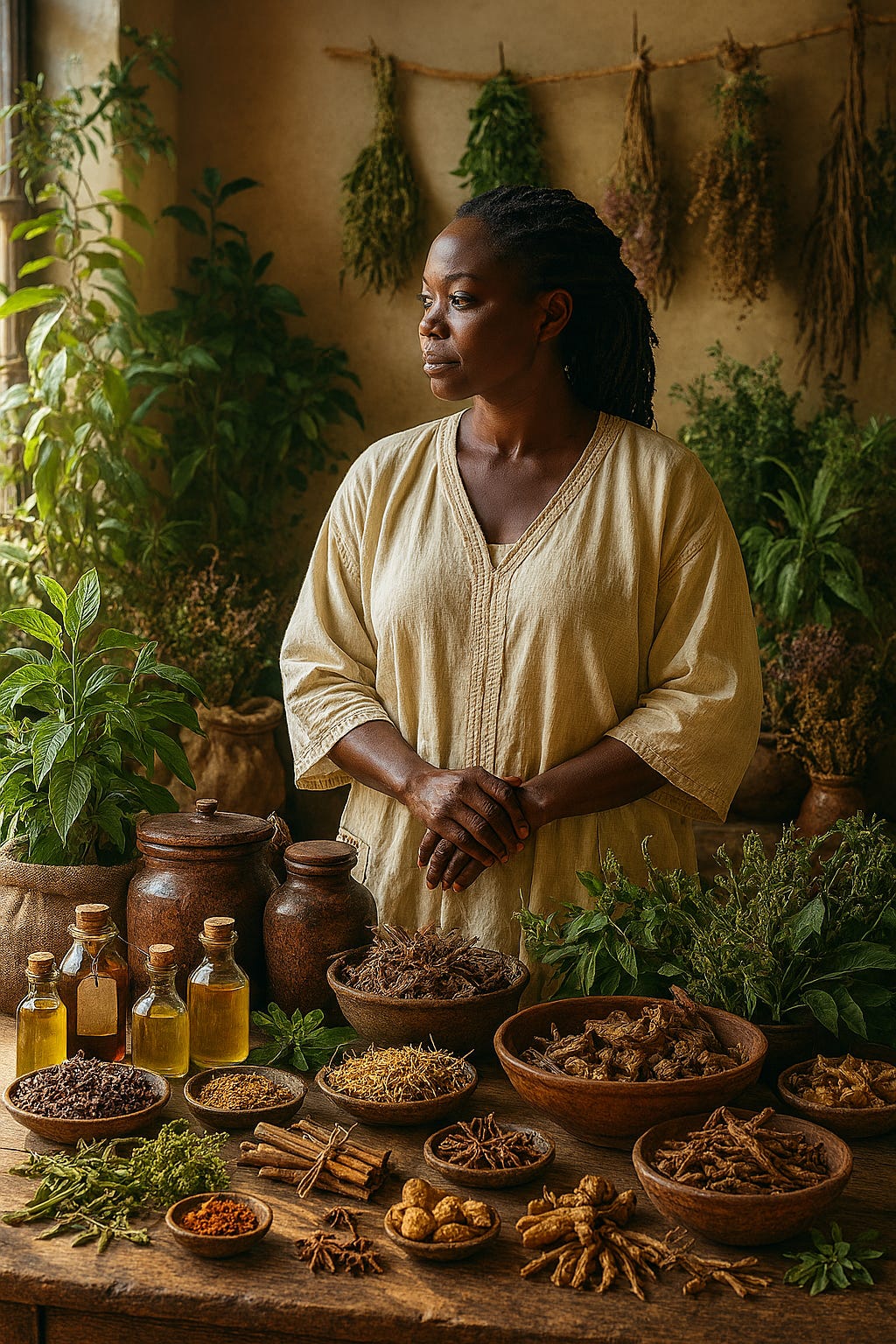
From Ancient Wisdom to Global Standards: Creating Africa’s Digital Herbal Intelligence System
In Parts 1 and 2 Building the Future of Food Part 1: A Global Superfood & Herbal Knowledge Platform and Building the Future of Food Part 2: The Strategic Commercialisation of Ogogoro as a candidate Use Case of this series, we explored the potential for a Global Superfood Platform and examined the rich landscape of local herbal drinks and fermented beverages. Now we turn to perhaps the most complex and culturally significant domain: herbal remedies and traditional medicine.
Thanks for reading! Subscribe for free to receive new posts and support my work.
This isn’t just about documenting plants or creating products. It’s about building a bridge between ancestral wisdom and modern science, creating systems that honor cultural heritage while ensuring safety, efficacy, and global accessibility.
The Opportunity Hidden in Plain Sight
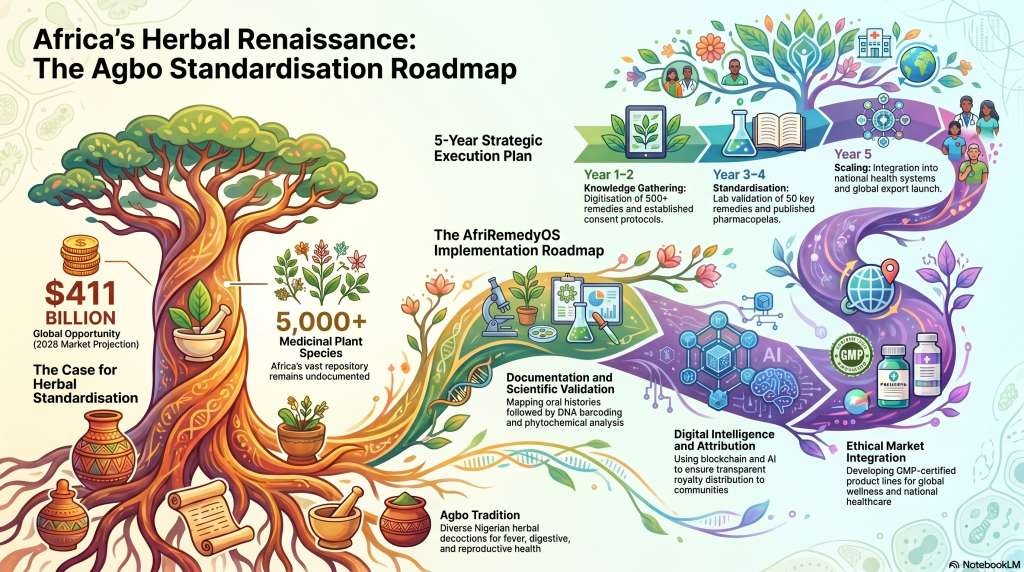
Africa is home to over 45,000 plant species, with an estimated 5,000 used medicinally across the continent. Yet the vast majority of this knowledge remains oral, fragmented, and vulnerable to loss. Meanwhile, the global herbal medicine market is projected to reach $411 billion by 2026, with much of the growth driven by demand for natural, culturally-rooted remedies.
Consider Nigeria’s “Agbo” – the Yoruba term for herbal decoctions. Variations like “Agbo iba” for fever and “Agbo jedi” for digestive health exist across regions, each with unique plant combinations, preparation methods, and cultural meanings. This represents both the strength and the challenge of African herbal traditions: profound effectiveness embedded in local practice, but lacking standardization and regulatory pathways for broader application. See Agbo and African Herbal Remedies commercial considerations
The question becomes: How do we systematically capture, validate, and scale African herbal knowledge without stripping away its cultural meaning?
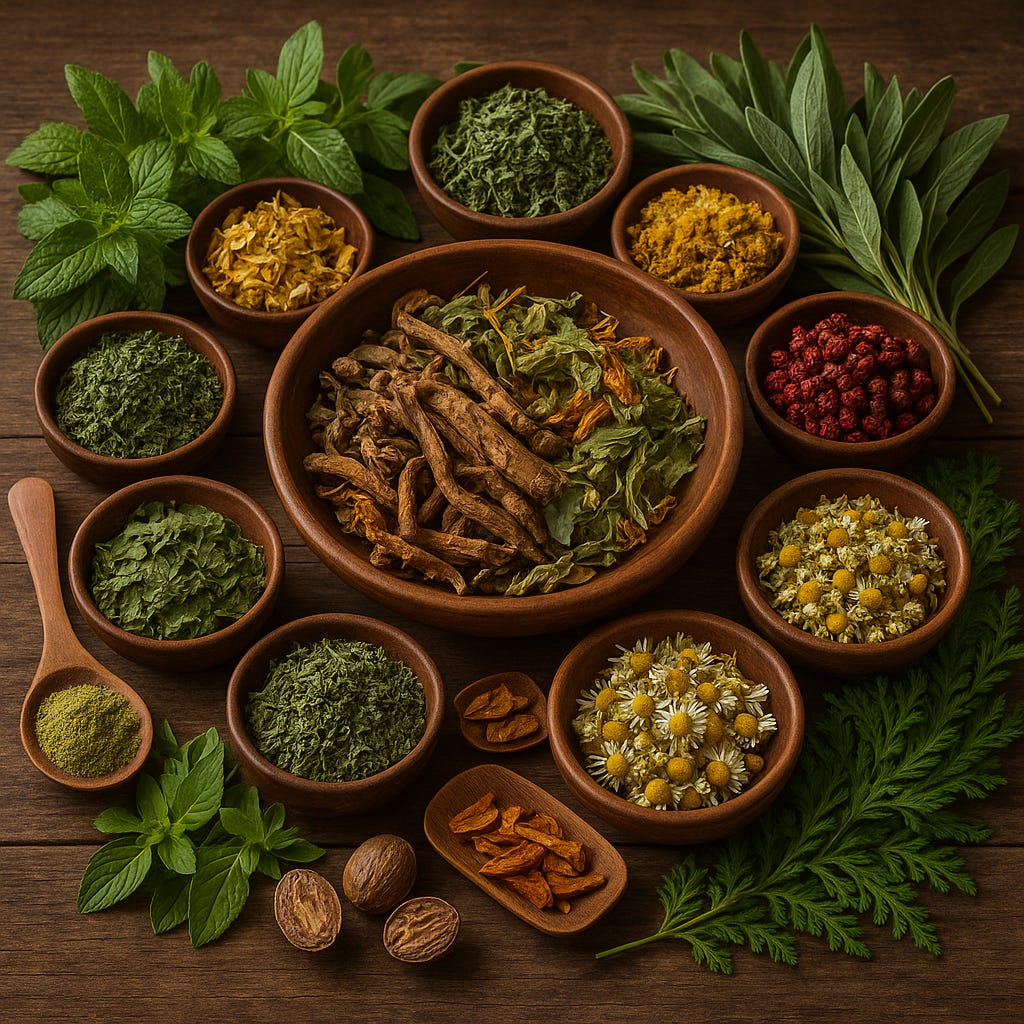
Introducing AfriRemedyOS: A Continental Herbal Intelligence System
The solution requires a comprehensive framework that I call AfriRemedyOS – a decentralized operating system for African herbal intelligence. This platform would operate across five integrated phases:
Phase 1: Community-Driven Knowledge Gathering
The foundation must be participatory and culturally respectful:
Ethnobotanical Mapping: Identify and engage with traditional healers, herbalists, elders, and spiritual practitioners across communities. This includes users or practitioner in and traditional birth attendants throughout the continent.
Digital Documentation: Deploy mobile-first tools for recording plant names, pictures and samples seasonality and varietals (both local and scientific), preparation methods, dosages, cultural stories, and healing rituals. These tools must work offline and support multiple indigenous languages.
Cultural Context Preservation: Capture not just the “what” but the “why” – the spiritual beliefs, origin stories, taboos, and ceremonial aspects that give remedies their full meaning. This narrative dimension is often lost in purely scientific approaches.
Ethical Protocols: Implement robust informed consent procedures and benefit-sharing agreements aligned with the Nagoya Protocol, ensuring communities retain ownership and receive compensation for their knowledge.
Phase 2: Scientific Validation and Standardization
Botanical Authentication: Use DNA barcoding and herbarium verification to confirm plant identities and prevent substitution or contamination.
Phytochemical Analysis: Employ techniques like HPLC and GC-MS to identify active compounds, understand mechanisms of action, and establish quality markers for standardization.
Safety Testing: Conduct comprehensive toxicology studies, including acute and chronic toxicity, genotoxicity, and potential drug interactions.
Dosage Calibration: Translate traditional measurements (”handful of leaves,” “three-finger pinch”) into standardized units suitable for modern dosing.
Clinical Validation: Design culturally-appropriate clinical trials that respect traditional practice while meeting scientific standards.
Phase 3: Digital Infrastructure and Knowledge Management
Multi-Layered Indexing System: Create searchable databases organized by cultural origin, remedy function, botanical classification, and therapeutic application. This allows both traditional practitioners and researchers to find relevant information quickly.
AI-Enhanced Pattern Recognition: Deploy machine learning tools to identify connections between remedies across cultures, suggest underexplored plant combinations, and predict therapeutic potential based on phytochemical profiles.
Semantic Translation Tools: Build systems that can translate between traditional healing concepts (”hot” and “cold” ailments) and modern medical terminology (inflammatory vs. anti-inflammatory responses).
Blockchain Attribution: Implement transparent tracking systems that ensure proper attribution and royalty distribution to originating communities.
Phase 4: Production and Quality Assurance
Good Manufacturing Practices (GMP): Establish production facilities that meet international standards while accommodating traditional preparation methods where scientifically appropriate.
Supply Chain Development: Partner with agricultural cooperatives and community growers to ensure sustainable sourcing of medicinal plants, potentially including agroforestry and conservation programs.
Quality Control Systems: Implement batch testing, stability studies, and contamination screening to ensure consistent product quality and safety.
Modular Product Development: Create diverse product formats – from traditional decoctions to modern capsules, teas, and tinctures – to serve different markets and preferences.
Phase 5: Market Integration and Global Distribution
Regulatory Pathways: Work with agencies like Nigeria’s NAFDAC and continental bodies like the African Union to develop appropriate regulatory frameworks for traditional medicine products.
Education and Training: Develop certification programs for traditional healers, educational materials for consumers, and training modules for healthcare providers interested in integrative approaches.
Export Development: Create export-ready product lines that meet international standards while maintaining cultural authenticity and community benefit-sharing.
Digital Platforms: Build consumer-facing apps and platforms that provide reliable information about traditional remedies, proper usage, and safety considerations.
Novel Approaches and Missing Elements
Several innovative concepts could enhance this framework:
Ethnobotanical Narrative Informatics: Develop new methodologies for analyzing healing stories and cultural narratives as data sources that encode information about symptom patterns, emotional states, and therapeutic relationships.
Climate-Adaptive Conservation: Integrate climate change projections to identify vulnerable medicinal plants and develop conservation strategies, including seed banking and climate-resistant cultivation methods.
Microbiome Integration: Explore how traditional fermented remedies affect gut microbiota and overall health, potentially revealing new mechanisms of action.
Diaspora Knowledge Networks: Engage African diaspora communities who have preserved and adapted traditional remedies in different environments, creating a global knowledge network.
Biosemiotic Analysis: Investigate how traditional healing symbols, rituals, and metaphors encode practical information about plant properties and therapeutic applications.
The Economics of Ethical Commercialization
Sustainable funding requires diverse revenue streams that benefit originating communities:
Community-Licensed Products: Develop herbal teas, tinctures, and wellness products with transparent royalty sharing through blockchain-based smart contracts.
Research Licensing: License validated datasets and AI models to pharmaceutical companies, research institutions, and biotechnology firms for drug discovery.
Platform-as-a-Service: Offer the digital infrastructure to other countries and regions looking to systematize their own traditional medicine knowledge.
Educational Content: Create courses, workshops, and certification programs for healthcare providers, researchers, and wellness practitioners.
Cultural Tourism: Develop ethical herbal tourism experiences that educate visitors while providing income to traditional healers and communities.
Addressing the Challenges
This approach faces several significant challenges that must be addressed:
Cultural Sensitivity: How do we maintain the spiritual and cultural dimensions of healing while meeting scientific standards? Some remedies may lose their effectiveness when removed from their cultural context.
Standardization vs. Diversity: Traditional medicine thrives on personalization and regional variation. Excessive standardization could diminish this strength.
Quality Control: Ensuring consistent quality across thousands of plant species and preparation methods presents massive logistical challenges.
Intellectual Property: Protecting traditional knowledge while enabling innovation requires sophisticated legal frameworks that don’t yet exist in many jurisdictions.
Safety Concerns: Some traditional remedies may have legitimate safety risks or interactions with modern medications that require careful management.
A Framework for Implementation
Year 1-2: Establish pilot programs in 3-5 countries, focusing on well-documented remedies like various Agbo formulations. Develop mobile data collection tools and train community researchers.
Year 3-4: Launch regional laboratory networks for botanical authentication and basic safety testing. Begin developing the digital platform infrastructure.
Year 5-6: Expand to continental scale, implement AI-enhanced analysis tools, and launch first certified product lines with community benefit-sharing.
Year 7-10: Integrate with national healthcare systems, establish international export channels, and position Africa as a global leader in evidence-based traditional medicine.
The Bigger Picture
This isn’t just about herbal remedies – it’s about creating a new model for how traditional knowledge systems can contribute to global health and wellness. By combining rigorous science with deep cultural respect, transparent benefit-sharing with economic viability, and local wisdom with global accessibility, we can build something unprecedented.
The potential extends beyond health to encompass biodiversity conservation, rural economic development, cultural preservation, and scientific innovation. Africa could lead the world in demonstrating how indigenous knowledge systems can be honored and leveraged in the modern era.
Moving Forward
The framework outlined here provides a roadmap, but implementation requires collaboration across multiple sectors: traditional healers and communities, scientists and researchers, technology developers, regulatory bodies, and impact investors.
The next phase of this series will explore the governance structures, funding mechanisms, and partnership models needed to transform this vision into reality. We’ll also examine how similar approaches could be applied to other domains of food and nutrition, creating an integrated ecosystem of traditional knowledge preservation and modern innovation.
The future of food – and health – may well depend on our ability to bridge these worlds effectively. Africa’s herbal wisdom offers a profound opportunity to lead this transformation, but only if we approach it with both scientific rigor and cultural humility.
This article is part of an ongoing series exploring the intersection of traditional food systems, modern technology, and global health.