Preamble: From flying gadgets to anticipatory infrastructure
Across the next 10 to 15 years, drones will stop being “projects” and start behaving like infrastructure. Not a standalone industry, but an intelligent layer inside health, logistics, agriculture, energy, cities, and climate systems.
The materials you shared already point in this direction. They map:
- How applications move from pilots to national systems
- How AI, robotics, and new materials unlock new use cases
- How regulation, funding, and workforce capacity shape what is actually possible
- How climate change and sustainability targets quietly set the agenda
This piece uses that work and the Predictive Anticipation Roadmap as a lens. It presents a future-facing timeline of emerging and probable applications from 2025 to 2040, sector by sector, and links them to stakeholder needs, ethical questions, and deployment strategies.
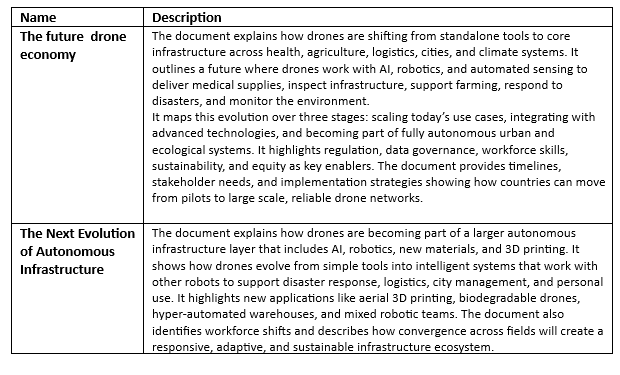
As usual supporting documentation Drone futures
1. Foresight frame: Horizons, not predictions
Instead of betting on one future, treat the drone economy as unfolding across three overlapping horizons:
- Horizon 1 (2025–2028): Near-term consolidation
Existing use cases scale, basic regulation matures, and stakeholders chase cost, safety, and speed. - Horizon 2 (2028–2035): Technological convergence
Drones merge with AI, robotics, 3D printing, and new materials. Systems become multi-agent and semi-autonomous. - Horizon 3 (2035–2040): Systemic integration and regeneration
Drones become part of a city or ecosystem “metabolism”, embedded in climate governance, infrastructure, and everyday life.
The Predictive Anticipation Roadmap sits above these horizons. It gives organizations a way to:
- Scan for signals and stakeholder pain points
- Build scenarios across horizons
- Design options that work across multiple futures
- Backcast into concrete deployment strategies
With that frame, the rest of this document walks the timeline.
2. Horizon 1 (2025–2028)
Consolidation and proof at scale
This period is about moving from “successful pilots” to “boring, reliable service”. Stakeholders want predictable value, not novelty.
2.1 Health and humanitarian logistics
Needs and use cases
- Faster access to blood, vaccines, and diagnostics for rural and hard-to-reach clinics
- Reliable supply during rainy seasons and floods when roads fail
- Reduced maternal deaths, stockouts, and sample spoilage
Emerging applications
- Routine blood and vaccine delivery routes serving networks of 20–40 facilities
- Daily sample return flights from remote health posts to regional labs
- Hybrid fuel-battery platforms that operate in heavy rain and low-infrastructure settings
Pain points
- Fragile funding models dependent on donors
- Limited regulatory capacity for BVLOS approvals
- Community mistrust around privacy and “spy drones”
Implementation pathway
- Phase 1: High-impact “hero” routes (emergency blood, vaccines) that generate evidence
- Phase 2: Network expansion to mesh-like coverage, shared across commodities
- Phase 3: Drone-in-a-Box hubs and remote operations centers, with local health workers integrated into workflows
Ethical considerations
- Equity of access between regions
- Gender inclusion in training and employment for pilots and technicians
- Data protection for health and location data
2.2 Agriculture and food systems
Needs and use cases
- Yield stability under climate stress
- Reduced input costs and chemical use
- Land tenure mapping to unlock credit
Emerging applications
- Multispectral crop monitoring that detects stress before it is visible
- Variable-rate spraying that cuts chemical use by 40–60 percent while protecting yields
- Drone-as-a-Service models priced per hectare, not per drone
Pain points
- Smallholders lack capital, skills, and connectivity
- Fragmented software and proprietary platforms
- Risk of reinforcing gender and power inequalities in land data
Implementation pathway
- Cooperatives and service providers operate regional fleets
- Bundled services that combine mapping, advisory, and spraying
- Open data standards for farm and land information
Ethical considerations
- Who owns land maps and yield data
- Whether women and marginalized groups benefit or are bypassed
- Potential for land grabs if data is misused
2.3 Infrastructure inspection and emergency response
Needs and use cases
- Cheaper inspection of power lines, pipelines, bridges, and towers
- Reduced worker risk in high, remote, or hazardous locations
- Faster situational awareness after disasters
Emerging applications
- Automated Drone-in-a-Box (DiaB) systems at substations and critical assets
- AI defect detection with near-human or better accuracy
- Standardized thermal and optical inspection routines integrated into asset management systems
Pain points
- Integration with legacy GIS, ERP, and maintenance software
- Unclear liability when AI classification fails
- Weather and access constraints
Implementation pathway
- Start with controlled industrial sites and critical corridors
- Use pilots to build ROI cases and safety data for regulators
- Introduce service-level contracts where providers sell “uptime” and risk reduction, not flight hours
Ethical considerations
- Workforce transition for traditional inspectors
- Use of collected imagery for surveillance beyond agreed scope
- Cybersecurity of inspection data for critical infrastructure
3. Horizon 2 (2028–2035)
Convergence of AI, robotics, materials, and manufacturing
By this horizon, drones are no longer acting alone. They form teams with robots, sensors, and software.
3.1 Heterogeneous robotic ecosystems
Stakeholder needs
- Scaling operations without linearly scaling headcount
- Consistent performance in dangerous, remote, or chaotic environments
Probable applications
- Disaster response stacks: aerial scouts, ground robots, snake robots, and heavy lift bots, all orchestrated by a “hive-mind” AI
- Warehouse and port operations where aerial drones manage vertical tasks and ground robots handle horizontal movement
- Mine, plant, and refinery inspection where mixed fleets continuously monitor assets
Technological enablers
- Edge AI for real-time perception and control
- Swarm coordination for 10–20 units per human supervisor
- Reliable mesh networking and UTM integration
Societal and ethical questions
- Responsibility when multi-robot systems fail in complex environments
- Labor shifts from physical operators to fleet managers and data analysts
- Fair access to these capabilities for Global South operators, not only large Western firms
3.2 Climate monitoring and adaptation systems
Stakeholder needs
- High-resolution, continuous data on forests, coasts, farmland, and urban heat
- Early warning for wildfires, floods, droughts, and coastal erosion
- Credible data for carbon markets and climate reporting
Probable applications
- Permanent drone-based climate sentinels over forests, coastal zones, and glaciers
- Autonomous systems that detect fires within minutes and trigger early response
- Methane and emissions detection across pipelines, landfills, and industrial sites
Scientific and technological horizons
- Bio-inspired governance where drone swarms adjust flight paths based on biodiversity signals
- Energy-harvesting skins for near-perpetual flight platforms
- Biodegradable and self-healing drones in sensitive ecosystems
Ethical considerations
- Balancing commercial data rights with public transparency
- Avoiding surveillance creep while monitoring land and communities
- Life-cycle carbon accounting for fleets and batteries
3.3 Aerial additive manufacturing and remote construction
Stakeholder needs
- Faster recovery of infrastructure after disasters
- Lower-cost construction in remote or risky locations
- Reduced need for heavy machinery in fragile ecosystems
Probable applications
- Drone-based 3D printing of temporary shelters, footbridges, and structural patches
- Swarm printing of large structures where multiple drones act as a mobile factory
- In-situ repair of dams, towers, and turbines without shutting down assets
Key constraints
- Material science limits on strength, durability, and curing
- Lack of standards for “printed in the sky” components
- Liability and insurance challenges when autonomous systems build things people rely on
Ethical considerations
- Who owns and controls critical printed infrastructure
- Local inclusion in planning, not just importing robotic construction teams
- Environmental impacts of new materials and binding agents
3.4 Advanced logistics, cities, and personal ecosystems
Stakeholder needs
- Lower-emission logistics for dense cities
- Faster and more predictable urban services
- Flexible tools for individuals and small businesses
Probable applications
- Dense urban drone corridors managed by mature UTM systems
- Cargo drones that replace some time-sensitive truck routes between cities
- Personal “app-drones” that shift roles: camera, courier, sensor, security, or game partner
Enablers
- Routine BVLOS approval in urban and peri-urban airspace
- Noise standards and route optimization for community acceptance
- Modular chassis with mission-specific payload pods
Societal impacts
- Pressure on traditional courier and delivery jobs
- New high-skill roles: UTM operators, swarm coordinators, drone UX designers
- Questions around personal safety, privacy, and acceptable use of airspace around homes and public spaces
4. Horizon 3 (2035–2040)
From “drone sector” to autonomous infrastructure layer
In this horizon, drones are part of a wider cyber-physical fabric. The language shifts from “drones” to “autonomous infrastructure”.
4.1 Smart city metabolism and digital twins
Stakeholder needs
- Continuous, granular understanding of city health
- Proactive maintenance instead of reactive repair
- Data-driven planning for climate adaptation
Probable applications
- Routine building envelope inspections feeding energy and safety upgrades
- Real-time traffic and pollution sensing that feeds adaptive traffic lights and public health alerts
- Integration of aerial data into city-scale digital twins for planning and crisis management
Implementation pathway
- Long-term regulatory trust in BVLOS over people
- Interoperable data standards across utilities, transport, environment, and planning
- Public participation in deciding what is monitored, where, and why
Ethical and governance questions
- Who sets the rules for always-on sensing in urban areas
- How to prevent function creep into constant surveillance
- How to ensure neighborhoods benefit from insights, not only investors and tech vendors
4.2 Regenerative and bio-integrated systems
Stakeholder needs
- Restoration of ecosystems under climate pressure
- New forms of climate mitigation beyond “do less harm”
- Integration of infrastructure and habitat rather than trade-offs
Probable applications
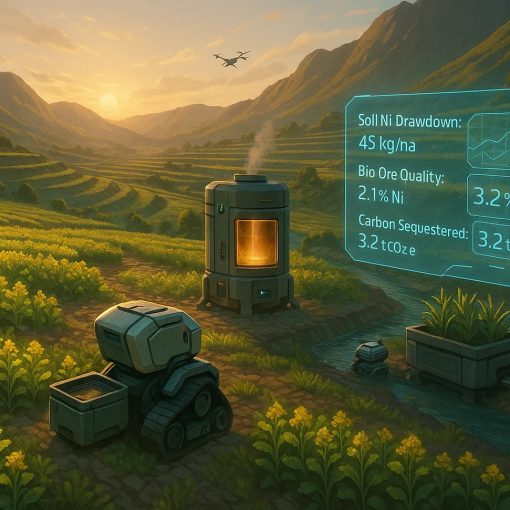
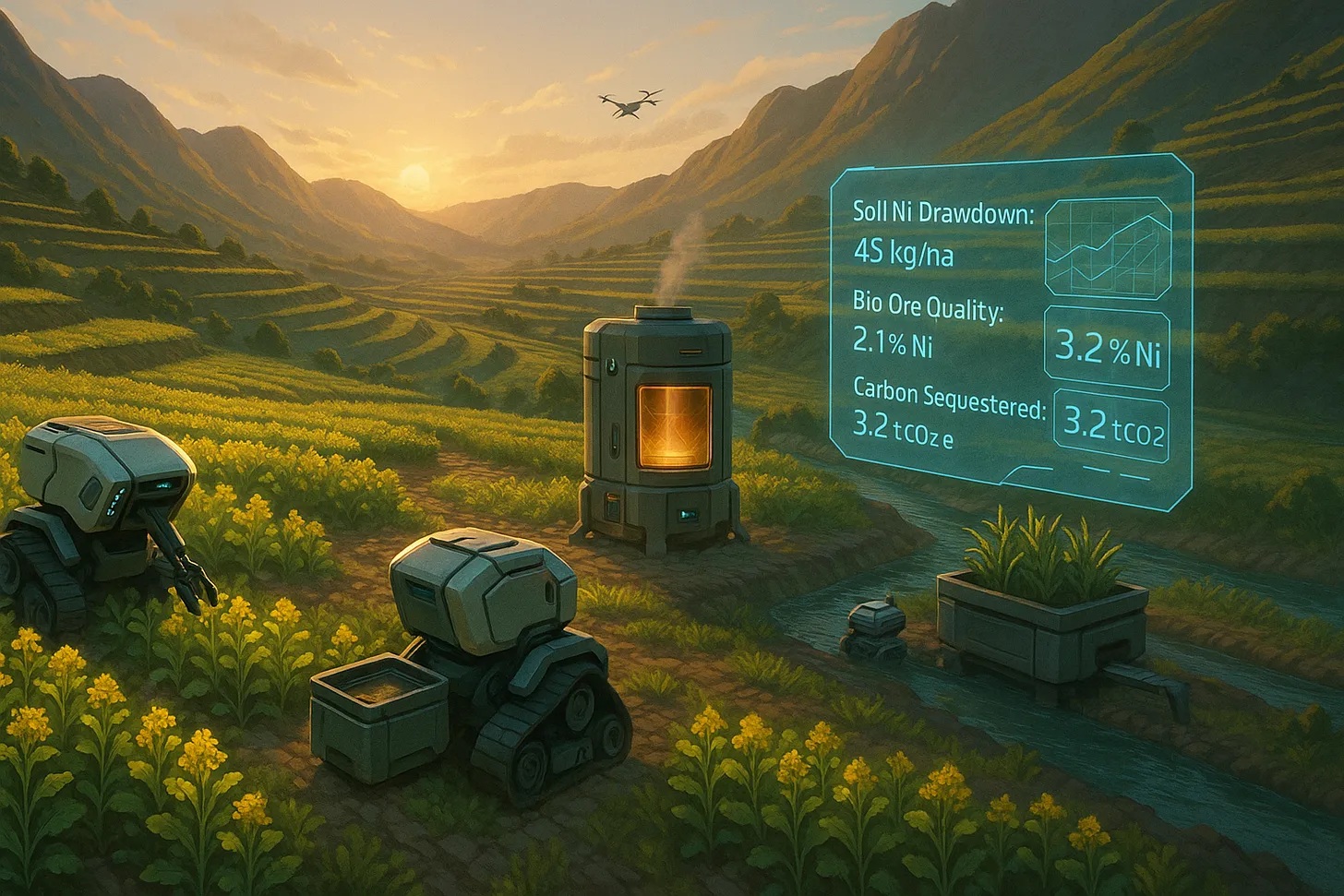
- Drone-led reforestation and seed dispersal using biodegradable platforms
- Pollination support in collapsing insect ecosystems
- Ecological corridor management along power lines, roads, and pipelines
Scientific horizons
- Living composite materials that repair themselves
- Piezoelectric and other harvesting surfaces that capture movement energy
- Biofeedback loops where environmental signals directly influence fleet behavior
Ethical considerations
- Human and non-human interests in algorithmic decision-making
- Indigenous and local knowledge integration in ecological interventions
- Governance of autonomous systems that act across borders and ecosystems
4.3 Markets, ownership, and geopolitics
By 2040, the main story is not technical. It is about power.
Diverse market implications
- High-income markets focus on integration, comfort, and productivity. The priority is frictionless services and resilient infrastructure.
- Emerging markets focus on access, sovereignty, and leapfrogging. The priority is local ownership of platforms and data.
- Climate-vulnerable regions focus on resilience and adaptation. The priority is survival, not convenience.
Key tensions
- Sovereign drone stacks versus globally integrated supply chains
- Open architectures versus closed proprietary ecosystems
- Public-interest deployments versus profit-maximizing networks
Stakeholder questions
- How can Global South entrepreneurs capture value, not only host deployments
- How should regulators treat foreign-controlled fleets that monitor critical infrastructure
- What does “responsible autonomy” look like at planetary scale
5. Implementation playbook: From foresight to deployment
To turn this timeline into action, organizations can combine the sector insights above with the Predictive Anticipation Roadmap.
5.1 Use foresight to pick the right bets
- Explore: Map stakeholder pain points in your sector: unmet health needs, climate risks, infrastructure gaps, workforce issues.
- Envision: Build scenarios across the three horizons: conservative, disruptive, and regenerative trajectories.
- Design: Develop concepts that remain valuable across multiple scenarios, not just a single prediction.
- Deliver: Launch pilots that are cheap in cost but rich in learning. Use them to refine both tech and strategy.
5.2 Deploy in phases, not big bangs
Across markets and sectors, a similar deployment pattern emerges:
- Pilot with clear, measurable outcomes
Life saved, downtime reduced, emissions avoided, cost per delivery lowered. - Expand networks along well-defined corridors
Health routes, power lines, river basins, urban testbeds. - Embed in institutions and budgets
From donor-funded projects to line items in health, transport, or climate budgets. - Integrate with broader systems
Digital twins, national climate strategies, sustainable infrastructure plans.
5.3 Design for equity, trust, and sustainability from the start
- Include communities, not just clients, in design and governance.
- Make data governance and privacy rules explicit and enforceable.
- Use circular design and life-cycle metrics to keep sustainability honest.
- Build training pathways for youth, women, and underrepresented groups into every major program.
6. What this means for leaders now
If you are a policymaker, investor, operator, or ecosystem builder, the timelines above point to a simple conclusion.
You do not control the pace of every technology involved. You do control:
- Which problems you prioritize
- Whose needs you center
- Which governance models you back
- How you build local capability, not just import tools
Drones will merge with AI, robotics, and climate systems whether we prepare or not. The question is whether they deepen extraction and surveillance, or help build resilient, regenerative, and more equitable infrastructures.
That choice is a strategic design problem. The foresight work you have started is already the right kind of tool to work on it.