Preamble
I am one of the embryonic international people in this story. Some governments and some citizens dislike the concept due to the complextity of administration and loyalty vs centuries of simpler nationalities and borders (dual nationality was already complex), but we are many, and we are not going away. An international person belongs to more than one place in culture, law or in practice. We keep a base, yet we live, work, play across borders and tech has made it easier. We contribute to more than one society. We might need systems that recognize our full lives. This is a multichapter series drawn from a chapter in an e-Book called Tales my country told me and an article I wrote based on that called The rise of the international person. This post will sound quite optimistic but there is counterpoint, contrarian and legitimate dark view to this, (its all optimistic until reality smacks you in the face), which I have highlighted as topics to be explored in other chapters in the appendices. Feel free to suggest directions based on these or your considerations .
Chapter 1. The international person
A child is born in London. Their parents are African, from two different countries. At home they switch languages without thinking. Summer is Lagos or Accra. Winter is London. They cheer for two national teams. They learn to code on a British curriculum and trade jokes in a West African dialect. No one told them to pick one country. They were encouraged to be international.
That child is part of a small, fast growing group. Cheap flights and constant connectivity keep families knitted across borders. People who leave do not disappear. They keep calling, sending money, and returning for weddings and funerals. The numbers tell the story. There were about 304 million international migrants in 2024, up from 154 million in 1990. That is almost the size of the United States. The ties are strong too. Remittances to low and middle income countries were estimated at about 685 billion dollars in 2024. Total global remittances were about 905 billion dollars. These flows now rival or exceed foreign aid in many places. (United Nations, Migration Data Portal, World Bank Blogs)
At the same time, more states accept people with more than one citizenship. About half of countries fully allowed dual citizenship as of 2022. Recent analysis shows the acceptance trend is still rising. (Global Citizen, globalgovernanceprogramme.eui.eu)
Remote work has widened the lane. More than fifty countries now offer digital nomad or remote work visas. Spain, Portugal, the UAE, Mexico, and many others market themselves to mobile professionals who earn online. (Citizen Remote, Forbes, VisaGuide.World)
What is an international person
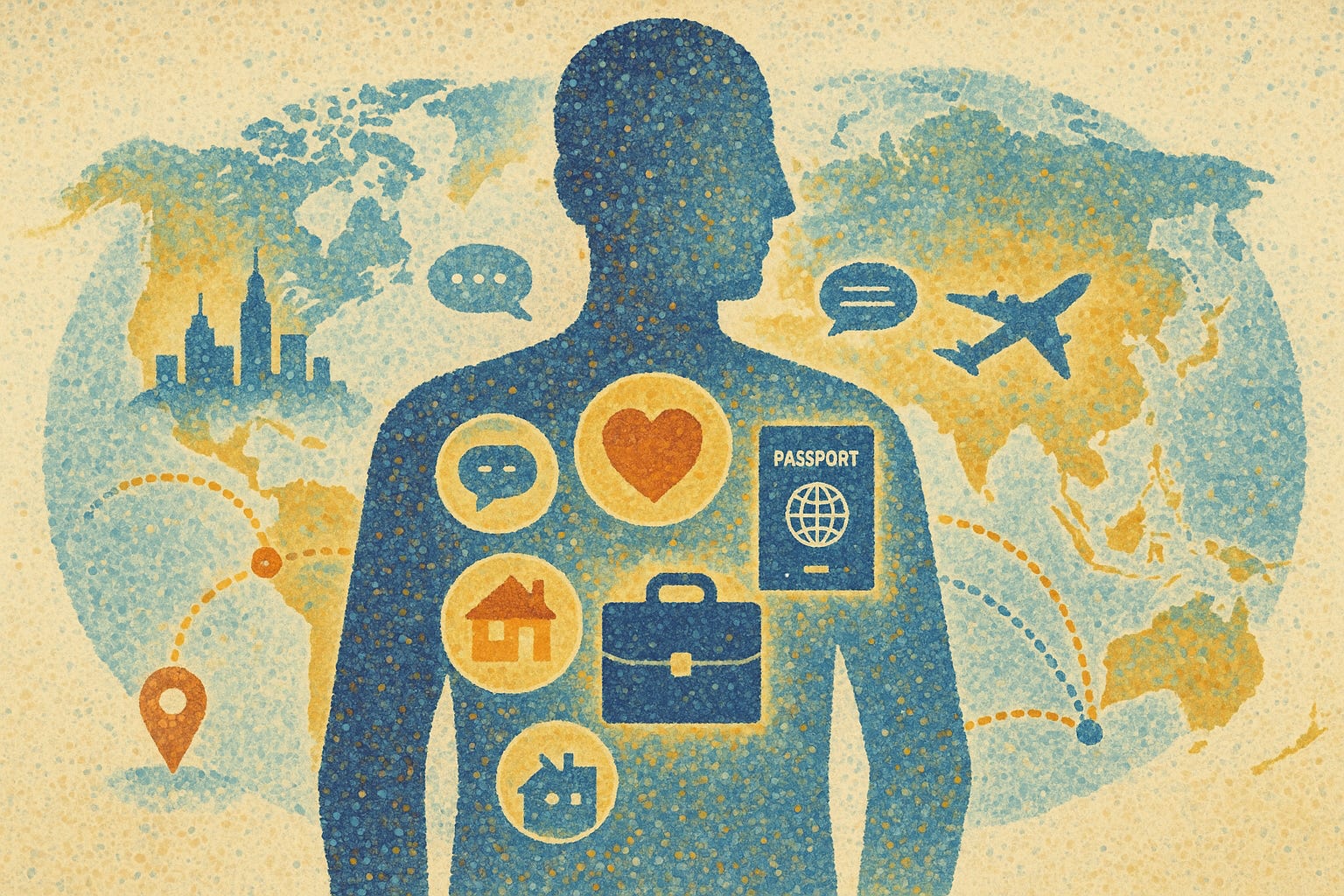
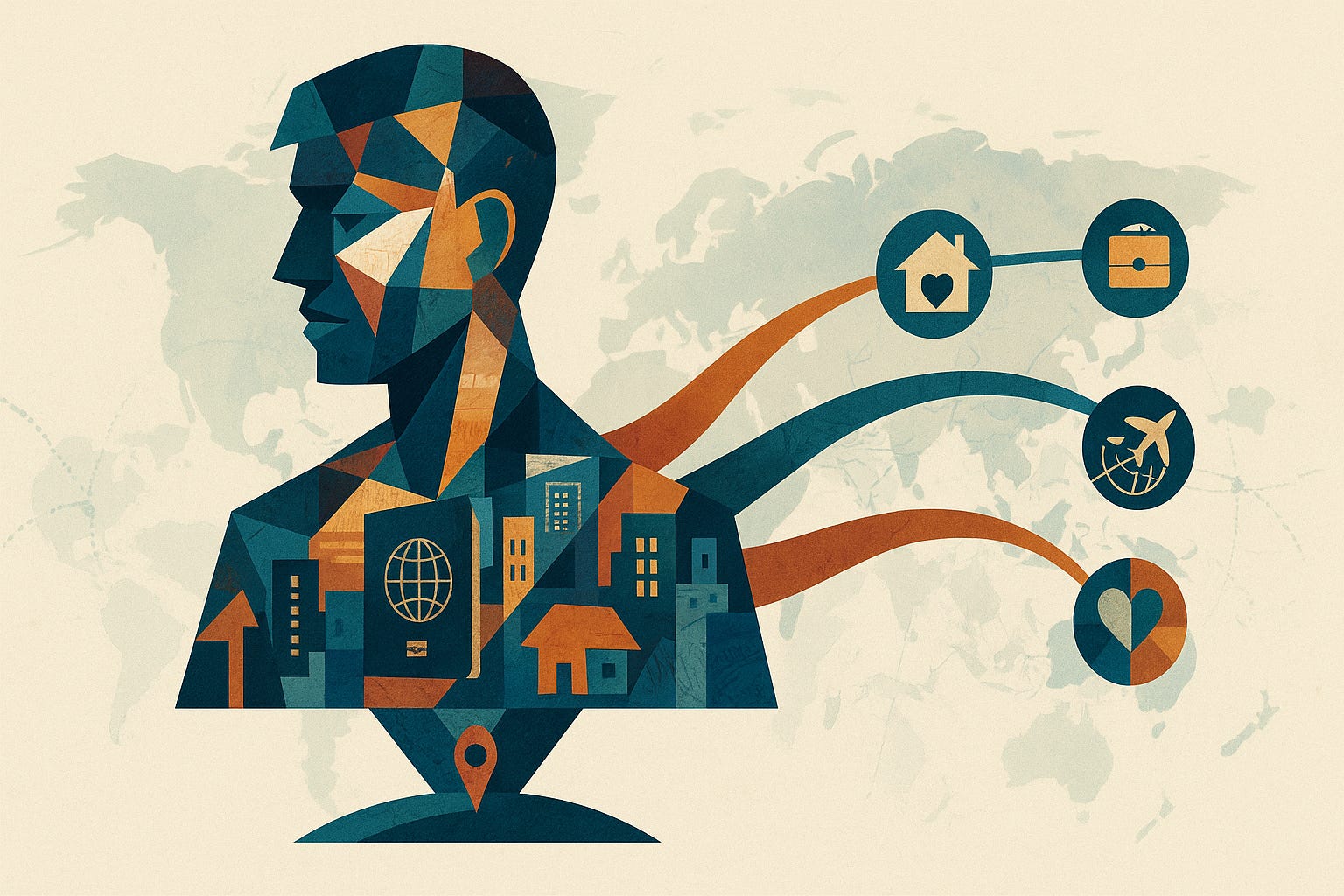
An international person is not a tourist. They live in more than one country across a life. They often hold multiple legal statuses. They may have more than one passport. They have a base of operations, but their social, economic, and cultural lives stretch across borders. They do not chase a single dream in a single place. They design a portfolio of place, identity, and opportunity.
You might know people like this. Some have homes in two countries. Some speak two or three languages at home. Some children can claim three passports because of mixed parentage and birthplace. These are not exceptions. They are early signs of a wider shift.
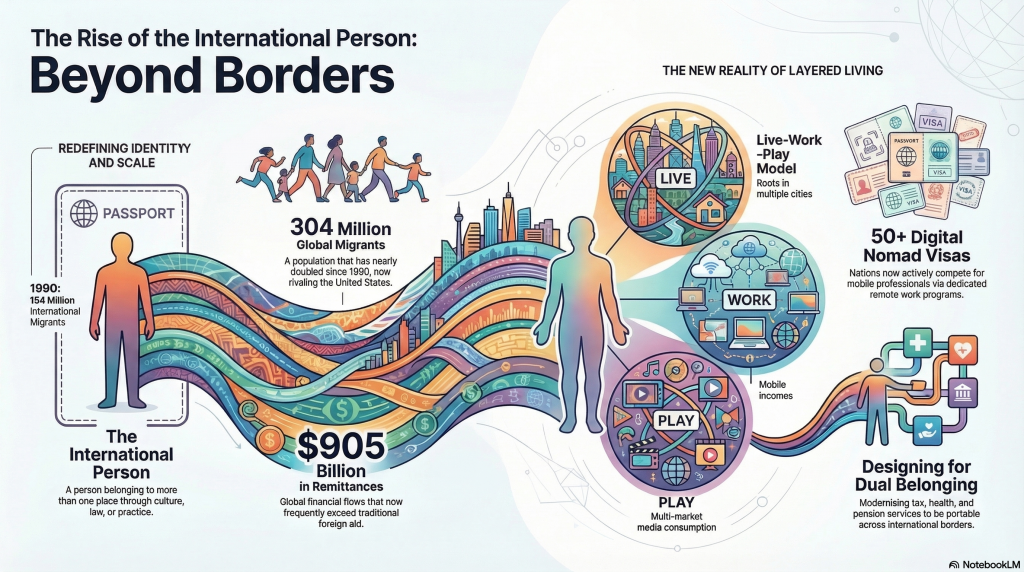
Live. Work. Play
Live. The international person keeps roots in more than one city. Their WhatsApp groups span time zones. Their holiday calendar fits two cultures. They vote where they can. They care about elections in more than one country.
Work. Their income is often mobile. They freelance, consult, or work for firms that allow cross border arrangements. Their client base is international. Their tax, pension, and compliance footprints are complex.
Play. They consume media from multiple markets. They follow two football leagues. They split loyalties. That split can sting. When a government acts in its narrow interest, it may alienate citizens who see their identity and obligations as layered.
Loyalty will look different
The old model expects single country loyalty. The new reality is layered loyalty. People can love a birthplace, a heritage country, and a host city at the same time. They can contribute to all three. That does not make them disloyal. It makes them plural.
This shift has consequences. When policies restrict movement or money, families feel it across borders. When a state defines national interest too tightly, it can clash with the interests of its own international citizens.
Power is shifting across borders
Global firms shape daily life as much as states. The largest companies now have market values bigger than the annual output of many countries. The comparison is imperfect, since market value and GDP are different measures, but the scale matters for influence. (Yahoo Finance)
States also project power through people. China has explicit diaspora engagement strategies tied to soft power and economic goals. India’s Overseas Citizen of India program gives long term privileges to people of Indian origin, and rules are tightening to balance benefits with enforcement. These policies show how countries treat international people as bridges for trade, ideas, and influence. (Stiftung Wissenschaft und Politik (SWP), cgitoronto.gov.in, hcilondon.gov.in, The Times of India)
What changes over the next 20 to 30 years
- Agenda setting. The international person is not driven mainly by the old “American dream.” They optimize for quality of life, networks, and optionality. They choose where they can build, learn, and raise children on their own terms.
- Loyalty norms. Expectations of single country loyalty will soften. Civic duties, taxes, and voting rights will adapt to layered belonging.
- Globalization 2.0. The idea of globalization will shift from trade first to people first. Mobile citizens and distributed teams will matter as much as container ships.
- Policy experiments. More countries will use residency by investment, talent visas, and diaspora programs to attract people and capital. Others will tighten rules to manage risk. We already see both paths. (Immigrant Invest, Jagranjosh.com)
What governments should do now
- Design for dual belonging. Modernize consular, voting, and tax services for citizens who live abroad part time.
- Protect flows, reduce friction. Keep remittance costs low, expand portable IDs, and simplify cross border compliance. The development gains are large. (World Bank)
- Invest in diaspora ties. Use alumni networks, cultural programs, and business councils. Treat international citizens as partners, not as problems. (Stiftung Wissenschaft und Politik (SWP))
- Plan public services across borders. Health coverage, pensions, and education should be portable or interoperable.
- Set clear rules. Publish simple guidance on taxes, military service, and property rights for people with multiple statuses.
What businesses should do now
- Sell to networks, not only to places. Target transnational communities and their calendars.
- Make payments simple. Offer cross border accounts, stable currency options, and clear KYC flows.
- Hire across borders. Build compliance into onboarding. Use remote work hubs and employer of record partners where it makes sense.
- Design products for layered identity. Language, culture, and time zone options should be first class features.
- Think in clusters. Many international people split time between a few city pairs. Build services around those corridors.
Scenarios for the next decade
- Open corridors. More digital nomad visas and mutual recognition deals create safe, legal mobility for skilled workers. Cities compete for international families. (Citizen Remote)
- Guarded gates. Security concerns and politics create stricter checks. Mobility concentrates among those with capital and rare skills.
- Network commons. Regional blocs make benefits portable. Health, education, and pensions become more interoperable.
PESTLE effects
Political.
- More diaspora voting and lobbying.
- Greater tension between narrow national interest and global citizen expectations.
- Growth in state programs to court or control diaspora influence. (Stiftung Wissenschaft und Politik (SWP))
Economic.
- Larger role for remittances and cross border incomes in household budgets.
- New demand for tax, compliance, and fintech services that reduce friction. (Migration Data Portal)
Social.
- Rise of multilingual, multi home households.
- Normalization of layered identity and mixed loyalties.
- Need for schools that support children who shuttle between systems.
Technological.
- More secure digital identity and e residency.
- Better cross border health and education records.
- Always on collaboration tools that shrink distance.
Legal.
- Wider acceptance of dual or multiple citizenship.
- Clearer tax treaties for remote work.
- Growth in portable benefits and social security agreements. (Global Citizen)
Environmental.
- More frequent travel raises emissions.
- Counter trend toward longer stays, fewer flights, and climate resilient city choices.
A working definition to carry forward
The international person is a citizen of more than one place in law or in practice. They keep a base of operations, but they live, work, and play across borders. They contribute to more than one society. They deserve systems that see and serve their full lives.
Summary conclusion for Chapter 1
This chapter defines the international person and shows why they matter. Cheap travel and constant connectivity help people sustain real lives in more than one place. Many hold multiple passports or legal statuses, and more countries now accept that reality. Work has gone mobile, with visas and policies that let professionals earn and contribute across borders. Loyalty looks layered, not singular. The chapter outlines practical actions for states and companies, from portable services and clear rules to products that fit multi home lives. The PESTLE scan highlights the politics of diaspora power, the economics of remittances, the social shift to multilingual households, the growth of digital identity and remote work, the legal expansion of dual citizenship, and the environmental cost of more movement. The international person is not an edge case. They are a preview of how families, firms, and governments will operate in a world where borders matter, but belonging stretches beyond them.
To be continued:
Appendices
The other chapters: critique, gaps, considerations and perspectives that need exploration
Chapter 2: The View from the Ground, National Citizens’ Perspectives
- If your children can hold three passports, how should you plan their education and civic life?
- Which two cities are your natural base pair, and what would it take to make that split sustainable?
- Which rules in your home country make international life harder than it should be, and who must you engage to change them?
- How would countries push back?
- You can cherry pick from multiple cultures without guilt if you also give back to each place you call home. That is not selfish. That is the future.
- How do single passport citizens perceive international people? Economic competitors, cultural diluters, privileged elites?
- The brain drain anxiety in developing countries vs. the brain gain potential.
- Local housing markets, job competition, and resource allocation tensions.
- Cultural preservation concerns vs. cosmopolitan enrichment.
Chapter 3: The Government Dilemma
- Security and intelligence challenges of layered loyalties.
- Tax collection complexities and revenue leakage.
- Military service obligations and exemptions.
- Electoral integrity concerns with diaspora voting.
- Social cohesion vs. diversity management.
Chapter 4: The Parent’s Paradox
- Identity formation challenges for children with multiple citizenships.
- Educational continuity across different systems.
- Language preservation vs. integration pressures.
- Grandparent relationships across vast distances.
- Mental health implications of constant cultural code switching.
Chapter: The Biggest Missing Element
When systems fail. What happens when multiple countries go to war with each other? When diplomatic relations break down? When economic sanctions prohibit your layered life? The framework needs stress testing against geopolitical reality.
The Turkish German tensions during the 2016 coup attempt, Russian dual citizens post Ukraine invasion, and Chinese American scientists during recent US China tensions all show how quickly international belonging can become international vulnerability.
The optimistic vision needs to grapple with these harder realities to be truly valuable for both international people and the societies that host them.
Novel Directions Worth Exploring
The Inequality Dimension
The current framing could inadvertently seem elitist. Consider:
- The domestic worker in Dubai sending money to the Philippines, is she not an international person?
- Refugees with layered belonging but no legal recognition.
- The class divide between expat professionals and migrant workers doing the same thing.
Unintended Consequences Chapter
- Tax avoidance schemes masquerading as international living.
- Children who feel homeless everywhere rather than at home everywhere.
- The environmental cost of maintaining multiple lives.
- Democratic participation declining when voting becomes abstract.
The Pushback Chapter
- Rising nationalism and citizenship stripping laws.
- Brexit as a case study in rejecting international integration.
- Trump era immigration restrictions and their impact on international families.
- China’s growing surveillance of overseas Chinese.
Content Gaps to Address
Practical Complexity
The recommendations are optimistic but need more nuance:
- Banking compliance, try opening accounts in three countries simultaneously.
- Healthcare continuity, prescription transfers and medical records.
- Retirement planning across multiple pension systems.
- Legal liability when laws conflict between your countries.
The Dark Side
- International people as vectors for corruption and money laundering.
- Diplomatic incidents when layered loyalties conflict.
- Espionage concerns and security clearance issues.
- Marriage and divorce across multiple legal systems.
Structural Suggestions
Case Studies Needed
- A Nigerian British Canadian doctor navigating medical licensing.
- An Indian American UAE entrepreneur dealing with business regulations.
- A Lebanese Australian German family during the 2006 Lebanon evacuation.
- A dual Turkish Dutch citizen during recent diplomatic tensions.
Counterarguments Chapter
Engage seriously with critics who argue international people:
- Weaken national solidarity.
- Exploit systems they do not fully commit to.
- Create unfair advantages over single citizenship peers.
- Complicate governance and social policy.
Research Directions
Quantitative Analysis Needed
- Economic impact studies on local communities.
- Comparative political participation rates.
- Educational outcomes for multi passport children.
- Mental health and identity formation research.
Historical Context
- How previous waves of international people were absorbed or rejected.
- Colonial era multiple belonging and its legacy.
- Cold War dual loyalty concerns and lessons learned.
Audience Considerations
The tone suggests writing primarily for other international people. Consider separate chapters for:
- Policymakers, focus on governance challenges and solutions.
- Local citizens, address concerns about fairness and integration.
- Employers, practical guidance on managing international employees.
- Parents, specific strategies for raising internationally mobile children.