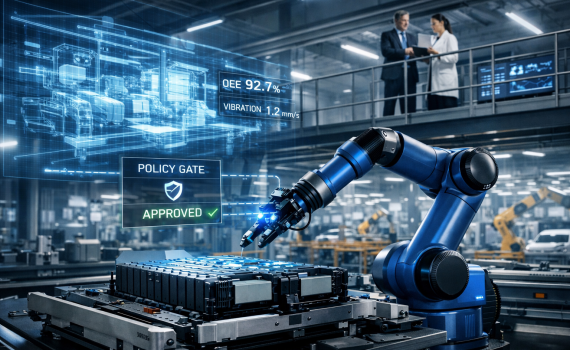
Manufacturing is becoming the next major frontier for AI. This article explores how digital twins, robotics, and industrial intelligence platforms are converging to reshape production, compress engineering cycles, and create a new class of software-defined industrial companies.
Reference
70 posts

Bernie vs Claude argues that the AI privacy crisis is not just a consumer issue but a democratic one. It proposes a Digital Sovereignty Act backed by enforceable rights, transparency infrastructure, human-in-the-loop governance, and a Digital Governance & Enforcement Suite that turns policy into operational reality.

Modular manufacturing is not about putting machinery into a steel shell. It is about turning production into a repeatable, financeable, movable asset. This article explains why developed economies adopt modular systems for flexibility, resilience, and faster launch, while the Global South adopts them for industrial access, infrastructure bypass, and local value capture. It also shows where modular wins, where it fails, and how to scale from one unit to a fleet without losing the economics of standardisation.

AI is transforming how requirements are created, validated, and evolved. What was once a lightweight Agile activity now demands structured governance, traceability, and explainability. This article introduces a unified framework to manage AI-generated artefacts, control change, and maintain accountability across modern delivery environments.

Agile was built for passive tools. AI changes that. When AI starts shaping decisions, generating requirements, and influencing delivery, teams need a new way to think about accountability, governance, and roles.

Artificial Intelligence is not replacing Business Analysts, it is elevating them. This article explores how AI transforms the BA role from manual execution to strategic orchestration, redefining skills, tools, governance, and career pathways in the modern enterprise.