
Science fiction rarely invents the future by itself. Its deeper value lies in making possible futures visible before science, engineering, policy, capital and public demand align. From satellite communications to personal devices, stories give people a shared language for imagining what technology could mean in everyday life. This article explores how speculative fiction shapes innovation, why resemblance is not the same as causation, and how writers, designers, researchers, educators and policymakers can use speculative practice responsibly.
systems thinking
10 posts
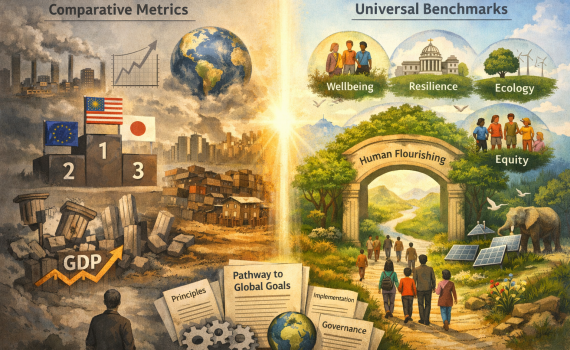
For decades, development has been measured by ranking countries against one another. This article argues that such comparisons are no longer viable—and proposes universal, non-comparative benchmarks grounded in planetary boundaries, human dignity, and adaptive capacity as a new foundation for global progress.

This article maps the shift from Business Analyst to Business Architect, showing how analysts can move from project delivery to enterprise design without abandoning their core skills.

This roadmap shows how organizations can move beyond prediction and build anticipation into their operating systems, using strategic foresight, scenario design, and adaptive execution.

Biomimicry promises resilient, nature aligned design, yet many projects quietly fail. This article explores why nature inspired ideas break down in real world use, and introduces a practical diagnostic checklist to move biomimicry from aesthetic inspiration to accountable design practice.

The Convergence is a practical biomimicry design framework that helps teams translate nature’s strategies into real world products and systems, using a repeatable six step loop grounded in Life’s Principles.